

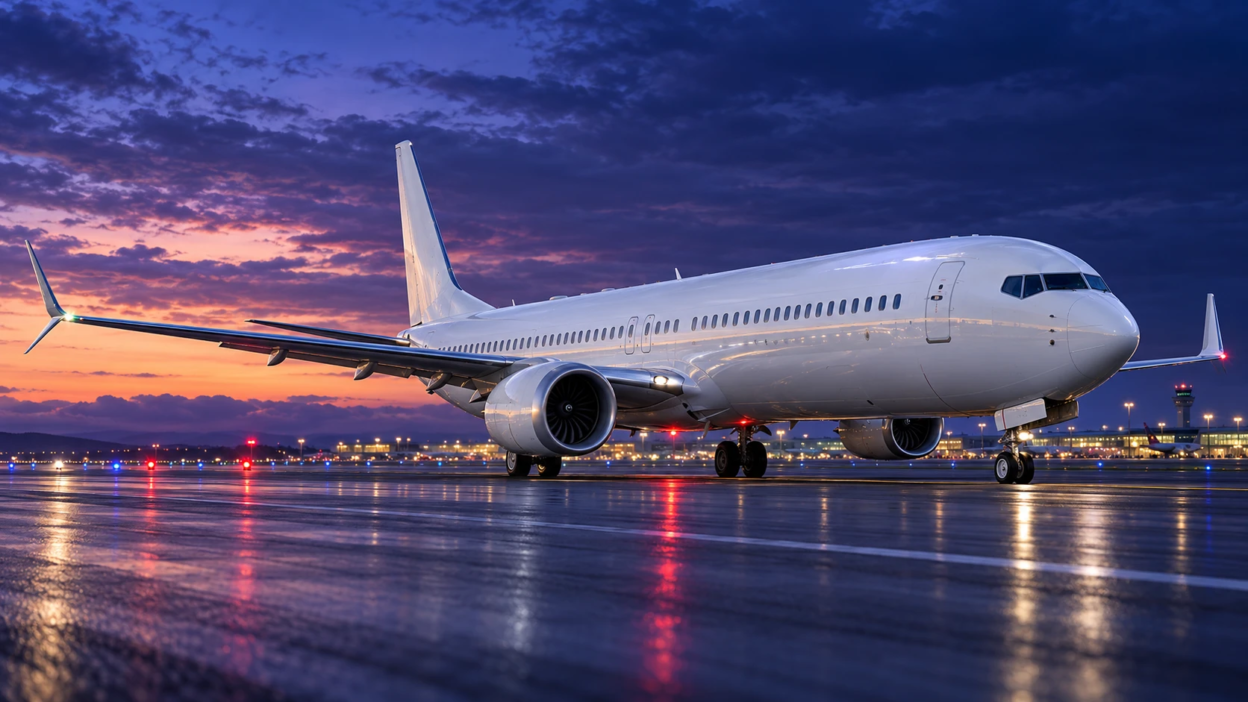
Boeing has reached a major milestone after the U.S. Federal Aviation Administration (FAA) officially certified the Boeing 737 MAX 10 on October 20, 2026. The decision followed years of delays, extensive safety reviews, and technical testing. Certification clears an important regulatory hurdle for the largest aircraft in Boeing’s 737 MAX family and allows the company to move toward commercial deliveries.
The FAA issued an amended type certificate confirming that the Boeing 737 MAX 10 meets applicable design and safety requirements. The regulator also approved updated production documentation, allowing Boeing to move toward aircraft deliveries. The decision is an important milestone for the manufacturer as it works to rebuild trust following years of safety and production challenges.
Boeing introduced the 737 MAX 10 in 2017 as a larger member of its popular single-aisle aircraft family. However, technical changes, additional testing, and stricter regulatory requirements extended the certification process. The aircraft was reviewed under requirements introduced by the Aircraft Certification, Safety, and Accountability Act of 2020, including more detailed safety assessments and evaluations of how pilots interact with aircraft systems.
According to Boeing’s official 737 MAX specifications, the MAX 10 typically accommodates 185 to 210 passengers in a two-class seating arrangement. Airlines can also configure the aircraft to carry up to 230 passengers. This makes it the highest-capacity aircraft in Boeing’s 737 MAX family.
The aircraft has a maximum range of approximately 3,100 nautical miles, or 5,740 kilometers. This makes it suitable for many domestic and medium-distance international flights.
The Boeing 737 MAX 10 includes an enhanced Angle-of-Attack system designed to improve the reliability of aircraft sensor information. Angle-of-Attack sensors measure how an aircraft’s wing is positioned relative to the airflow. The upgraded system uses additional monitoring checks to identify incorrect sensor readings and prevent unreliable information from affecting other aircraft systems. Boeing plans to make these improvements standard on newly produced 737 MAX aircraft and offer upgrades for aircraft already in service.
Before receiving FAA certification, the Boeing 737 MAX 10 completed nearly 1,000 test flights covering more than 2,000 flight hours. Boeing also conducted approximately 1,000 hours of ground testing. The certification program included engineering reviews, system safety assessments, and extensive documentation to demonstrate compliance with aviation safety requirements.
The certification follows major changes to aviation safety oversight after two fatal Boeing 737 MAX 8 crashes. Lion Air Flight 610 crashed in Indonesia in October 2018, while Ethiopian Airlines Flight 302 crashed in March 2019. The accidents killed a total of 346 people and exposed serious concerns involving the Maneuvering Characteristics Augmentation System (MCAS), pilot information, and aircraft certification practices.
Boeing faced additional scrutiny after a door plug detached from an Alaska Airlines Boeing 737 MAX 9 during Flight 1282 on January 5, 2024. The incident caused rapid cabin depressurization and raised serious questions about aircraft manufacturing and quality control. A later National Transportation Safety Board investigation identified failures involving factory training, procedures, and oversight.
Another issue emerged during the final stages of certification when a software problem affecting automated flight guidance was identified on certain Boeing 737 MAX aircraft. The problem could affect automated guidance during specific landing situations. After reviewing the issue in October 2026, the FAA determined that it did not require immediate safety action or prevent certification of the MAX 10.
The Boeing 737 MAX 10 has attracted significant demand from airlines and aircraft-leasing companies. According to Boeing’s October 20 announcement, more than 30 customers have ordered a total of 1,555 MAX 10 aircraft. The model accounts for more than 30% of Boeing’s outstanding 737 MAX order book, making its certification an important development for the company’s future deliveries.
Major customers awaiting the Boeing 737 MAX 10 include United Airlines, Delta Air Lines, American Airlines, and Ryanair. These carriers plan to use the larger aircraft to expand capacity and modernize parts of their fleets. For background on one major customer, TechBonafide’s guide to United Airlines’ aircraft fleet and onboard features covers the airline’s existing aircraft and onboard technology.
The Boeing 737 MAX 10 gives airlines an opportunity to carry more passengers on busy routes without adding as many extra flights. A larger aircraft can also help reduce operating costs per available seat when demand is strong. However, the benefits will depend on ticket demand, aircraft configuration, fuel costs, and how efficiently airlines operate the aircraft.
According to Boeing, technological improvements across the 737 MAX family can reduce fuel consumption and carbon dioxide emissions by approximately 20% compared with previous-generation aircraft. These improvements could help airlines control fuel expenses and reduce emissions per flight or passenger, although actual results depend on route conditions, seating arrangements, and aircraft operations.
The Boeing 737 MAX 10 competes with the Airbus A321neo in the market for larger single-aisle passenger aircraft. The A321neo offers greater maximum passenger capacity and range, while airlines compare operating costs, route requirements, and aircraft availability when making fleet decisions. Readers interested in the passenger experience aboard the rival aircraft can also explore TechBonafide’s guide to Airbus A321neo first-class cabins.
FAA type certification does not mean the Boeing 737 MAX 10 will immediately appear on passenger flights. Boeing must continue producing aircraft that meet the approved design and required quality standards. Each aircraft must also meet applicable airworthiness requirements before delivery and commercial operations. Airlines will then need to complete their own preparations before introducing the aircraft into scheduled service.
Boeing expects to begin delivering the 737 MAX 10 following its certification, with airlines preparing for passenger operations in 2027. Aircraft leasing company Aviation Capital Group has announced that it is scheduled to deliver the first aircraft of this model to Canadian carrier WestJet. However, the exact timing of airline operations will depend on aircraft deliveries, applicable regulatory approvals, and each airline’s preparations.
The certification of the Boeing 737 MAX 10 represents an important development for modern aviation technology. Its long-term success will depend on reliable production, continued safety oversight, and how well the aircraft performs during regular airline operations.

Tech Bonafide is the editorial identity of TechBonafide, an independent technology publication covering AI, software, cybersecurity, gadgets, and emerging technology.


