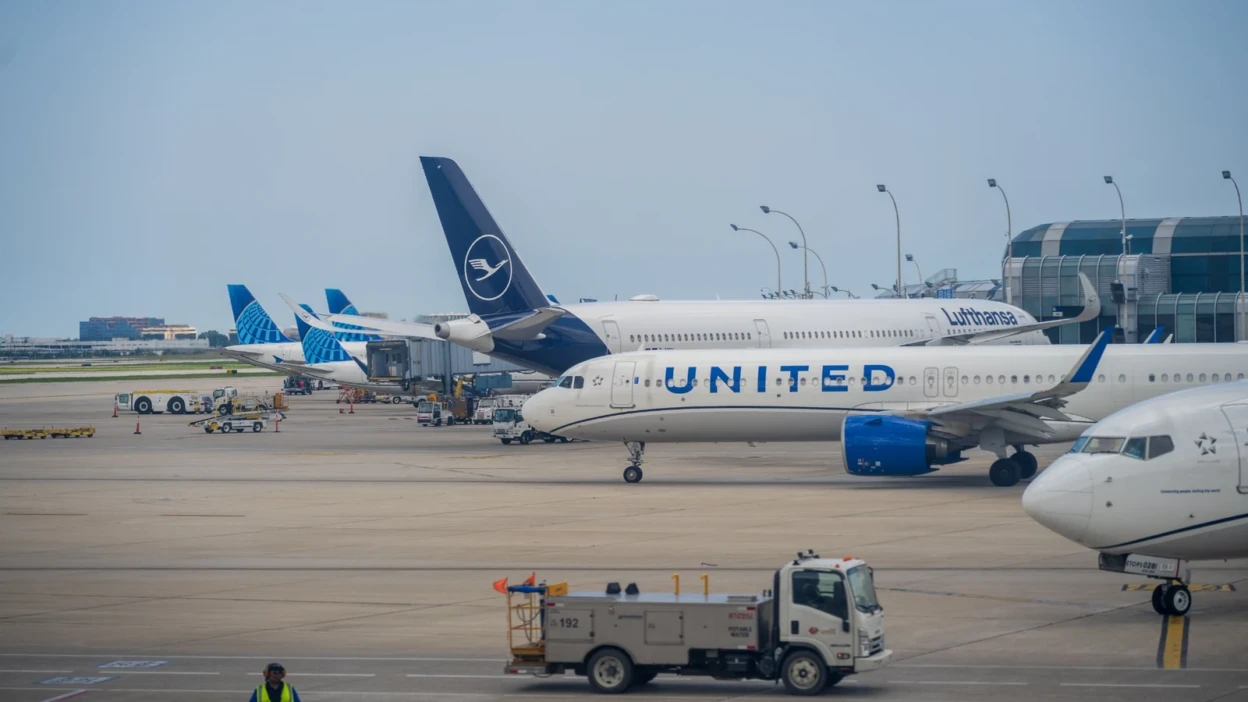
Flights across the United States began resuming on Friday night, November 13, 2026, after the Federal Aviation Administration (FAA) lifted a nationwide ground stop caused by air traffic control communications problems. The agency had halted departures as a safety precaution after technical issues affected multiple regional air traffic control centers, according to an official FAA statement.
U.S. Transportation Secretary Sean Duffy confirmed that American airspace reopened at 8:15 p.m. Eastern Time on Friday. The decision came several hours after the nationwide restriction was introduced. According to the U.S. Department of Transportation, instability in radar and communications systems had begun at approximately 3:36 p.m. Eastern Time.
The ground stop primarily affected aircraft waiting to depart. Planes already flying were still handled by air traffic controllers and allowed to land safely. Duffy said more than 3,500 aircraft were airborne when the problems emerged. Officials explained that the FAA had not lost all radar or communications capabilities, but inconsistent information made continued normal operations unsafe.
Initial findings pointed toward overloaded switches and routers in the country’s older air traffic communications network. Duffy said the equipment received more data than it could reliably handle, creating inconsistencies in information reaching air traffic control facilities. The problem affected both communications and radar information. Investigators were continuing to examine the failure, and the government’s initial explanation should not be treated as a completed technical investigation.
The Transportation Department said newer internet protocol equipment had not experienced the same failure. Duffy also stated that the FAA’s newer SMART air traffic decision-support system was not connected to the affected equipment. Homeland Security Secretary Markwayne Mullin said investigators had found no evidence of a cyberattack, although the investigation was continuing, according to Associated Press reporting.
The nationwide interruption caused major disruption at airports. By 11:30 p.m. Eastern Time on Friday, nearly 10,000 flights had been canceled, Reuters reported, citing flight-tracking company Flightradar24. Aircraft were diverted, airport gates became crowded, and passengers faced long delays. The reported cancellation total was a late-Friday snapshot rather than a final count of all affected flights.
International journeys involving U.S. airports were also disrupted, along with cargo flights. Even after the FAA removed the nationwide restriction, airlines faced difficulties restoring their schedules. Aircraft and flight crews were left in different locations from where they were needed, meaning some delays and cancellations could continue beyond the original outage.
Duffy warned that reopening the airspace did not mean every scheduled departure could immediately proceed. Airlines needed available pilots, cabin crews, and aircraft before restarting services. Passengers were advised to check their flight status directly with their airline rather than assuming that the end of the nationwide ground stop meant their particular flight would operate normally.
Travelers whose flights were canceled or significantly changed should also review their rebooking and refund options. Under U.S. Department of Transportation refund rules, eligible passengers who decline alternative travel and other compensation are entitled to a refund when their flight is canceled or significantly changed. Passengers who accept and take a replacement flight are generally not entitled to a refund of that airfare under these rules. Refund rights are separate from additional assistance, such as meals or hotel accommodations.
The incident marked the first nationwide FAA ground stop since January 2023, when a failure involving the agency’s pilot notification system disrupted flights across the country. Friday’s shutdown involved a different problem affecting the communications and radar information used by air traffic control facilities.
The disruption highlights the importance of reliable communications infrastructure in U.S. aviation. Although the FAA lifted the nationwide restriction on Friday evening, airlines still needed time to recover from widespread cancellations and delays. Investigators were continuing to examine the technical failure and the steps needed to reduce the risk of another nationwide interruption.

Tech Bonafide is the editorial identity of TechBonafide, an independent technology publication covering AI, software, cybersecurity, gadgets, and emerging technology.