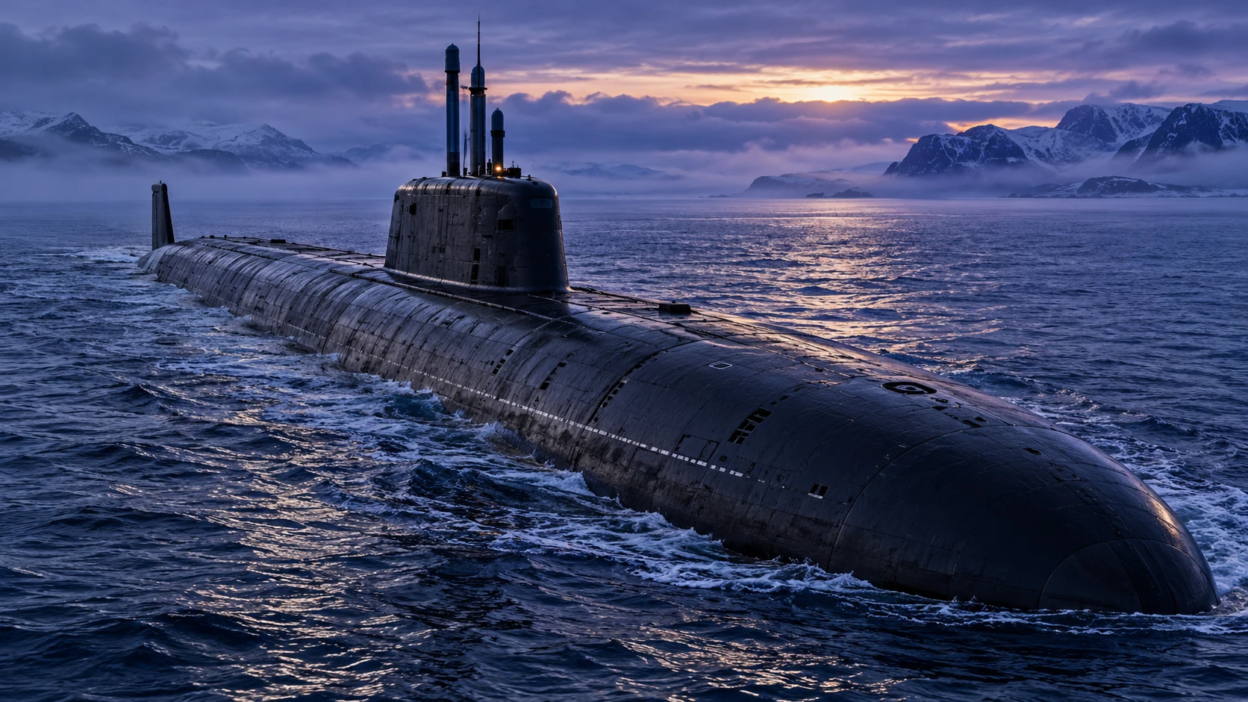
Russia’s Khabarovsk nuclear submarine is moving through testing as questions grow about when it could enter active naval service. The Project 09851 vessel is designed to carry Poseidon, a nuclear-powered underwater weapon capable of carrying a nuclear warhead. The development is attracting attention because of its potential impact on naval security, although the submarine’s commissioning date and the operational readiness of its weapons remain uncertain.
On October 29, 2026, Vladimir Maltsev, head of Russia’s All-Russian Fleet Support Movement, said Khabarovsk could join the Russian Navy’s active fleet in the near future. TASS reported his comments following a forum marking 330 years of the Russian fleet. Maltsev leads a fleet-support organization rather than Russia’s Defense Ministry, and his statement did not establish an official commissioning date. As of November 2, no confirmed date had been announced.
Khabarovsk belongs to Russia’s Project 09851 submarine program. Unlike conventional attack submarines, which are primarily designed to locate enemy ships and submarines and launch weapons against them, Khabarovsk has a specialized role. It is being developed to carry large autonomous underwater weapons capable of operating over considerable distances.
Russia’s Defense Ministry announced the rollout of Khabarovsk from a construction hall at the Sevmash shipyard in Severodvinsk on November 1, 2025. However, independent satellite-image analysis indicated that the vessel entered the water around November 30. In August 2026, reports of its sea trials showed further progress. These trials allow engineers to evaluate the submarine’s propulsion, navigation, underwater performance, and safety systems before the Navy can formally accept it for service.
One of the most important features of Khabarovsk is its connection to the Poseidon underwater weapon system. Poseidon is an unusually large, nuclear-powered underwater vehicle designed to travel without a human crew. Unlike conventional torpedoes, which have limited operating ranges, Poseidon uses nuclear propulsion to support much longer missions.
Poseidon is also designed to carry a nuclear warhead, making it different from conventional underwater drones used for surveillance or research. Russian officials have described it as a weapon capable of targeting naval formations and important coastal infrastructure. However, claims about its maximum speed, range, and potential destructive effects remain difficult to verify independently. Public estimates should therefore be treated cautiously rather than presented as confirmed technical performance.
Khabarovsk is expected to carry multiple Poseidon underwater vehicles. Specialist submarine analysis by H. I. Sutton has estimated that the vessel could accommodate six Poseidon weapons. However, this number remains an analytical estimate, and Russia has not publicly confirmed the submarine’s final weapons configuration.
Russia already operates another specialized nuclear submarine, Belgorod, which has been associated with Poseidon development and testing. Khabarovsk is intended to expand this capability through a vessel specifically designed around the underwater weapons system. However, the existence of these submarines does not independently confirm that Poseidon has entered regular operational service.
The technology has raised concerns among defense experts because underwater nuclear weapons create different challenges from traditional ballistic missiles. Missile defense systems are mainly designed to detect and intercept threats traveling through the air or space. An autonomous underwater weapon follows a different route, potentially requiring advanced sonar systems, underwater sensors, and submarine detection technology.
Nuclear propulsion gives submarines important operational advantages. Unlike conventional diesel-electric submarines, nuclear-powered vessels can remain underwater for extended periods without regularly surfacing to recharge batteries. However, mission duration still depends on food supplies, maintenance, and crew requirements. Operating nuclear submarines also involves complex engineering and safety procedures, as illustrated by TechBonafide’s report on Royal Navy Vanguard-class submarine maintenance.
These developments highlight the growing importance of underwater surveillance and detection technology. For example, the U.S. Navy’s maritime sensing research includes work on acoustic sensors, autonomous surveillance systems, and technologies designed to monitor underwater environments. Such research may help improve future threat detection, although it does not establish that existing systems can reliably locate or intercept Poseidon vehicles.
However, Khabarovsk’s reported progress toward naval service does not mean the complete Poseidon weapons system is operational. The submarine must complete the required testing and acceptance procedures before formal commissioning. Separately, the Poseidon vehicles must meet their own technical and operational requirements. Publicly available information does not yet establish that the complete system is ready for regular deployment.
As of November 2, 2026, Russia has not confirmed when Khabarovsk will officially enter naval service. The next important milestones will be the submarine’s formal commissioning and further confirmation of Poseidon’s operational readiness. Until those developments occur, expectations about the vessel joining the Navy soon should be treated as forecasts rather than evidence of an active deployment.