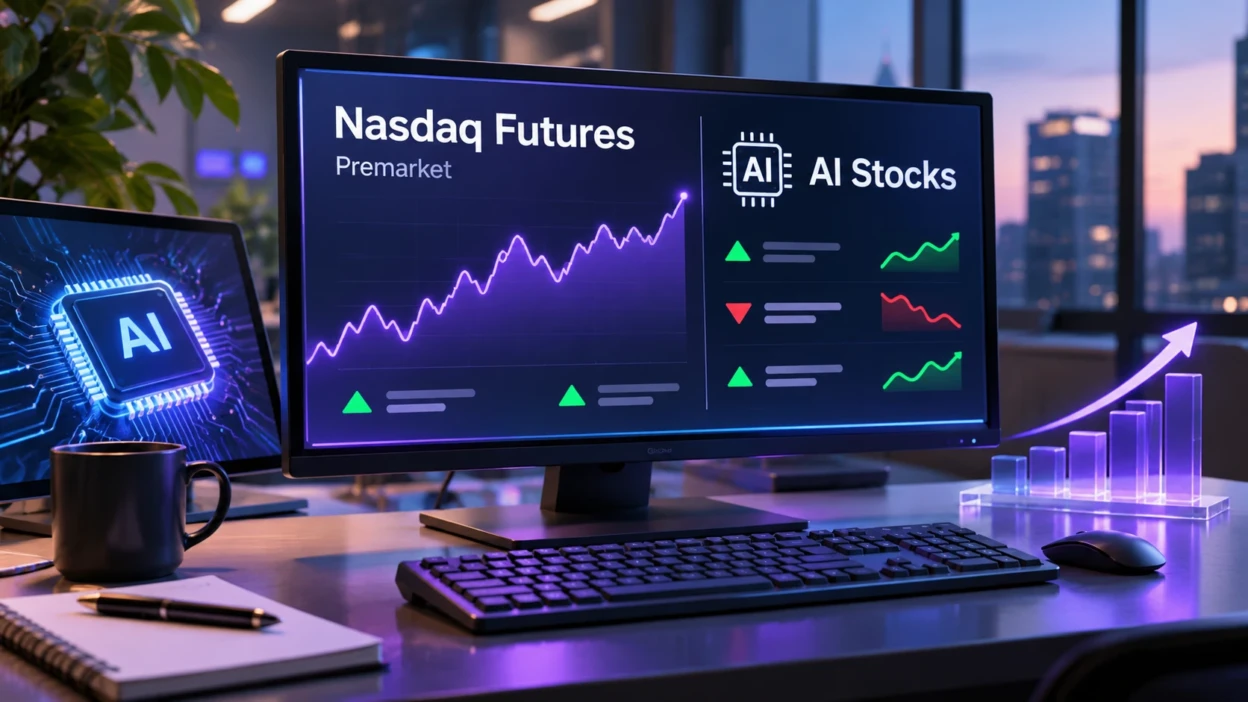
Nasdaq-100 E-mini futures were down 1.64%, or 436 points, at 7:03 a.m. Eastern Time on Friday, November 20, 2026, according to Reuters’ premarket report. Shares of several AI-linked companies were also falling before U.S. stock markets opened. The futures reading showed weaker expectations for the Nasdaq-100, not a completed decline in the regular-session index.
The shift followed Anthropic’s November 19 stock-market debut and Nvidia’s earnings earlier in the week. It also showed why following one AI company, or one overnight futures number, is not enough to explain the broader technology market. Interest-rate expectations and concern about returns on expensive AI infrastructure were part of the picture, according to Reuters.
A useful pre-open reading separates three things: the futures contract, the companies influencing market sentiment, and the actual stock index once regular trading begins. Those measures are connected, but they are not interchangeable.
What the November 20 decline showed?
In the same 7:03 a.m. ET snapshot, S&P 500 E-mini futures were down 0.74% and Dow E-mini futures were down 0.1%, Reuters reported. The bigger decline in Nasdaq-100 futures pointed to relatively greater pressure on the growth-heavy index. It did not establish that AI stocks alone caused the move.
Reuters reported that Anthropic shares fell 7.4% in premarket trading after their first day on the stock market. Nvidia was down 2.2%, while several other chipmakers and AI infrastructure companies also lost ground. These were premarket stock prices, which can change quickly and are not final daily returns.
The contrast with the previous day matters. TechBonafide reported rising Nasdaq-100 futures before Anthropic’s debut on November 19. Later that day, the Associated Press reported that the Nasdaq Composite closed down 2.3%. The Nasdaq Composite and Nasdaq-100 are different benchmarks, so those figures should not be treated as a direct performance comparison. They do show why an early futures reading is not a forecast of the final closing result.
What Nasdaq futures actually track?
The widely quoted E-mini Nasdaq-100 futures contract, identified as NQ, tracks expectations for the Nasdaq-100 Index. CME Group’s contract information specifies a contract value of $20 per index point and a minimum price movement of 0.25 index points. These are futures-contract specifications, not the value of a share of an individual technology company.
The Nasdaq-100 covers 100 of the largest non-financial companies listed on Nasdaq and uses modified market-capitalization weighting. It is not the same as the Nasdaq Composite, which includes a much broader group of Nasdaq-listed securities. A headline saying “Nasdaq futures” usually refers to the Nasdaq-100 contract, so identifying the benchmark matters.
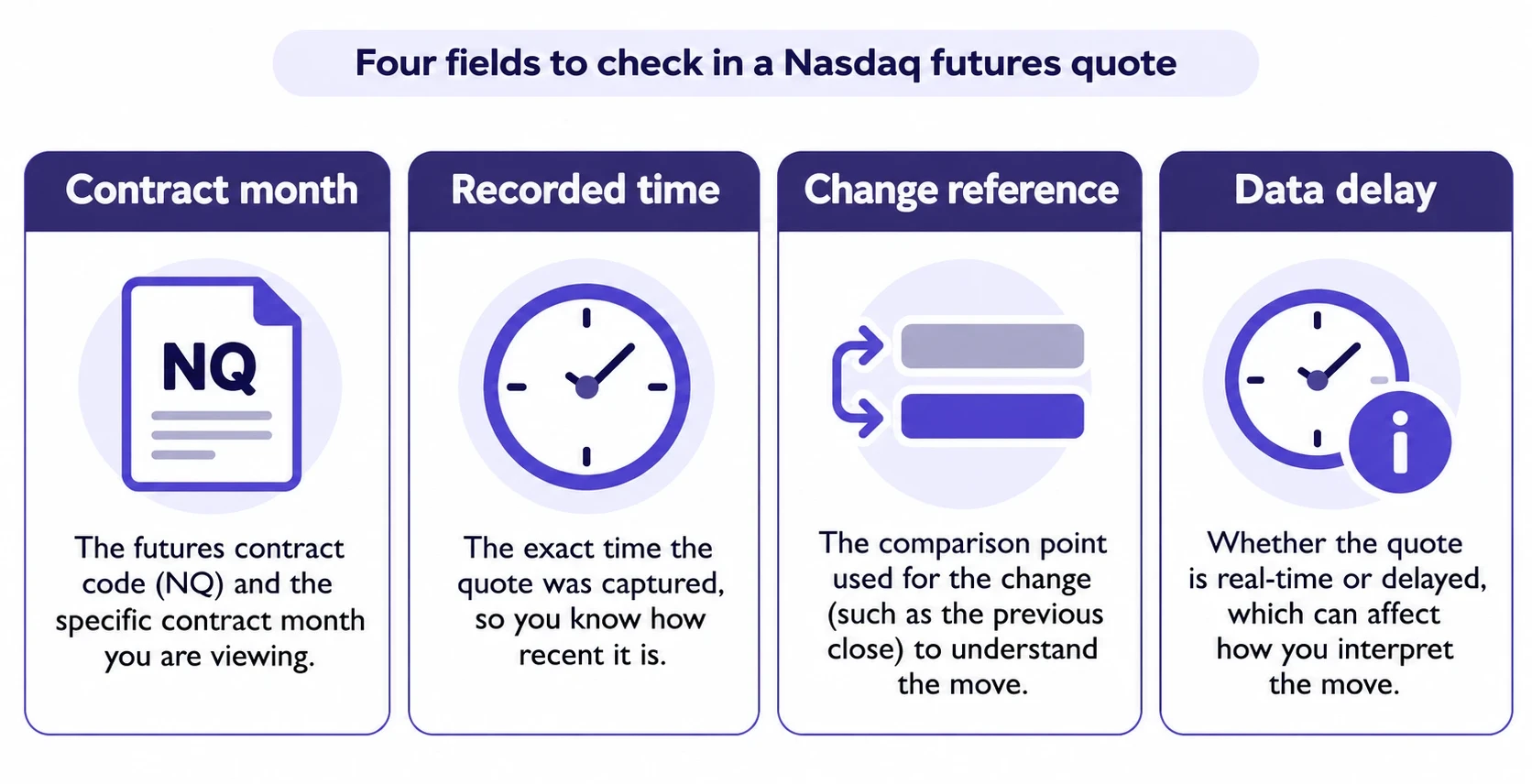
The number on a futures screen also needs context. Check which contract month is shown, when the quote was recorded, whether the feed is delayed, and what reference price the percentage change uses. Futures can trade outside regular stock-market hours, and CME explains that interest and expected dividends affect the relationship between futures and a cash index. Subtracting a futures price from the previous cash-index close is not a reliable way to predict the opening gap.
Why AI shares do not move futures equally?
Larger companies generally have more influence on a modified market-capitalization-weighted index than smaller ones. A move in Nvidia can therefore matter more to Nasdaq-100 futures than a similar percentage move in a much smaller constituent. The effect still depends on the actual index weight, other components, and the market’s response to the news.
A Nasdaq listing does not automatically make a company part of the Nasdaq-100. Nasdaq’s published index methodology sets separate eligibility and inclusion procedures for newly listed companies. Anthropic’s IPO can affect confidence in AI-related shares without its stock automatically contributing to the Nasdaq-100 calculation.
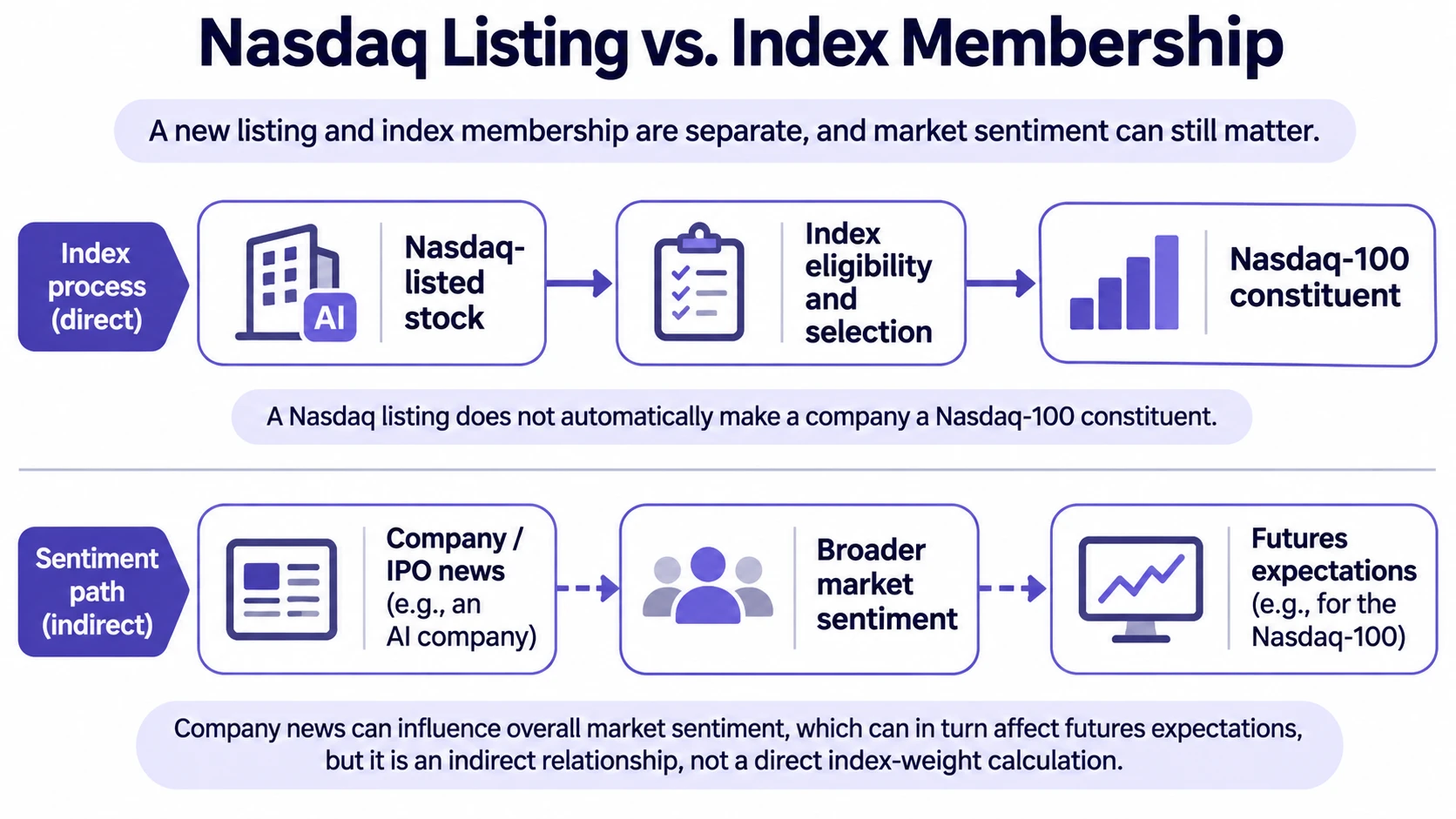
That distinction is especially useful when news about one company dominates the morning. If AI chipmakers are down together, the index signal may reflect a broader technology move. If only one newly listed stock is volatile, its price alone cannot explain the futures contract. Neither pattern proves what will happen after the opening bell.
How to interpret the signal before the open?
Start with the contract name, its percentage move, the exact time, and the reference used for the change. Then compare the Nasdaq-100 futures move with S&P 500 and Dow futures during the same snapshot. A larger Nasdaq decline can suggest technology-related pressure, but it does not identify the cause by itself.
Next, inspect the premarket moves and verified news affecting major Nasdaq-100 companies. Separate their direct index influence from broader sentiment around AI spending, earnings, borrowing costs, and new share listings. Do not assume every AI company mentioned in a headline is an index constituent.
Finally, wait for regular trading if the question is how the stock index actually performs. Nasdaq’s published schedule sets the normal U.S. stock session at 9:30 a.m. to 4:00 p.m. ET, with stock premarket trading from 4:00 a.m. to 9:30 a.m. ET. Those hours are different from the nearly continuous futures trading session.
Important: Futures are leveraged financial contracts. The Commodity Futures Trading Commission warns that losses can exceed an initial margin deposit. Checking futures to understand market conditions does not require trading them, and a premarket move is not a guarantee of a profitable trade.
The November 20 decline illustrates the limit of the signal. Nasdaq-100 futures showed early weakness as multiple AI-related stocks fell, but the contract did not establish where the cash market would open or finish. Reading it alongside company news, index composition, other futures and the clock produces a more accurate picture than watching one percentage in isolation.

Tech Bonafide is the editorial identity of TechBonafide, an independent technology publication covering AI, software, cybersecurity, gadgets, and emerging technology.