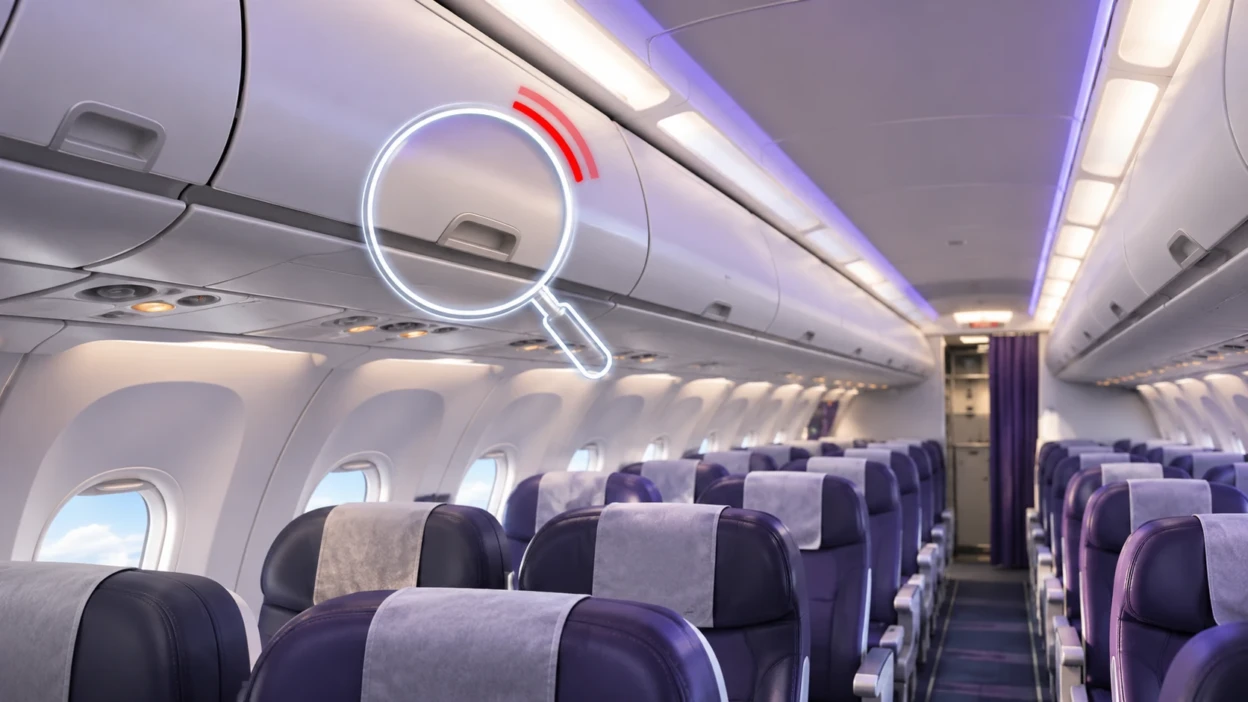
The U.S. Federal Aviation Administration (FAA) has proposed inspections of certain overhead baggage compartments on older Airbus A319 aircraft and selected A318, A320 and A321 jets. The proposal published on November 5, 2026 follows reports that components securing some overhead bins had shifted from their intended positions. The proposal is not yet a final U.S. airworthiness directive.
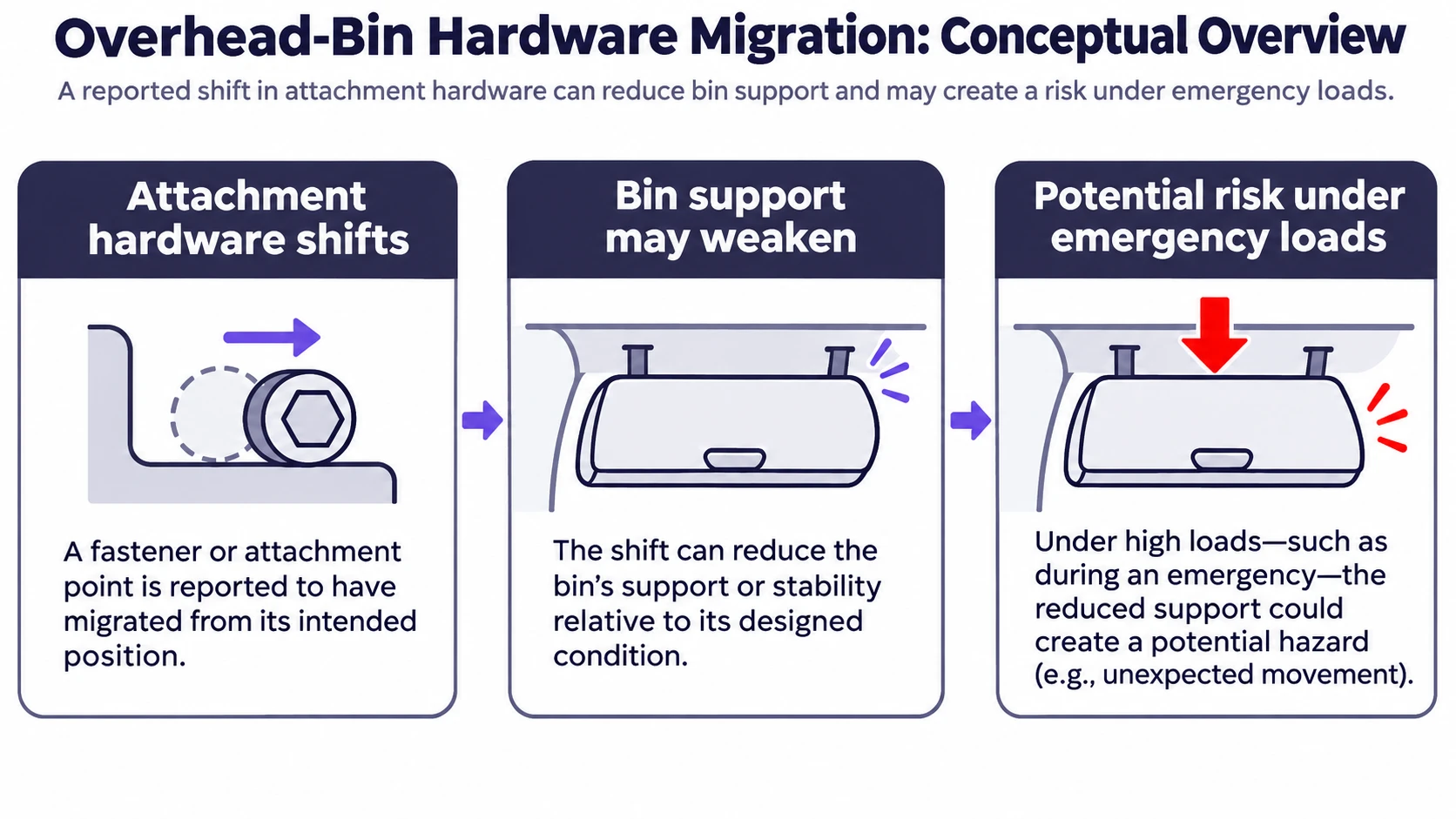
Regulators identified the issue on aircraft fitted with specified overhead stowage compartments supplied by ARIES. According to the FAA, bushings, retainer rings and pins at attachment points had moved out of position. Possible contributing factors include loads on the attachments and maintenance during bin removal or reinstallation, although the notices do not establish a single cause in every case.
The concern is not simply whether a compartment closes properly during routine flight. Regulators warn that damaged attachment points could weaken a bin when an aircraft is subjected to emergency landing loads. In that situation, a bin might detach, injure occupants or obstruct an evacuation route. These are potential risks described in the regulatory documents, not evidence that every covered aircraft has a defective bin.
 Under the FAA proposal, operators would carry out a one-time visual inspection of affected compartments and take additional inspection or repair steps when problems are found. The proposal would also restrict installation of affected parts. It does not order the immediate grounding of every aircraft in the A319 or A320 family.
For the A319, the listed models are A319-111, -112, -113, -114, -115, -131, -132 and -133. Selected A318, A320 and A321 versions are also included. A319neo variants are not listed; they should not be confused with the newer aircraft described in TechBonafide’s A319neo guide. Whether a particular aircraft requires action depends on the directive’s detailed applicability and installed parts, not its family name alone.
This is not the first regulatory response to the issue. The European Union Aviation Safety Agency issued directive 2025-0248 on November 6, 2025, and it took effect on November 20, 2025. That directive addresses specified ARIES overhead bins and calls for inspections and corrective work where applicable. The FAA’s new proposal would introduce corresponding U.S. requirements, with some differences, if a final rule is adopted.
The FAA estimates that the proposal would affect 1,370 aircraft registered in the United States across the listed models. It estimates basic inspection costs of up to $425 per aircraft, or up to $582,250 for U.S. operators in total. Those figures are regulatory cost estimates, not a count of damaged bins or a prediction that every aircraft will need repairs.
The FAA is accepting comments through December 21, 2026, under docket FAA-2026-13800. The agency may change the proposal after reviewing submissions. No final U.S. compliance date is established by this notice.
For passengers, the proposal does not introduce a new travel procedure. The immediate responsibility, if a rule is finalized, would sit with aircraft operators and their maintenance programs. The next important development is the FAA’s decision on whether to adopt the inspections and, if so, the final compliance terms.

Tech Bonafide is the editorial identity of TechBonafide, an independent technology publication covering AI, software, cybersecurity, gadgets, and emerging technology.