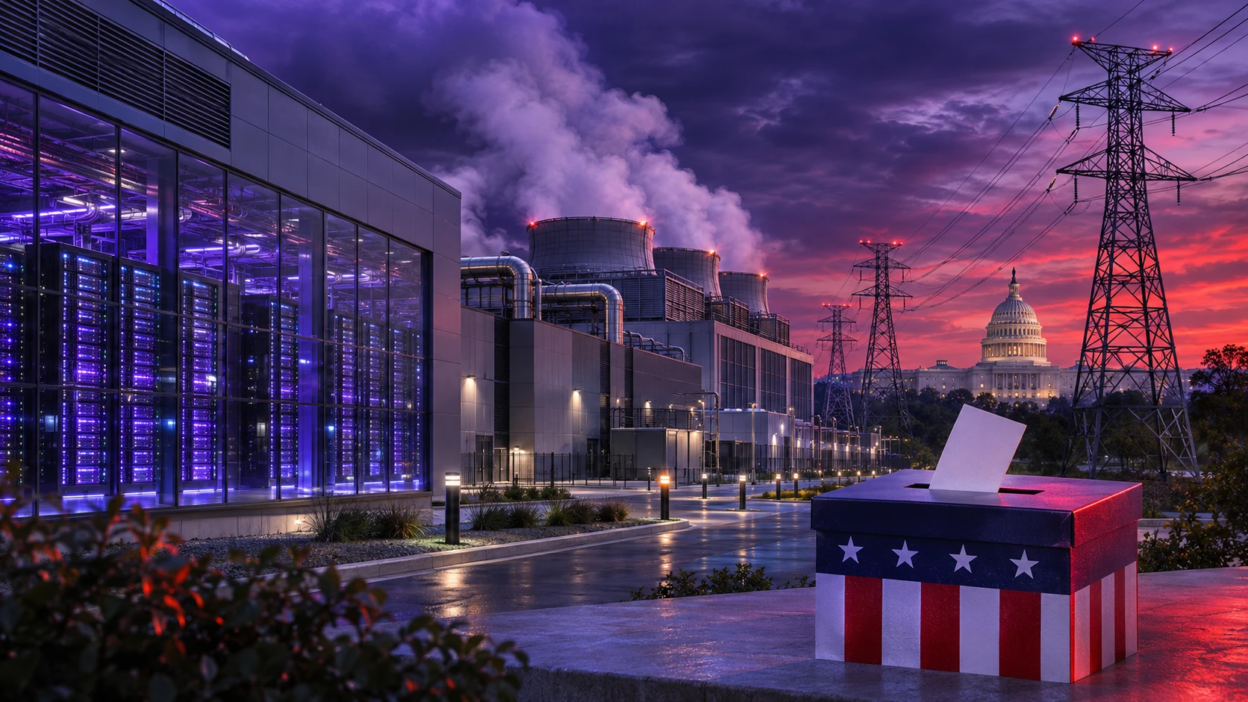
The November 3, 2026, US midterm elections have raised fresh concerns about artificial intelligence data center expansion, particularly in Texas and Georgia. Democratic candidates Gina Hinojosa and Keisha Lance Bottoms, who campaigned for stronger oversight of large data center projects, are projected to win their states’ governor races. Their victories could lead to tougher rules for new AI infrastructure, although the results remain unofficial and future policy changes have not yet been decided.
The development gained attention on November 4 as investors began assessing how the election results could affect future construction. Major technology companies depend on large data centers to power AI systems, cloud services and other digital platforms. Projects such as Anthropic’s new AI data-center platform show how businesses are investing in additional computing capacity to support growing demand. However, concerns about electricity costs, water consumption and environmental effects are creating new challenges for the industry.
One of the most significant election outcomes came from Texas, where the Texas Secretary of State’s election results show Democrat Gina Hinojosa ahead of Republican Governor Greg Abbott. During her campaign, Hinojosa called for a temporary moratorium on new data center development until state lawmakers could introduce stronger protections for electricity customers, water supplies and nearby communities. Her victory increases the possibility of additional regulations, but any new restrictions would depend on government decisions after she takes office.
Texas has become a major location for AI infrastructure because of its available land, energy resources and business investment. Several technology companies have planned large facilities in the state to support their growing computing needs. Any lengthy delay in construction approvals could affect their expansion plans and increase development costs.
However, Texas had already taken action against unrestricted data center expansion before the election. On September 21, 2026, Governor Greg Abbott directed the Texas Commission on Environmental Quality to stop issuing permits sought by data centers while state authorities completed reviews of electricity demand and water use. Hinojosa had called for broader protections through state legislation. This means the election could change how Texas develops its long-term data center policy rather than introducing restrictions for the first time.
A similar political shift took place in Georgia, where Georgia’s unofficial election results support the projected victory of Democrat Keisha Lance Bottoms over Republican Rick Jackson in the governor’s race. Bottoms campaigned for a pause on new data center construction while the state reviews the industry’s effects on electricity bills, water resources and local communities. The Atlanta area is one of the country’s major data center construction markets, making Georgia’s future policies important for technology companies planning new facilities. However, the election result alone does not introduce a statewide construction ban.
The debate comes as demand for AI computing power continues to grow. Modern AI data centers use powerful processors, networking equipment and cooling systems that require reliable electricity supplies. The technical requirements of AI training and inference facilities can differ depending on how the computing systems are used. According to Lawrence Berkeley National Laboratory’s 2025 update, US data centers consumed an estimated 192 terawatt-hours of electricity in 2024, representing about 4.7% of the country’s total electricity use. The report projects that demand could increase substantially by 2030. Some data center cooling systems also use significant amounts of water, making local resource availability an important consideration when approving new facilities.
Residents living near proposed data center locations have raised concerns about increasing electricity bills, pressure on local water resources, construction noise and changes to nearby neighborhoods. These concerns are part of a wider AI data-center power crunch that is affecting infrastructure planning and investment decisions. Some communities also question whether these projects create enough permanent jobs to justify tax benefits and other financial incentives offered to developers.
The election results also increased uncertainty among investors in AI-related businesses. According to November 4 market reporting, shares of several semiconductor and technology companies, including TSMC, Samsung Electronics, SK Hynix and Kioxia, declined during Asian trading as investors assessed the possibility of tighter US data center regulations. Investors were also concerned about the cost and profitability of large AI infrastructure projects. The market reaction does not confirm that construction will slow, but future permitting restrictions could affect companies supplying chips, servers and other data center equipment.
However, the election results do not mean that existing AI data centers will close or that every planned project will be canceled. Facilities already operating, projects under construction and developments still awaiting permits may face different requirements. The effect on any individual project will depend on its location, existing approvals and future state or local government decisions. Companies planning new facilities may face greater uncertainty if regulators introduce additional environmental reviews or infrastructure requirements. Similar concerns have already influenced new data center rules in Virginia, where policymakers have introduced additional oversight of large computing facilities.
Technology companies may also respond by changing how they develop new facilities. Some could invest more heavily in renewable energy, advanced cooling systems and equipment that uses less electricity. Others may look for locations where power supplies and construction approvals are more predictable.
The situation highlights a growing challenge for the technology industry. Businesses want to expand AI infrastructure quickly to meet rising demand, but communities increasingly want stronger protection against the costs and environmental effects of large computing facilities.
Restrictions on new data center construction would not automatically reduce demand for artificial intelligence services. Companies and consumers could continue using AI tools even if the development of new computing facilities becomes slower or more expensive. However, delays in expanding computing capacity could create additional costs and challenges for AI providers trying to meet future demand.
For cloud computing providers, semiconductor manufacturers and other technology businesses, the coming months could be important. Once the incoming governors take office, their administrations may review data center permitting rules, electricity requirements, water protections and financial incentives. Technology companies will need to watch whether campaign proposals become formal policies and how those decisions affect the approval of future projects.
The November 2026 US elections highlight the growing importance of data center development in state politics. Concerns about electricity prices, water availability and the effects of large construction projects are influencing discussions about future AI investment. While demand for artificial intelligence remains strong, the speed of infrastructure expansion could increasingly depend on access to reliable power, regulatory approvals and support from local communities. The next major development will be whether the incoming Texas and Georgia administrations turn their campaign proposals into binding rules.