

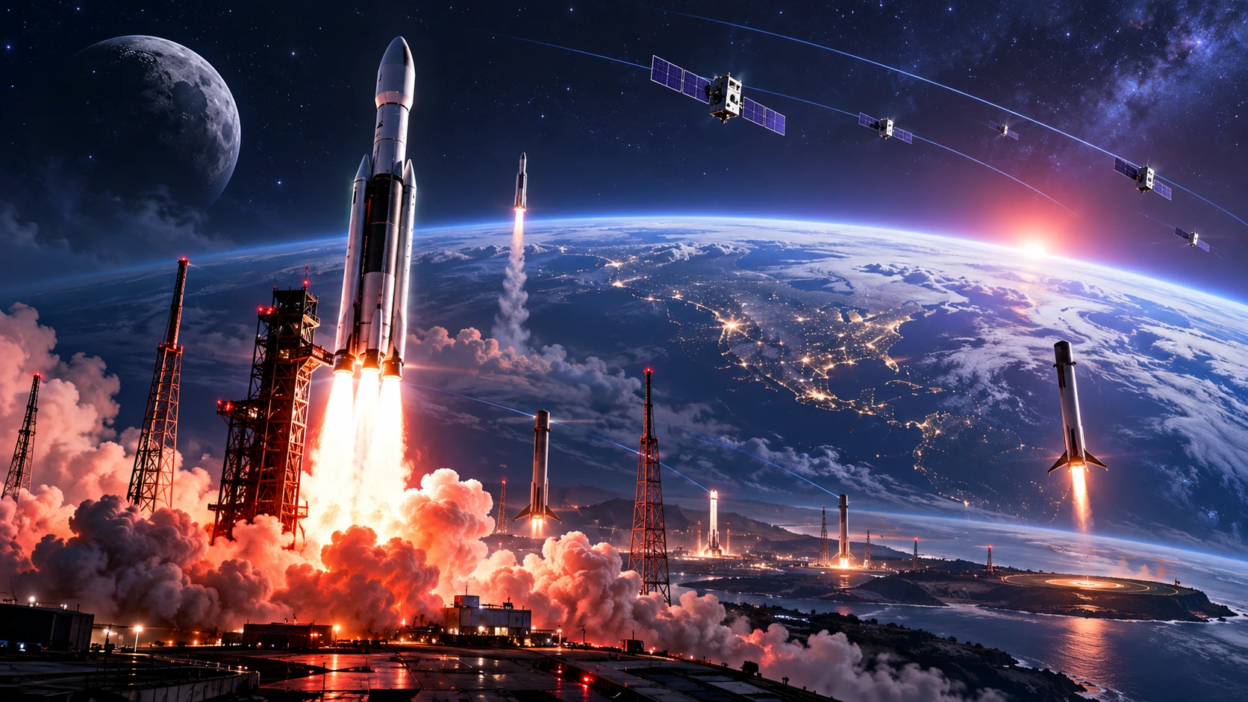
World Space Week 2026 is being observed around the world from October 4 to 10 under the theme “Rocket Revolution,” highlighting how reusable launch systems, commercial providers and new space participants are changing access to orbit.
The annual observance was established by the United Nations General Assembly in 1999. Its dates mark two major milestones in space history: the launch of Sputnik 1 on October 4, 1957, and the entry into force of the Outer Space Treaty on October 10, 1967.
For decades, access to orbit was dominated by major government space programs. Today, commercial launch companies, startups, universities and a growing number of national space programs are expanding who can build spacecraft, launch payloads and participate in space missions.
One of the biggest changes is the growth of reusable launch systems. Many traditional launch vehicles discarded major hardware after a mission, while newer systems are designed to recover and reuse important components. Reusability can help reduce recurring launch costs and support a higher launch frequency.
Recent developments, including SpaceX’s Starship orbital flight, also show how quickly next-generation launch systems are evolving. More frequent and capable launches could make it easier to deploy satellites, carry out scientific missions and test new technologies in orbit.
Lower launch costs and wider access to launch services are also creating opportunities for smaller organizations. Universities can develop research satellites, startups can build space-based services, and countries without large launch programs can take part in satellite missions more easily than in the past.
Small satellites have become an important part of this shift because they can support Earth observation, communications, weather monitoring, agriculture, disaster response and scientific research without requiring the scale of many traditional spacecraft.
More experimental missions are also combining satellites with advanced computing. Google’s Project Suncatcher, for example, is preparing to test AI hardware in orbit as researchers explore whether powerful computing systems could eventually operate beyond traditional data centers on Earth.
Artificial intelligence is becoming more closely connected with modern space systems as well. AI can help analyze large amounts of satellite data, automate some spacecraft operations and process information closer to where it is collected.
The expanding commercial space industry is also giving companies more opportunities to offer launch services, satellite communications, Earth-imaging products and other space-based technologies. This wider participation is one of the main ideas behind the “Rocket Revolution” theme.
However, easier access to orbit also creates challenges. A growing number of spacecraft means governments and companies must pay closer attention to orbital congestion, space debris, responsible operations and the long-term sustainability of the space environment.
World Space Week also places a strong focus on education and public engagement. Events held during the week give students, teachers, researchers and space organizations opportunities to discuss new technologies and encourage more young people to explore careers in science, engineering and space research.
Almost seven decades after Sputnik 1 opened the Space Age, access to orbit is continuing to change. Rockets are becoming more reusable, commercial companies are playing a larger role, and smaller organizations are gaining opportunities that were once available mainly to major governments.
The next stage of the rocket revolution may therefore be about more than reaching space faster or at lower cost. It could also shape how satellites, AI systems and other space technologies become part of everyday services and scientific work in the years ahead.