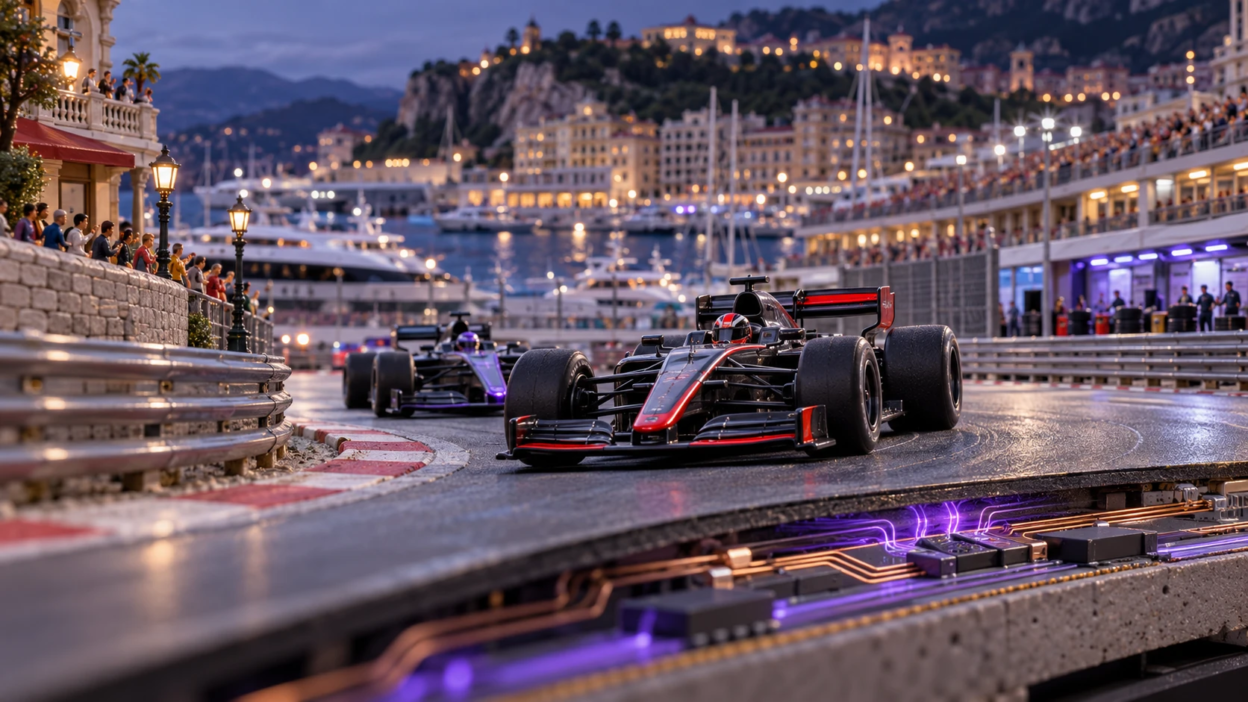
Miniatur Wunderland in Hamburg, Germany, has been preparing miniature Audi Formula 1 cars for its detailed Monaco racing display. In an April 2026 construction update, the attraction confirmed that Audi and Cadillac racing models, along with their pit areas, were still being built. The additions are designed for an existing 1:87-scale racing system that uses magnetic technology, sensors, and computer software to create realistic motorsport action.
Miniatur Wunderland is known for its detailed miniature cities, moving trains, airports, and vehicles. Its Monaco section, which opened in April 2024, includes a 22-meter racing circuit built at a scale of 1:87. The miniature Formula 1 cars move without visible guide rails, creating realistic racing scenes through technology hidden beneath the road surface. The attraction’s official Monaco opening announcement provides details about the circuit’s launch and engineering.
Audi’s entry into Formula 1 for the 2026 season also brought changes to Miniatur Wunderland’s miniature racing project. In its April 2026 construction report, covering April 13–19, the attraction confirmed that miniature Audi and Cadillac vehicles and their pit facilities were still under construction. That report established the project’s status at the time, but it did not announce a completion date. A later completion announcement for these specific additions could not be verified.
The miniature racing circuit uses a specially developed magnetic propulsion system instead of conventional onboard drive motors. Electronic circuits beneath the track create controlled magnetic fields that move the vehicles forward. Each miniature racing car contains a Halbach array, an arrangement of permanent magnets that concentrates magnetic force in a particular direction. Miniatur Wunderland explains this system in its Formula 1 technology guide.
The Monaco racing system combines position tracking, electronic control, and specially developed software to manage the miniature vehicles. According to Miniatur Wunderland, the circuit uses approximately 5,700 position sensors and another 2,800 sensors to monitor track temperature. These components work with electronic controllers to coordinate the cars’ movement.
The software manages racing behavior such as acceleration, braking, overtaking, and pit stops. Because each vehicle can be controlled individually, races can develop differently instead of following one fixed sequence. The system demonstrates how precisely coordinated electronics and software can create realistic movement on a small scale.
The Monaco display also features miniature Formula E racing, bringing another form of motorsport to the attraction. Miniatur Wunderland says Formula E is featured every third race. The same miniature venue can therefore recreate different racing events using its advanced electronic control system.
Audi made its Formula 1 debut at the Australian Grand Prix in Melbourne on March 8, 2026. Its factory team introduced the Audi R26 during a major change in the sport’s technical regulations. The new rules place greater emphasis on hybrid power systems, increased electrical output, and sustainable fuels. Audi’s official Formula 1 debut announcement provides more details about the team’s entry into the championship.
Recreating modern Formula 1 cars at a 1:87 scale presents major design challenges. Miniatur Wunderland explains that simply shrinking original vehicle designs does not work because some components become too thin to reproduce. Its model-building team therefore creates specially adapted miniature car bodies before fitting them with the magnetic components needed for racing.
Miniatur Wunderland’s racing system shows how software, electronics, and sensor feedback can coordinate moving objects without direct human control. Similar principles of automated movement and continuous monitoring are used in industrial equipment and robotics. Readers can explore related applications in our guide to how automation machines are changing industries.
For visitors, the attraction offers more than a display of miniature vehicles. It shows how precise electronic controls can reproduce aspects of a real racing event, including overtaking and pit stops. This is different from the sensors and assistance systems found in full-size vehicles, which are explored in our guide to vehicle technology advancements.
Miniatur Wunderland’s Audi Formula 1 model project brings the 2026 racing season into an already advanced miniature motorsport display. While the attraction’s April update confirmed that the Audi and Cadillac additions were still under construction, the existing Monaco circuit demonstrates what magnetic propulsion, precise sensors, and computer-controlled movement can achieve at a very small scale.