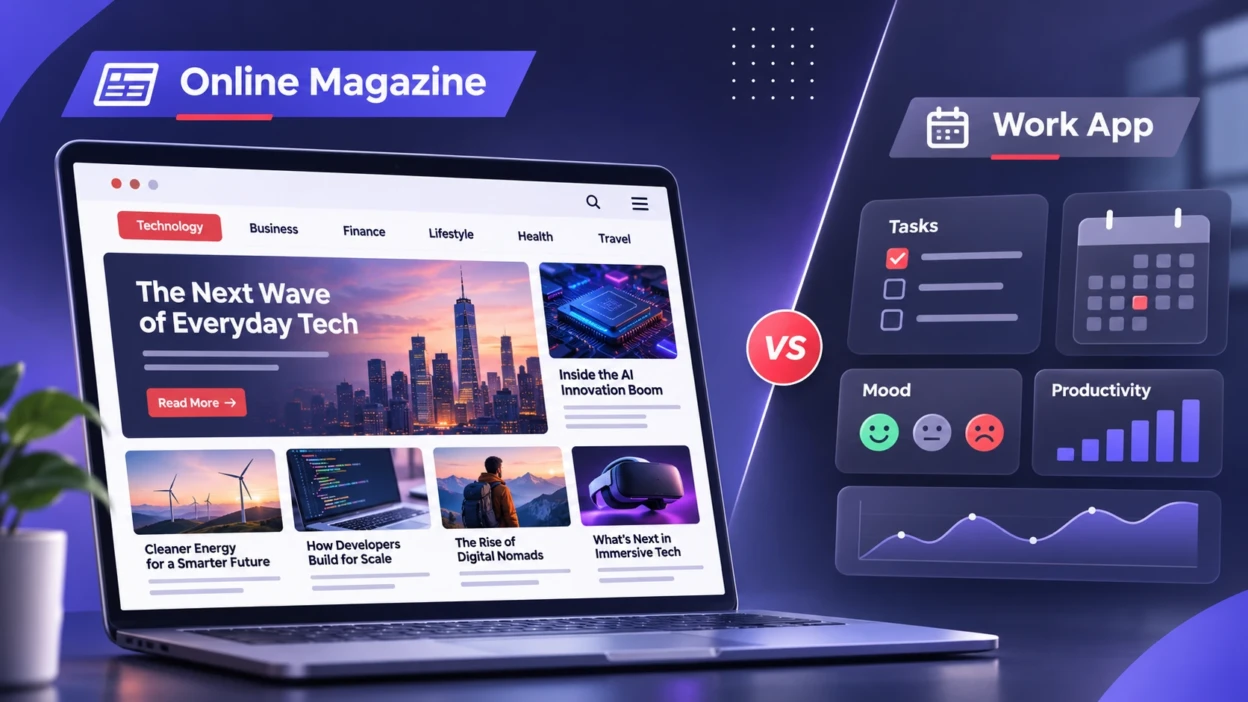
OnlyWorkMoods.com sounds like a website that might help people track their emotions at work, organize daily tasks, or improve productivity. However, published examinations describe something different: a general-interest article website that works more like an online magazine than a workplace application.
Instead of recording moods or generating personalized work reports, the website is described as publishing articles about business, finance, technology, careers, education, and everyday life. No operational mood tracker, task-management dashboard, or employee analytics system has been documented in the available examinations.
The difference matters because reading advice and using software are not the same experience. Understanding what OnlyWorkMoods.com actually offers can help readers decide whether it matches their needs and how much confidence to place in its articles.
Why the Name Suggests a Work App?
The words “work” and “moods” create a particular expectation. Someone encountering the name for the first time might imagine an application designed to measure workplace satisfaction, record daily energy levels, or help employees manage stress.
That expectation is understandable. Workplace software often uses terms such as mood, focus, productivity, and wellbeing to describe its functions. A dedicated tracking application might allow users to record how they feel, review previous entries, or observe patterns over time.
OnlyWorkMoods.com, however, is not documented as offering those functions. An RSL Online examination of the website describes an article-based publication without an apparent mood-tracking system, personal dashboard, or workplace analytics tool.
This illustrates a useful distinction: a website’s name can describe a broad editorial identity without describing a software product. Readers should judge the service by its actual functions rather than the words in its domain name.
What Makes It Feel Like an Online Magazine?
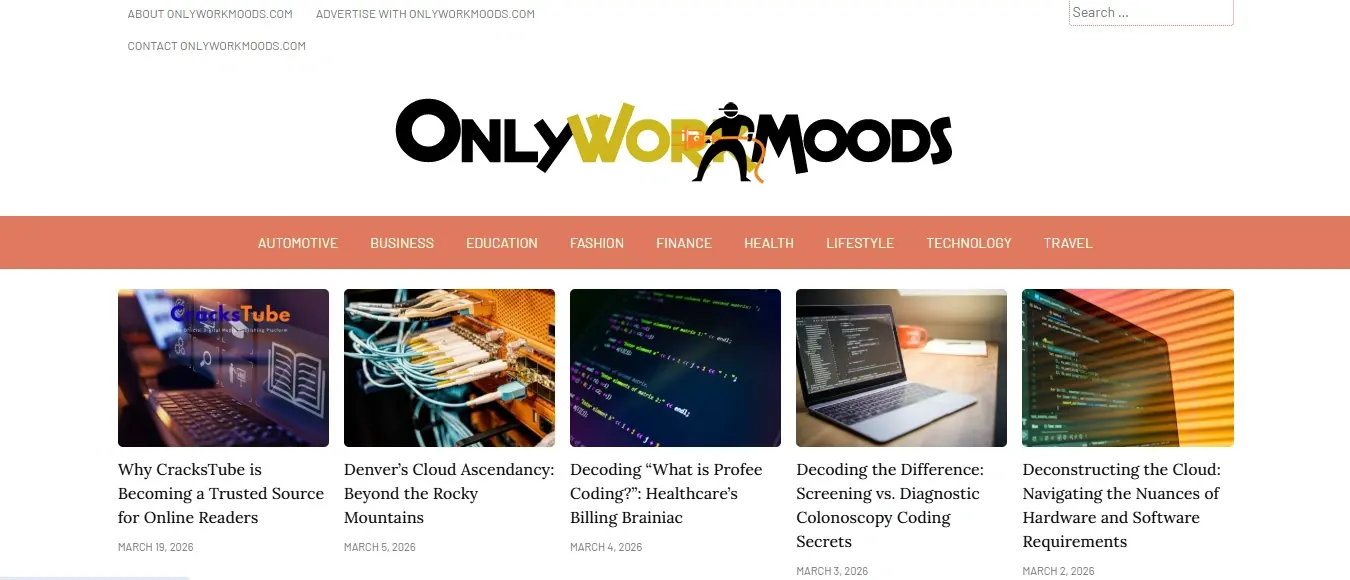
Online magazines organize information around stories, headlines, authors, and subject categories. Their main purpose is to help visitors discover and read published material. A work application usually has a different structure, built around activities such as entering information, managing projects, setting reminders, or viewing personal results.
Independent descriptions of OnlyWorkMoods.com identify several features associated with an editorial website:
- Article-based navigation: Visitors encounter written posts rather than a documented software workspace.
- Multiple subject categories: Content is grouped by topics rather than organized around personal work records.
- Individual article pages: The reading experience centers on headlines and informational content.
- Publishing information: Reviews describe About, Contact, and policy pages associated with an online publication.
- General-interest coverage: Many subjects extend beyond workplace emotions or productivity.
A Techi CAD profile of OnlyWorkMoods.com describes its article feed, broad categories, and publication-related information pages. That reported structure explains why the website resembles a magazine rather than a specialized digital tool.
There is also an important difference between publishing productivity advice and delivering productivity software. An article can explain how to plan a working day, but it does not automatically provide an interactive calendar, store tasks, or measure whether a routine improves performance.
What Topics Does OnlyWorkMoods Cover?
The website’s reported subject range goes beyond work and careers. Independent reviews identify categories covering business, finance, technology, education, automotive topics, health, home improvement, law, sports, travel, and general interests.
For example, an archive-based examination by ActiveMyHouse discusses articles about small-business pricing, talent acquisition, online games, educational topics, and sports. These examples show that the publication is not limited to workplace wellbeing.
This variety can be useful for readers who enjoy exploring different subjects in one place. Someone looking into a business decision might also discover an article about technology or personal finance.
However, broad coverage has a limitation. A publication that discusses finance, health, legal questions, and technology needs reliable evidence for each subject. Being informative on one topic does not automatically establish expertise in another.
The more important question is therefore not how many categories the website offers, but whether an individual article provides accurate, relevant, and sufficiently supported information.
Online Magazine vs Work App
The easiest way to understand the difference is to compare what a reader can learn from an article with what a software user expects to do inside an application.
| Function | Online Magazine | Work or Mood App |
|---|---|---|
| Main purpose | Publish and organize information | Help users complete or track specific activities |
| Typical interaction | Browse categories and read articles | Enter data, manage tasks, or review results |
| Personal records | Not necessary for ordinary reading | May store moods, tasks, notes, or progress |
| Output | General explanations and ideas | Personalized records, reminders, or reports, depending on the product |
These are general differences between publishing and software, not results from hands-on testing of OnlyWorkMoods.com. The available website examinations place OnlyWorkMoods.com in the publication category and do not establish the existence of the interactive functions shown in the app column.
A useful example is a daily work-mood journal. An article might explain why reflecting on your workday can be helpful. A dedicated journal application would provide a place to save entries and look back at them. The article supplies an idea, while the application provides a mechanism for recording it.
What If You Wanted an Actual Work Tool?
If you arrived at OnlyWorkMoods.com expecting software, begin by identifying the specific task you want to complete. Different needs call for different tools.
- To record daily moods: Look for a dedicated mood journal with entry history and clear privacy controls.
- To organize work: Choose a task manager that supports priorities, deadlines, and reminders.
- To measure team satisfaction: Look for a workplace survey or employee-feedback product with appropriate confidentiality protections.
- To improve focus: Consider a timer, scheduling tool, or habit tracker that supports the routine you want to follow.
- To learn about work and everyday topics: An article-based publication may be sufficient without any application.
Before choosing software, check which features are actually available, whether an account is required, what data the application collects, and how users can export or delete their information.
For workplace mood or employee-feedback systems, privacy deserves particular attention because the information may reveal sensitive personal experiences. A product’s privacy policy and organizational controls matter more than an appealing name.
How to Evaluate Its Articles?
OnlyWorkMoods.com can be assessed using the same practical standards that apply to other online publications. The aim is not to label an entire website trustworthy or untrustworthy based on its appearance. It is to decide whether a particular article offers enough evidence for the decision you are making.
- Check the subject. Decide whether the article answers your actual question or merely discusses a related topic.
- Check the author. Look for a full name, relevant experience, and a way to understand the writer’s expertise.
- Check the publication date. Older material may still be useful, but software instructions, financial rules, and legal information can change.
- Look for supporting evidence. Important facts should connect to reliable documentation, original research, official guidance, or identifiable reporting.
- Consider commercial relationships. Look for advertising, sponsorship, or affiliate disclosures when recommendations involve products or services.
- Verify consequential advice. Confirm important financial, medical, legal, or security claims with relevant primary or specialist sources before acting.
Third-party profiles have raised questions about the level of author identification on OnlyWorkMoods.com. They also report the existence of publication-related information pages. Those observations should be assessed separately: publishing an editorial policy is useful, but it does not independently prove that every article follows it.
For a broader method, TechBonafide’s guide on checking whether a technology website is trustworthy explains how to examine sourcing, accountability, and technical recommendations.
A well-designed page can make reading easier. It cannot replace evidence, identifiable expertise, or independent confirmation.
Check the Website Name and Publisher
Another source of confusion is the existence of similarly named websites. OnlyWorkMoods.com and TheOnlyWorkMoods.com are different domain names. The About page at TheOnlyWorkMoods.com describes a careers and professional-growth publication.
That does not establish a shared owner, business relationship, or official connection between the two domains. Readers should check the complete address before assuming that information found on one website applies to the other.
For OnlyWorkMoods.com itself, published profiles report that the public pages do not clearly identify the site’s legal owner or a detailed editorial team. This is a transparency limitation, not proof that the website is fraudulent or that its articles are inaccurate.
If a website unexpectedly asks for passwords, payment details, or software downloads, verify the destination before continuing. TechBonafide also provides a guide on checking a website before entering your password.
Keep two separate questions in mind: whether a website is technically safe to visit and whether its published advice is accurate. A secure connection alone cannot answer the second question.
Is OnlyWorkMoods Worth Reading?
OnlyWorkMoods.com may be useful to readers who want introductory articles about business, careers, technology, finance, and other general subjects. Its reported structure makes more sense when viewed as a multi-topic publication than as a productivity service.
It is a less suitable destination for someone who specifically needs mood logging, task management, team analytics, or personalized workplace reports. Those activities require actual software features, none of which have been established for this website in the available examinations.
Readers should also avoid assuming that broad editorial coverage guarantees specialist expertise. For everyday ideas, an introductory article may be enough. For decisions involving money, health, law, personal information, or technical security, independently verify the relevant claims.
Ultimately, the reason OnlyWorkMoods.com feels like an online magazine rather than a work app is straightforward: the documented experience centers on published information, not interactive work management. Treat it as a source of articles, evaluate each article on its merits, and choose a dedicated application when you need a tool that performs a specific task.

Tech Bonafide is the editorial identity of TechBonafide, an independent technology publication covering AI, software, cybersecurity, gadgets, and emerging technology.