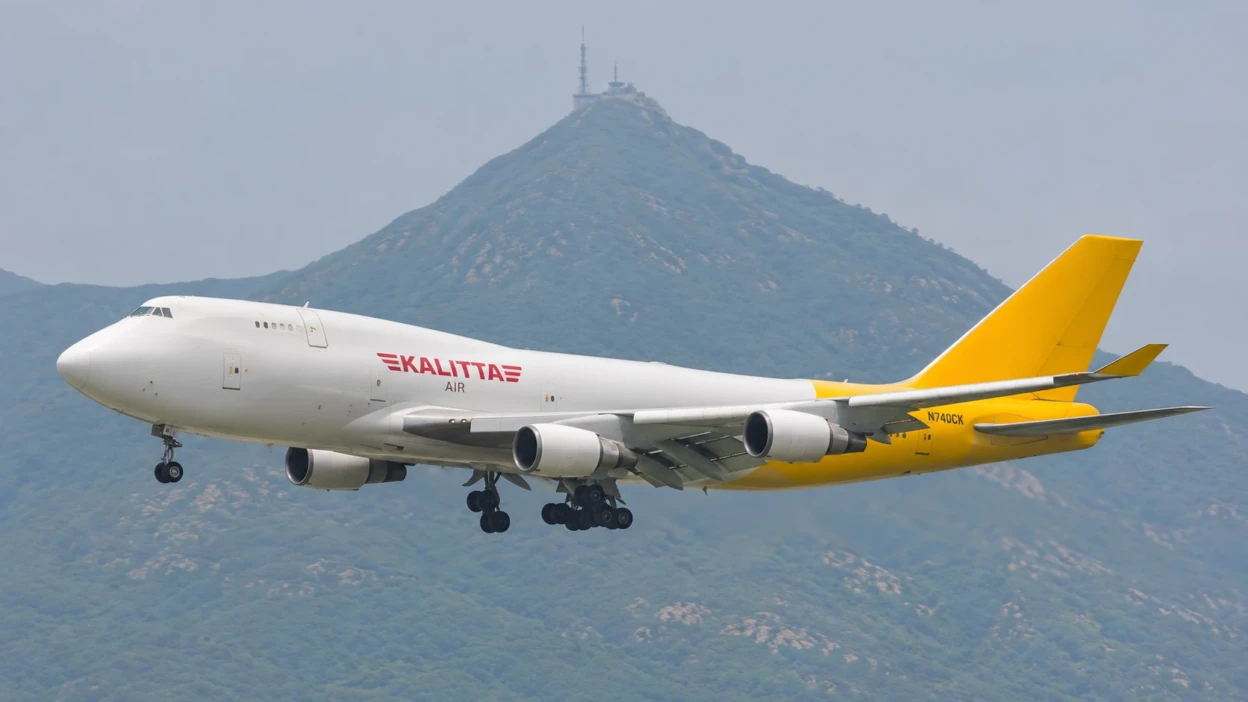
The US Federal Aviation Administration (FAA) has proposed new safety checks for Boeing 747-400 and 747-400F aircraft after a hydraulic pump problem was linked to a fire on a different Boeing aircraft. The proposal, published on November 13, 2026, would require operators to look for a particular pump and replace it where necessary.
According to the FAA’s proposed airworthiness directive, the action covers both passenger and cargo versions within the specified model series. It is a proposal rather than an active new requirement, and the FAA is accepting public comments until December 28, 2026.
The problem was first identified following a fire in the main landing gear wheel well of a Boeing 777. The FAA says investigators traced the incident to an alternating current motor pump (ACMP) that overheated after a fault in its electrical control system.
Investigators found a missing lock washer and nut in the electrical load control unit. According to the FAA, that fault allowed two-phase power to continue reaching the pump, causing it to overheat, leak hydraulic fluid and start a fire. The fire described in the regulatory record occurred on a Boeing 777, not on a Boeing 747.
The concern for the Boeing 747 is that the same pump design can also be installed on 747-400 and 747-400F aircraft. The proposed rule targets ACMP part number 731966. The FAA warns that an unchecked failure could start a fire in the wheel well, damage the airplane and threaten safe flight and landing. The notice does not identify a matching fire incident on a 747.
Under the proposal, operators would review maintenance records or inspect their aircraft to determine whether the affected pump is installed. If it is, they would need to carry out the applicable replacement actions described in Boeing’s March 5, 2026, service documentation. The proposed rule would also prohibit future installation of the affected part once it takes effect. The FAA says the redesigned pump includes protective fusible links intended to prevent overheating following an electrical phase failure.
The FAA estimates that 105 aircraft registered in the United States would fall within the scope of the proposed directive. It estimates that a replacement, where required, could cost up to $77,269 per aircraft in parts and labor. The regulator says it cannot determine how many airplanes would actually need that replacement.
The new 747 proposal follows an earlier FAA rule for Boeing 777 aircraft covering the same safety issue. That separate directive was published on September 28 and took effect on November 2, 2026. The 747 proposal does not cover the newer 747-8 model.
For passengers, the filing does not announce a blanket grounding of Boeing 747 aircraft or new travel restrictions. Its immediate implications are for airlines and maintenance teams, which must track the rulemaking and assess the relevant pump configurations if the proposal is adopted.
The FAA may revise the requirements after reviewing public comments. A final rule, if issued, would establish the actual compliance timetable and required work. Until then, the November 13 notice should be understood as a proposed safety measure, not a completed recall or proof of a fire on a Boeing 747.

Tech Bonafide is the editorial identity of TechBonafide, an independent technology publication covering AI, software, cybersecurity, gadgets, and emerging technology.