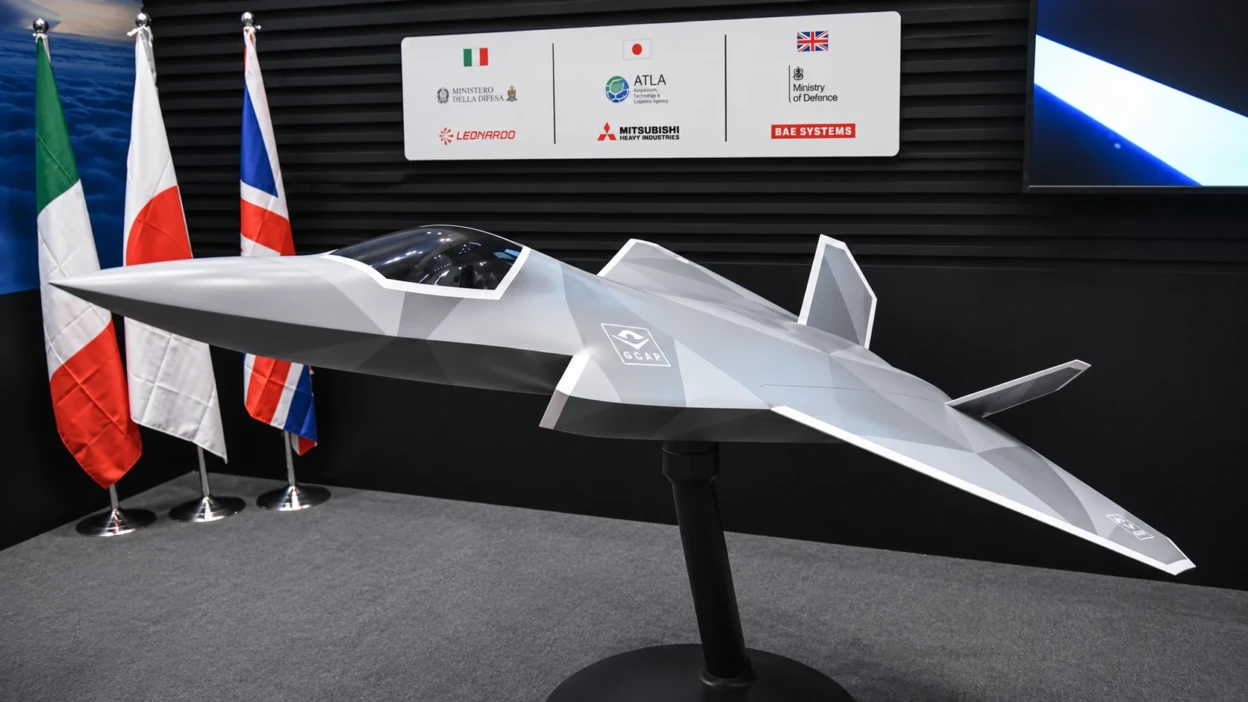
Italy says it supports Germany taking part in the Global Combat Air Programme (GCAP), the next-generation fighter aircraft project led by the United Kingdom, Italy and Japan. However, Rome has proposed that Germany initially participate as an observer rather than immediately becoming a full partner. The Italian Defence Ministry clarified its position on November 14, 2026, following reports of disagreement over Berlin’s possible involvement, according to Reuters’ report on the ministry’s statement.
The Italian government said its proposal would allow Germany to begin sharing information about the project while leaving open the possibility of full membership later. It argued that this approach would protect the programme’s existing development schedule and allow closer cooperation without disrupting work already underway. The ministry’s explanation was also published by Italian news agency Adnkronos.
The statement followed a Financial Times report that said Italy had resisted granting Germany an equal role in the fighter project. Rome disputed that interpretation and maintained that it welcomed German participation. The disagreement highlights an important distinction between supporting Germany’s eventual membership and agreeing to give it full decision-making and development rights immediately.
The defence ministers of Japan, Britain and Italy held a virtual meeting on November 11 to discuss GCAP. In an official statement published on November 12, Japan’s Ministry of Defense said the three countries had reaffirmed their commitment to continued cooperation. The public summary did not announce any change in the programme’s membership.
GCAP aims to develop a sixth-generation combat aircraft that the three countries intend to introduce into service from 2035. The project brings together major aerospace and defence companies, including Britain’s BAE Systems, Italy’s Leonardo and Japan’s Mitsubishi Heavy Industries. The planned aircraft is expected to use advanced digital engineering, sensors and software-based systems, although its final operational capabilities have yet to be demonstrated.
The development programme reached another milestone in July 2026 when the three governments awarded a jointly funded £4.6 billion contract to Edgewing, an international industry joint venture responsible for the aircraft’s next design stage. The contract supports further design work and testing. It does not represent the final total cost of developing, producing and operating the aircraft.
GCAP has already created a way for countries outside the founding partnership to participate. In July 2026, Canada became its first observer nation. The UK government said that status gives Canada greater access to information about the programme and potential industrial cooperation, but does not give it a decision-making role. Italy’s proposal for Germany would follow a similar broad approach, although no final German participation agreement has been announced.
Germany has been examining its options for future combat aircraft after difficulties with its previous fighter development partnership with France. During an October visit to Japan, German Chancellor Friedrich Merz confirmed that Berlin was considering a possible GCAP role, according to Reuters. Bringing Germany into GCAP could provide additional industrial expertise and financial support, but the countries would also need to address questions about development responsibilities, manufacturing work and costs.
For the Global Combat Air Programme, the main unanswered question is how Germany could participate without disrupting the existing partnership or its 2035 service target. Italy has publicly supported a path toward German involvement, but the terms of any future membership, Germany’s role in aircraft development and a possible timetable for joining remain unsettled.

Tech Bonafide is the editorial identity of TechBonafide, an independent technology publication covering AI, software, cybersecurity, gadgets, and emerging technology.