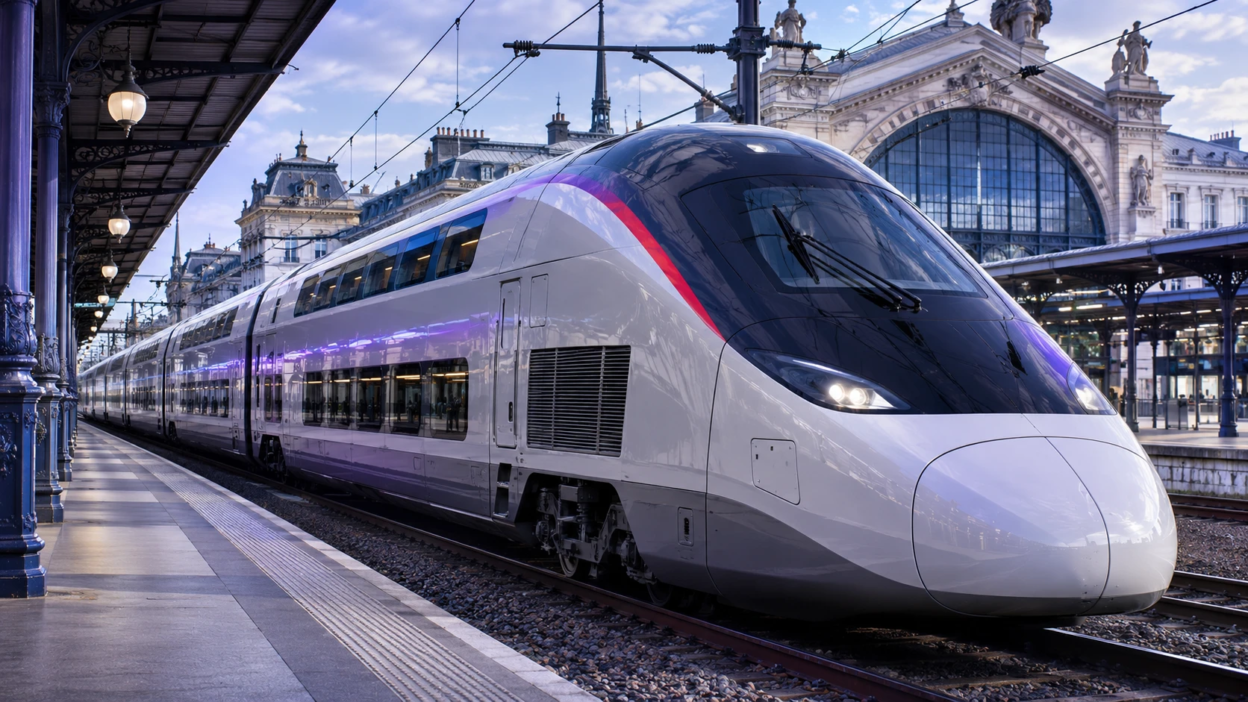
France’s fifth-generation high-speed train, developed under the name TGV M and introduced to passengers as the new TGV INOUI, made its debut on the Paris–Marseille route on November 6, 2026. The launch marks the beginning of a gradual rollout after repeated delays to the project, which was developed by French train manufacturer Alstom and national railway operator SNCF.
The new train is designed to offer passengers greater comfort, improved accessibility, better onboard technology, and lower energy consumption. It represents the fifth generation of France’s famous TGV high-speed rail system and introduces several engineering improvements intended to make rail travel more efficient.
The inaugural journey took place on November 6, 2026, between Paris Gare de Lyon and Marseille Saint-Charles. According to SNCF Voyageurs’ official introduction to the new-generation TGV, the first six trainsets are being introduced on the Paris–Marseille route, initially with one return journey per day. Services will gradually expand as more trains become available.
One of the biggest improvements in the Nouveau TGV M is its flexible passenger capacity. The double-decker train can accommodate up to 600 passengers in a configuration with first class, second class, and a bistro. Its maximum-capacity layout can hold up to 740 passengers. The new design provides approximately 20% more seats than the previous generation, allowing SNCF to transport more people without necessarily increasing the number of train journeys.
Despite its increased passenger capacity, the Nouveau TGV M is designed to consume approximately 20% less energy than existing TGV models. Its aerodynamic front design and more efficient traction systems help reduce energy use. According to Alstom’s published performance figures, the new train is also expected to deliver a 32% reduction in carbon dioxide emissions. These figures are manufacturer-reported performance estimates rather than independently measured results from the first passenger journey.
The Nouveau TGV M can reach operating speeds of up to 320 kilometers per hour (199 mph). Although this is similar to existing high-speed trains in France, the new model focuses on improving passenger experience, energy efficiency, and operating costs rather than simply increasing speed.
Inside the train, passengers will find redesigned seats, improved lighting, more luggage space, and additional charging options. Second-class seats provide approximately five centimeters of extra knee room through a slimmer seat-back design, while first-class seats are five centimeters wider than before. Adjustable headrests, individual power sockets, and improved seat materials are designed to make longer journeys more comfortable.
The new train also features improved Wi-Fi connectivity, modern charging facilities, and access to the TGV INOUI digital entertainment portal. SNCF has previously reported that the portal offers more than 600 entertainment options, including movies, podcasts, news, and games. Better onboard connectivity is becoming an important part of modern travel, with similar developments appearing in aviation, including easyJet’s upcoming Starlink Wi-Fi rollout.
Another important feature is the redesigned two-level Bistro TGV INOUI, located in carriage four. The lower level includes self-service refrigerators, food and drink options, and automatic payment terminals, with staff available to help passengers. The upper level offers a comfortable dining area with 28 seats, allowing travelers to enjoy refreshments during their journey.
Accessibility is another major focus of the new train. As explained in SNCF Voyageurs’ accessibility overview, the TGV M includes an integrated lifting platform and a system that helps bridge the gap between the train and station platform. These features are designed to allow wheelchair users to board independently. The train also includes dedicated accessible spaces, redesigned facilities, and room for up to eight bicycles.
The TGV M has been developed with a flexible interior design that allows SNCF to adjust seating arrangements and carriage configurations according to passenger demand. Digital technology also played a role during development, with SNCF using virtual reality tools to help design the driver’s cabin and accessible passenger spaces. This reflects the growing use of virtual reality in transportation for design, testing, and training. The train’s modular layout could also help SNCF respond to changing passenger needs and manage capacity more efficiently.
The new-generation train also includes connected monitoring systems designed to make maintenance more efficient. These systems can provide information about the condition of important train components, helping maintenance teams identify potential problems and plan repairs before equipment failures disrupt services. Alstom expects the design and monitoring technology to reduce maintenance costs compared with older TGV models.
The TGV M was initially expected to enter service around the 2024 Paris Olympic Games, but its introduction was postponed several times. The project required extensive technical testing, adjustments, and certification work before passenger operations could begin. In its May 2026 certification announcement, SNCF confirmed that the European Union Agency for Railways had granted the train marketing authorization, marking an important milestone toward commercial service.
SNCF Voyageurs and Eurostar have ordered a combined 160 new-generation high-speed trainsets from Alstom. According to Alstom’s January 2026 order announcement, SNCF Voyageurs accounts for 130 of these trains, while Eurostar has ordered 30. Deliveries will take place over several years, supporting fleet modernization and future high-speed rail services across France and other European markets.
The initial rollout focuses on the Paris–Marseille route, where SNCF plans to increase services as more trainsets become available. The new-generation trains are intended to support a wider modernization of France’s high-speed rail network over the coming years, although the timing of additional routes will depend on fleet deliveries and operating plans.
The Nouveau TGV M marks an important step in France’s high-speed rail modernization. Rather than increasing the top operating speed, the new train focuses on carrying more passengers, reducing energy consumption, improving accessibility, and introducing smarter onboard systems. Its gradual rollout on the Paris–Marseille route will show how these improvements perform during regular passenger operations.