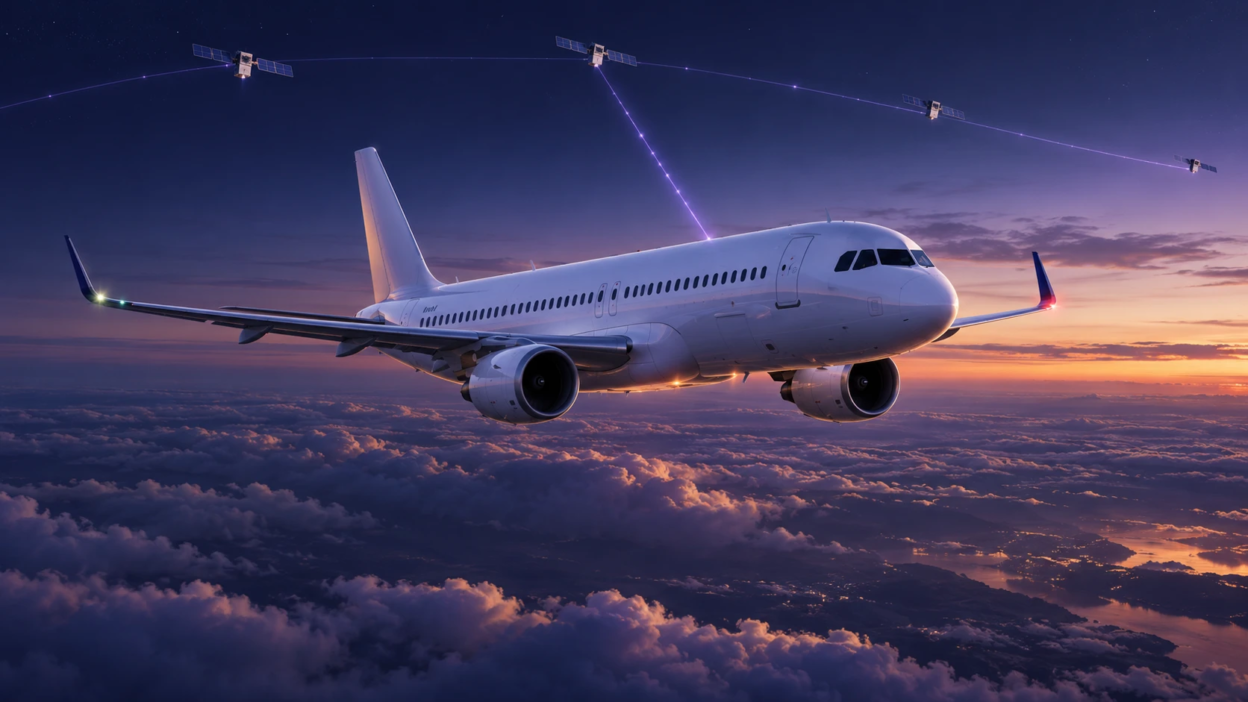
British budget airline easyJet announced on October 26, 2026, that it will introduce Starlink satellite internet on its flights, with installations beginning in the first half of 2027. According to easyJet’s official announcement, the service will be introduced gradually across its Airbus A320-family aircraft, with completion expected by early 2028. The partnership with SpaceX will give easyJet passengers access to onboard internet for the first time, although not every flight will offer the service when the rollout begins.
The new internet service will be installed across easyJet’s Airbus A320, A320neo, and A321neo aircraft. Passengers will be able to browse websites, watch videos, play online games, and communicate with friends or family using their smartphones, tablets, and laptops. The service aims to provide a faster and more reliable connection during flights, improving the travel experience for both holidaymakers and business passengers.
Starlink, operated by SpaceX, uses thousands of satellites in low Earth orbit to deliver internet connectivity. Because these satellites travel closer to Earth than traditional communications satellites, they can reduce latency, or the delay in sending and receiving data. Starlink’s aviation internet service is designed to support browsing, streaming, messaging, and other online activities during flights, although actual performance can vary. TechBonafide’s guide to Starlink internet speed and latency provides more background on the technology, but home internet speed figures should not be treated as guaranteed speeds on easyJet flights.
EasyJet operates more than 350 aircraft on over 1,200 routes and carried around 100 million passengers in 2025. The airline expects Starlink to make flying more convenient for travelers who want internet access during their journeys. However, the announced installation plan covers the Airbus A320, A320neo, and A321neo models rather than every aircraft in easyJet’s wider fleet. The airline has not announced plans to equip its older A319 aircraft as part of this rollout.
The planned internet service will also help passengers access useful travel information during flights. Customers will be able to check flight details through the easyJet app and website, review destination weather, find local transportation options, and explore tourist attractions before landing. EasyJet says the technology could also make it possible for passengers to order food and drinks directly from their seats using connected devices. However, the airline has not announced when such an ordering feature might become available.
EasyJet CEO Kenton Jarvis explained that staying connected has become increasingly important for modern travelers. Business passengers often need internet access to manage work, while holidaymakers may want entertainment or communication during their flights. The partnership with SpaceX is part of the airline’s wider effort to improve customer experience while continuing to offer affordable travel options.
One important question remains unanswered: whether easyJet passengers will receive Starlink internet for free or need to pay an additional fee. The airline has not announced its pricing plans or specific internet packages. It has also not confirmed which routes will receive the service first. More information about availability and access is expected as the first aircraft receive the technology in 2027.
EasyJet is joining a growing number of airlines adopting Starlink for onboard internet access. United Airlines has already expanded satellite-powered Wi-Fi across a substantial part of its operations, as TechBonafide reported in its coverage of United Airlines’ Starlink Wi-Fi rollout. Unlike United’s existing deployment, easyJet will not begin installing the technology until 2027. The growing interest in Starlink shows how satellite internet is becoming an important part of air travel, although installation costs and passenger pricing remain important considerations for budget airlines.
EasyJet’s partnership with Starlink could make high-speed onboard internet more widely available on European short-haul flights. Installations are scheduled to begin in the first half of 2027, with completion expected by early 2028. However, passengers should not expect the service on every flight immediately, and pricing details have yet to be confirmed. If the rollout proceeds as planned, millions of travelers could gain new options for entertainment, communication, and work while flying.