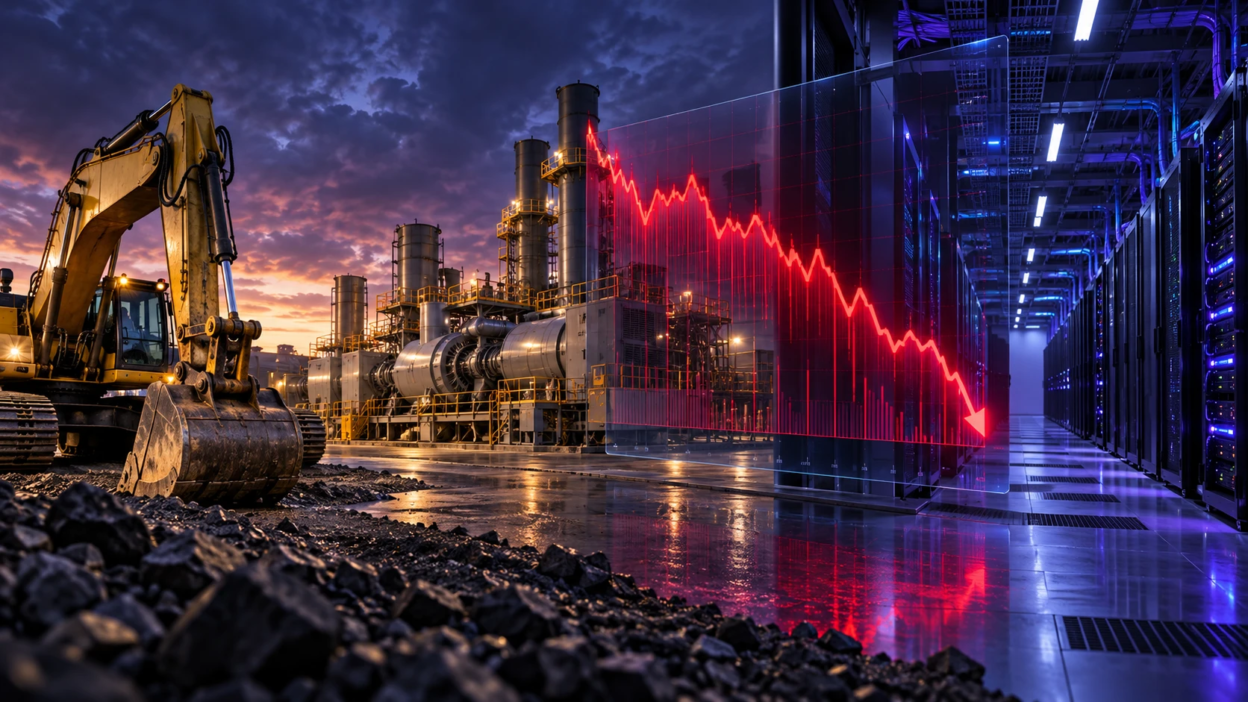
Caterpillar (NYSE: CAT) shares fell about 9% in premarket trading on October 29, 2026, even though the American construction and power equipment manufacturer reported stronger-than-expected third-quarter earnings. Revenue increased 17% to $20.7 billion, while demand for generators, industrial engines, and turbines used in artificial intelligence (AI) data centers helped support its Power & Energy business. Investors focused on the company’s unchanged full-year sales outlook and potential cost pressures.
According to Caterpillar’s third-quarter 2026 results, the company reported total sales and revenue of $20.7 billion, up 17% from $17.6 billion during the same period in 2025. Reported earnings reached $7.13 per share, while adjusted earnings were $7.20 per share, exceeding analysts’ expectations. Higher sales volume and favorable pricing helped support the revenue increase, even as manufacturing expenses and tariff-related costs remained important considerations.
One important source of demand for Caterpillar’s power equipment is the rapid expansion of AI data centers. Large technology companies are building facilities to support artificial intelligence applications, cloud computing, and advanced digital services. According to the International Energy Agency, global data-center electricity demand is projected to rise from approximately 485 terawatt-hours in 2025 to around 950 terawatt-hours by 2030. This growing need for electricity is increasing interest in generators, turbines, and other power infrastructure.
Caterpillar supplies generators, industrial engines, and turbines that help meet the growing electricity needs of AI infrastructure. Its Power & Energy division generated approximately $8.78 billion in third-quarter sales, an 18% increase from the previous year. Demand for large engines and turbines used in data centers contributed to this growth. The trend also reflects a wider AI data-center power crunch, as technology companies work to secure reliable electricity for expanding computing facilities.
Caterpillar’s Construction Industries business also reported strong growth, with third-quarter sales rising 18% to approximately $7.98 billion from $6.76 billion a year earlier. Higher equipment sales and favorable pricing supported the increase. Resource Industries sales also climbed 15% to approximately $4.62 billion, showing that the company’s growth extended beyond AI-related power equipment.
Despite its strong quarterly results, Caterpillar shares fell about 9% in premarket trading on Thursday, October 29, 2026. The decline followed the company’s decision to maintain its existing full-year sales growth forecast in the mid-to-high teens instead of raising its outlook after the earnings beat. The unchanged forecast disappointed some investors who had expected stronger guidance.
Tariff-related expenses remain another concern for Caterpillar. The company has projected approximately $2.2 billion in tariff costs for 2026, creating pressure on manufacturing expenses and profitability. However, its third-quarter operating profit also included $128 million in recoveries related to tariffs imposed under the International Emergency Economic Powers Act (IEEPA). These figures show why investors are watching both ongoing trade costs and potential tariff recoveries.
Caterpillar continues to benefit from strong orders for power equipment and industrial machinery. Chairman and CEO Joe Creed highlighted strong customer demand and a record order backlog, indicating that equipment orders extend into future delivery periods. The growing demand for AI-related power infrastructure is also affecting other manufacturers, as seen in TechBonafide’s coverage of Asian power-equipment makers benefiting from the AI boom. This wider trend shows how investment in artificial intelligence is creating opportunities for industrial equipment suppliers.
Caterpillar’s connection to artificial intelligence extends beyond traditional construction equipment. Although the company does not manufacture AI chips or software, its generators and power systems help provide electricity for large computing facilities. In January 2026, Caterpillar and its partners announced a 2-gigawatt power-generation agreement involving natural gas generators for the planned Monarch Compute Campus in West Virginia. The project demonstrates how Caterpillar’s equipment is being used to support the expansion of AI infrastructure.
Looking ahead, investors will closely monitor CAT stock, future earnings reports, power-generation orders, and construction equipment demand. Continued investment in AI data centers could support Caterpillar’s long-term sales growth, but concerns about AI infrastructure spending and technology stock valuations show why the market outlook remains uncertain. Tariff costs, economic conditions, and possible delays in data-center construction projects could also affect future business performance.