

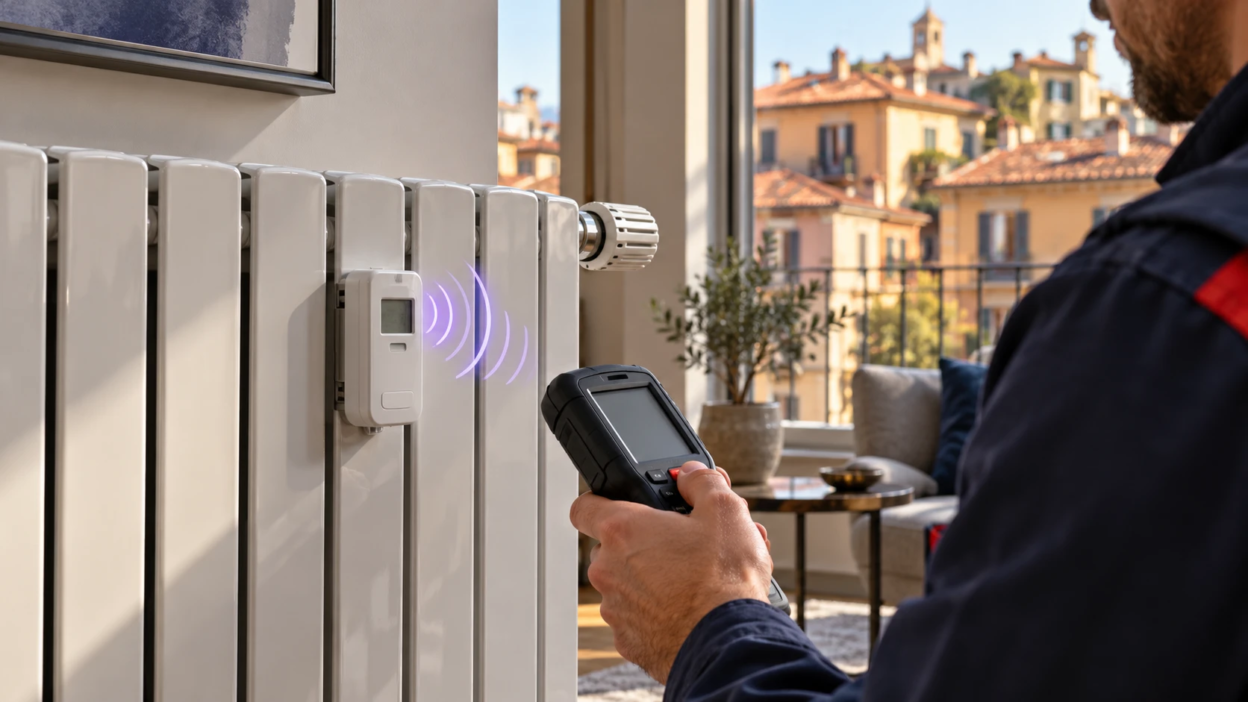
Italy is approaching a January 1, 2027 deadline for remote reading of certain heating and other thermal-energy meters used in apartment buildings. The requirement affects covered devices that cannot yet be read remotely, prompting building administrators to check whether equipment upgrades or replacements are necessary.
The change is gaining attention as November 2026 begins, leaving around two months for affected buildings to prepare. The requirement is part of Italy’s effort to improve energy efficiency, modernize utility monitoring, and make heating consumption easier to track.
Telelettura, meaning remote meter reading, allows compatible meters and heat cost allocators to be read without someone entering an apartment to access the equipment directly. Depending on the technology, readings may be collected periodically rather than transmitted continuously over the internet.
In buildings with centralized heating systems, readings from individual apartments can be collected through compatible communication devices or central monitoring systems. Depending on the installation, building managers and authorized service providers can then access consumption records without manually inspecting every meter.
The legal basis includes Italy’s Legislative Decree No. 73/2020, which amended Article 9 of Legislative Decree No. 102/2014. Under Article 9(5-bis), covered supply meters, sub-meters, and individual heat cost allocation systems installed after October 25, 2020, were already required to support remote reading, subject to technical feasibility and cost-effectiveness conditions.
The January 1, 2027 deadline also addresses older covered devices that cannot currently be read remotely. Article 16 of the EU Energy Efficiency Directive requires existing meters and heat cost allocators to gain remote-reading capability or be replaced with suitable equipment by that date, except where the Member State demonstrates that doing so is not cost-effective. The framework concerns thermal energy, including centrally supplied heating, cooling, and domestic hot water.
Traditional meters may require a technician to visit a device or enter an apartment to record consumption. Remote-readable equipment can make this process easier by allowing readings to be collected without direct access to individual apartments. The European Commission guidance on remote reading explains that walk-by and drive-by collection technologies may qualify where accepted under national rules. Therefore, remote reading does not necessarily require every meter to maintain a continuous internet connection.
This reduces the need for manual meter inspections and makes it easier to collect information regularly.
The technology can also help building administrators monitor heating usage more efficiently. Having access to updated consumption records may improve transparency and help residents understand their energy habits.
However, installing remote-reading equipment does not automatically reduce energy bills. Actual savings depend on energy consumption, heating efficiency, and how residents manage their usage. Technologies such as smart thermostats can help residents manage heating settings and consumption, but they serve a different purpose and do not replace the need for compliant meter-reading equipment.
Some existing meters may support compatible communication modules that allow remote reading, while older or incompatible equipment may need replacement. A qualified technician should evaluate the device type, communication compatibility, building conditions, and applicable requirements before recommending an upgrade.
Technical feasibility and cost-effectiveness are important considerations under the regulatory framework. However, building owners should not assume that older equipment is automatically exempt. Any possible exception should be evaluated against the applicable rules, with supporting technical documentation where required.
Building administrators should begin by identifying the meters and heat cost allocators currently installed, checking whether they support remote reading, and confirming when they were installed. They should then request an assessment from a qualified technician or service provider covering equipment compatibility, possible upgrades, replacement costs, and any applicable exceptions. Where changes are necessary, administrators should arrange the work before the January 2027 deadline and explain the planned process to affected residents.
The move toward telelettura also reflects the growing use of connected monitoring technologies. The broader Internet of Things (IoT) ecosystem allows compatible devices to exchange information for monitoring and management, although remote-readable heat meters do not necessarily require continuous internet access.
Digital monitoring platforms can help property managers organize consumption records and understand how buildings use energy. A related example is an electrical power monitoring system (EPMS), which monitors electrical infrastructure rather than individual heating-cost allocation devices. Although the technologies have different purposes, both demonstrate how digital measurements can support better energy management.
Wireless communication systems may also make it possible to monitor multiple meters across larger residential buildings without repeated physical inspections.
As more buildings adopt connected devices, protecting consumption information and securing communication systems will become increasingly important.
Remote-reading systems should use appropriate security measures to protect data and prevent unauthorized access.
For residents, the transition is expected to make heating consumption easier to monitor and reduce interruptions associated with traditional meter reading.
The January 2027 deadline is not a general order to replace every electricity, gas, or drinking-water meter in Italian homes. The requirement concerns covered thermal-energy measurement and heat-cost allocation equipment, including relevant heating, cooling, and domestic hot-water systems supplied from centralized sources. Whether a particular building needs changes depends on its existing equipment and the applicable legal conditions.
With the deadline approaching, affected property owners and building managers are being encouraged to check whether their existing equipment supports telelettura.
Italy’s move toward remote meter reading represents another step in the digital transformation of energy management. As connected monitoring technology becomes more common, apartment buildings could benefit from more accessible consumption information, improved efficiency, and simpler utility management.


