

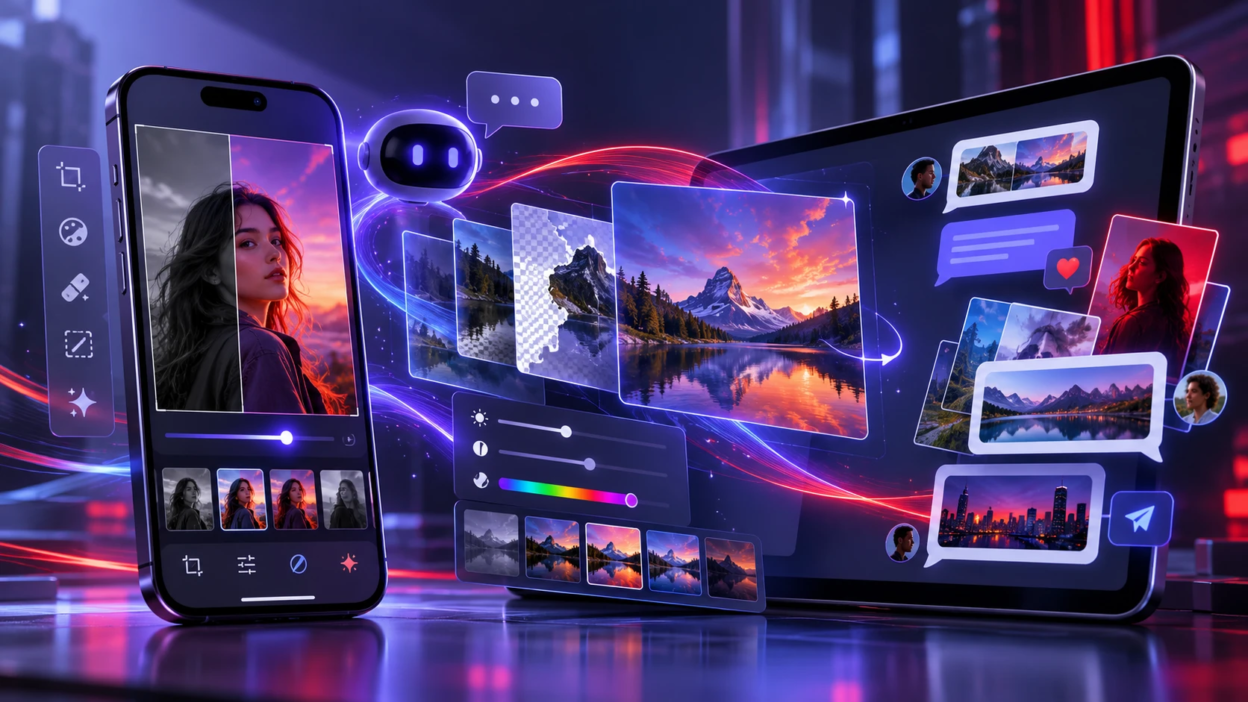
Meta’s Muse Image is bringing AI-powered image creation and editing to more everyday users through Meta AI, Instagram, and WhatsApp. The tool lets people generate pictures from text prompts, edit existing photos, and combine multiple images without needing advanced design skills.
Meta officially announced Muse Image on July 7, 2026, as the first image-generation model developed by Meta Superintelligence Labs. The company designed it to understand complex creative instructions and support photo editing directly through conversations with Meta AI.
Muse Image launched through the Meta AI app and website, with Instagram Stories support in the United States and WhatsApp image generation in selected countries. Meta also announced plans to expand the technology to Facebook, Messenger, and additional markets.
Muse Image lets users create pictures by describing what they want in everyday language. For example, someone can request a travel photo, promotional poster, or creative background without manually designing every detail.
The tool works with Meta’s Muse Spark AI model to process more complex requests. Meta says it can plan image layouts, use relevant web information, and combine visual references to produce results that better match the user’s instructions.
Muse Image can blend multiple photographs into one visual and make changes to selected parts of an existing picture. Users can request object removal, background changes, or different visual styles using simple text instructions.
Meta also says the model has improved text rendering inside images. This could help users create posters, instructions, and infographics with more readable words, although generated text should still be checked for spelling and accuracy before publication.
Meta has introduced suggested prompts called presets to help people begin creating images more easily. These options include restoring old photographs, trying different hairstyles, and turning personal pictures into clay animation or retro video game styles.
Muse Image also lets users mark changes directly on a picture. By circling, sketching, or adding notes to a selected area, people can explain what they want edited without rewriting the entire prompt.
Muse Image powers more than 30 AI-powered effects for Instagram Stories, giving users new ways to change the appearance of their pictures before posting. The initial Instagram Stories rollout focused on users in the United States.
On WhatsApp, people in supported countries can generate pictures during conversations with Meta AI. Meta offers Muse Image for free everyday image creation, while subscription plans provide additional creation capacity. Feature availability may vary by country and account.
Muse Image also includes a room-redesign feature. Users can upload a photo of a room and ask Meta AI to show different furniture arrangements, colors, or decorating styles.
Meta says the tool can suggest room designs using products available on the web or Facebook Marketplace. This gives users a way to explore possible changes before shopping, although generated room designs may not reflect exact product dimensions or availability.
Muse Image could also be useful for content creators, social media managers, and small businesses. It may help them experiment with promotional graphics, product backgrounds, and other visual ideas without starting every design from scratch.
Meta announced plans to integrate Muse Image with Advantage+ creative, giving advertisers additional ways to develop marketing visuals using AI. Other technology companies are also exploring how AI-generated imagery fits into advertising, including OpenAI’s separate test of visual advertising during ChatGPT image generation.
Meta also outlined plans to expand Muse Image experiences across Facebook, Messenger, and additional parts of Instagram and WhatsApp. These integrations could make AI image creation more accessible to advertisers, although businesses should check current feature availability before planning campaigns around the technology.
The growing use of AI-generated pictures also raises concerns about image authenticity, privacy, and misuse. Realistic AI images can sometimes be difficult to distinguish from actual photographs, making transparency important when sharing edited content.
Meta has introduced Content Seal watermarking technology to help identify certain AI-generated pictures. Images produced through the Meta AI app and website include an invisible signal designed to remain detectable after common edits such as cropping or resizing.
Meta also changed Muse Image following privacy-related feedback. On July 10, 2026, the company removed a feature that allowed users to reference public Instagram accounts through @-mentions when generating images.
These developments show why users should review AI-generated pictures carefully, especially when they include real people, product information, or content that could be mistaken for an authentic photograph.
Muse Image enters a competitive market that includes several AI image-generation and editing platforms. Readers interested in other options can explore TechBonafide’s comparison of AI image generators, covering ChatGPT, Midjourney, and Ideogram.
For everyday users, the main appeal is the ability to create and change pictures through simple instructions. For businesses and content creators, the technology could provide additional ways to develop visual ideas and marketing materials.
However, image accuracy, privacy, feature availability, and responsible use remain important considerations. As Meta expands Muse Image to more platforms, its usefulness will depend on how reliably it produces results and how effectively the company addresses these concerns.