

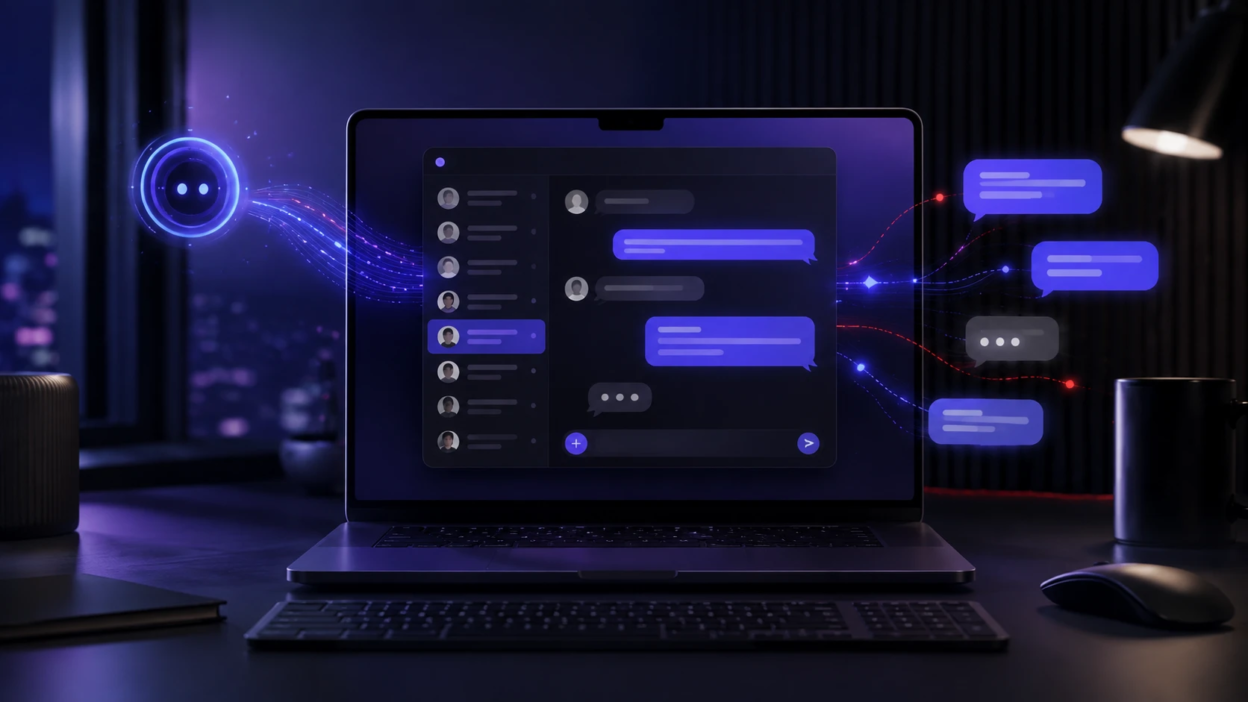
OpenAI has introduced an important new update for ChatGPT on Mac, allowing the AI assistant to work directly with Apple Messages. The change significantly expands what ChatGPT can do on a computer, but it also raises serious questions about privacy, permissions, and how much control users should give an AI over private conversations.
The new Apple Messages plugin allows ChatGPT to search messages, catch up on conversations, draft replies, and send messages through the Messages app on a Mac. This means users no longer have to manually copy a conversation into ChatGPT when they need help understanding a long discussion or writing a response.
For example, someone could ask ChatGPT to find details mentioned in an older conversation, summarize recent messages from a group chat, or prepare a reply to a contact. ChatGPT can then use the information available in Apple Messages to complete the request.
The integration works with conversations handled through Apple Messages, including iMessage, SMS, and RCS messages available on the Mac.
However, there are important limitations. The feature is currently designed for Apple Silicon Macs and is available through ChatGPT Work and Codex on the desktop. It is not simply a feature that automatically gives every normal ChatGPT conversation access to a user’s Messages inbox.
That limitation matters because this update goes far beyond generating text inside a chatbot window. ChatGPT is increasingly becoming an assistant that can interact with other applications and take actions for users.
Sending messages is particularly sensitive. By default, ChatGPT asks users to approve the message and its recipients before it is sent. Keeping this confirmation step enabled is important because an incorrect recipient, misunderstood instruction, or inaccurate AI-generated response could have real consequences once a message leaves the device.
Privacy is an even bigger concern.
Apple Messages can contain some of a person’s most private information, including family discussions, business conversations, addresses, phone numbers, personal plans, financial details, and other sensitive information. Giving an AI assistant access to this type of data represents a much bigger privacy decision than asking ChatGPT a normal question.
The integration requires users to grant relevant macOS permissions before ChatGPT can access and work with Messages. OpenAI says the Messages connection operates locally on the Mac and retrieves information when needed rather than creating a complete searchable index of every conversation.
Still, users should carefully review the permissions they approve. Even when an integration is designed with safeguards, allowing AI software to read private conversations creates additional risks that did not exist when ChatGPT was limited to information manually entered by the user.
There is also another important issue: private conversations involve more than one person. A user may choose to connect their own Messages history to ChatGPT, but the people who sent those messages may not expect their words to be analyzed by an AI assistant.
This makes responsible use especially important for workplace conversations, confidential discussions, customer information, and messages containing sensitive personal details.
The update also shows how quickly competition between AI assistants is moving toward direct control of everyday applications. The most important AI products may no longer be judged only by how well they answer questions. Their value could increasingly depend on how effectively they can search personal information, understand context, and complete actions across a user’s computer.
For Apple, the development is notable because Messages is one of the most important applications inside its ecosystem. Allowing ChatGPT to work with conversations gives OpenAI another route into tasks traditionally associated with system-level assistants such as Siri.
For users, the convenience could be significant. Instead of opening several message threads, searching manually, reading long conversations, and writing individual replies, ChatGPT can potentially handle much of that process from a single request.
But convenience should not remove human oversight.
Users should pay close attention to what ChatGPT is allowed to access and should review AI-generated messages before allowing them to be sent. Giving an AI permission to read information is one thing; allowing it to communicate with other people on your behalf is a much more serious step.
The Apple Messages integration therefore represents more than another small ChatGPT feature. It is another sign that OpenAI is pushing ChatGPT from a conversational AI toward an assistant capable of working directly inside a user’s digital life.
That could make ChatGPT considerably more useful on the Mac, but it also makes privacy controls, permission management, and user approval more important than ever.