
Publishing on Voozon.com may offer writers, businesses, and content marketers an additional way to reach readers through contributed articles and guest posts. However, publication is subject to editorial approval, and visibility or SEO results are not guaranteed. Before submitting an article, contributors should understand Voozon’s publishing guidelines, content requirements, link policies, potential fees, and copyright considerations. This guide explains what to verify before making a submission.
What Voozon is and Who It Fits?
Voozon.com is a multi-category digital publication covering subjects such as technology, business, finance, health, education, and lifestyle. Alongside its regular editorial content, the website accepts selected contributions from external writers, businesses, and organizations. Its Voozon.com guest post opportunities page outlines the types of content contributors may propose and the publishing conditions they should clarify. Submissions are subject to editorial review, and acceptance is not automatic.
The publication may be suitable for writers, industry professionals, businesses, and content marketing teams that can produce original, informative articles relevant to its audience. A successful contribution should provide genuine reader value rather than exist primarily to promote a product or generate backlinks.
If your goal is long-term visibility, plan for repeatable topics, clear positioning, and a simple workflow. Guest publishing should complement your existing website and content strategy rather than replace the channels you control directly. If you only need a private document library or highly restricted distribution, a public digital publication may not be the right choice.
Contributor Identity and Submission Requirements
Before preparing your article, determine how Voozon accepts contributor enquiries and whether an author profile, company information, or previous writing samples are required. Its public publishing information describes an enquiry-based contribution process, but does not establish that every contributor receives a self-service account or publishing dashboard.
When contacting the publication, introduce yourself or your organization, explain your proposed topic, and provide relevant examples of previous work. Ask whether submissions can appear under an individual author’s name, a company identity, or another agreed attribution format. If an agency manages the submission, clarify who will communicate with the editor and approve revisions.
- Profile Consistency: Use one clear professional name, an accurate description of your expertise, and consistent brand information when submitting contributor details.
- Contact Visibility: Confirm which author or business contact details may appear publicly and avoid sharing unnecessary personal information.
- Team Responsibilities: If multiple people are involved, assign responsibility for drafting, fact-checking, approving edits, and communicating with Voozon’s editorial team. Do not assume that shared publishing accounts or contributor roles are available.
Once your identity and submission responsibilities are clear, it becomes easier to maintain consistent author attribution and organize your publishing history.
If you encounter a third-party publishing offer, unfamiliar submission address, or website using a similar name, verify its relationship with Voozon.com before sharing personal information, documents, or payment details. TechBonafide’s guide to checking whether a tech website is trustworthy explains how to examine website identity, contact information, and other credibility signals.
Content Policies You Must Review
Every contributor should review the publication’s rules before submitting an article. Pay particular attention to prohibited content, sensitive subject areas, factual accuracy, attribution requirements, and how Voozon handles medical, financial, or legal information.
Voozon’s editorial policy addresses originality, attribution, contributor standards, AI-assisted writing, sponsored material, and external links. Contributors should avoid submitting copied articles, lightly rewritten material, unsupported factual claims, or content created mainly to place backlinks. AI-assisted writing should be reviewed for accuracy, originality, relevance, and misleading statements before submission.
- Originality Rules: Prepare original content that offers meaningful information or perspective. Confirm whether previously published material is eligible before submitting it, and do not assume that superficial rewriting makes duplicated content acceptable.
- Attribution Requirements: Support important factual claims with appropriate references and confirm whether Voozon requires a particular citation format.
- Moderation Triggers: Understand how misleading statements, unsupported claims, excessive promotional links, copyright concerns, or unsuitable subjects may lead to revision requests or rejection.
- AI-Assisted Content: Review AI-generated drafts carefully to identify incorrect information, fabricated references, copied material, or statements that cannot be supported.
- Sensitive Topics: Apply additional fact-checking when discussing health, finance, law, safety, or other subjects where inaccurate information could cause harm.
Clear policy alignment reduces unnecessary revisions and helps protect your professional reputation.
Writers using AI-assisted drafting tools should verify important claims against reliable sources before submitting their articles. TechBonafide’s explanation of why AI hallucinations happen shows why confident-sounding AI-generated information can still contain errors. Human fact-checking is especially important when articles discuss health, finance, technology, or legal subjects.
Copyright, Licensing, and Reuse Rights
Publishing is not only about writing; it also involves intellectual property rights. Before submitting an article, determine who retains copyright, what publishing permissions the contributor grants, and whether the content may be reused or distributed through other channels.
Before submitting content, review Voozon’s Terms and Conditions and confirm whether any separate contributor agreement applies. Clarify who owns the submitted article, what publishing rights are granted, whether the content can appear on another website, and how corrections or removal requests are handled. Do not assume that submitting an article automatically gives the contributor control over its final publication or deletion.
| Area to Verify | What to Look for | Why It Matters |
|---|---|---|
| Copyright Ownership | Whether the creator retains ownership or agrees to transfer specific rights | Determines whether the work can be reused, licensed, or published elsewhere |
| Platform License | Exclusive or non-exclusive publishing permissions and their duration | Affects syndication, redistribution, and control over future publication |
| Media Usage | Permissions for photographs, illustrations, screenshots, and embedded assets | Helps prevent copyright complaints and unauthorized use of third-party material |
| Removal and Archiving | Procedures for corrections, removal requests, and retained copies | Clarifies what happens if published content needs to be changed or withdrawn |
Contributors should also retain records of image licenses, source permissions, and any written publishing agreements. If an article includes material belonging to another organization, confirm that the necessary reuse rights exist before submitting it.
After confirming rights and licensing, you can approach the publishing process with fewer legal and editorial uncertainties.
Formatting, Editing, and Publishing Workflow
A well-researched article can lose clarity when its structure, formatting, or supporting references are inconsistent. Before submitting to Voozon, prepare a clean document with a descriptive headline, logical headings, readable paragraphs, properly attributed sources, and relevant images. Ask the editorial team about preferred file formats, image specifications, word-count expectations, and permitted links.
Contributors should also clarify how editorial revisions are handled, who approves the final version, and whether corrections can be requested after publication. Keep a separate copy of the submitted article and any correspondence so the publishing process remains organized. Features such as scheduled publishing, contributor dashboards, and revision history should not be assumed unless Voozon confirms their availability.
- Create A Standard Outline: Use a consistent structure for similar topics so readers can follow your information easily.
- Build A Pre-Publish Checklist: Include spelling checks, source verification, link testing, copyright reviews, and compliance with editorial guidelines.
- Set A Review Routine: Decide who approves the article, who checks factual claims, and how editorial feedback will be handled.
- Document Your Style Rules: Maintain consistent tone, terminology, formatting, capitalization, and citation practices.
- Keep Original Files: Store copies of drafts, images, references, and editorial correspondence in case corrections are needed later.
A stable workflow reduces avoidable errors and helps contributors maintain consistent quality across multiple publishing opportunities without spending unnecessary time on revisions.
SEO and Discoverability Settings
Before submitting an article, ask whether contributors can suggest the headline, article category, URL slug, author attribution, and relevant external links. The final publishing decisions may remain with Voozon’s editorial team. Choose a descriptive headline that matches the article’s subject and avoid adding unnecessary keywords merely to influence search rankings.
Guest publishing should support a broader content strategy rather than being treated as a guaranteed backlink or ranking opportunity. Confirm how many links are permitted and whether commercial links require special attributes. Google’s guidance on qualifying outbound links recommends rel=”sponsored” for paid placements. Voozon also states that publication does not guarantee indexing, search rankings, referral traffic, or other SEO outcomes.
- Title Clarity: Suggest specific, descriptive titles that match reader intent instead of using vague or keyword-heavy wording.
- Tag Discipline: If contributors can recommend tags or categories, choose only those that accurately represent the article’s subject.
- Internal Linking: Recommend relevant connections to related published articles when permitted, but confirm whether the editorial team controls these links.
- External Link Relevance: Include references that provide useful information or support important claims rather than inserting unrelated promotional destinations.
- Author Attribution: Where author information is displayed, ensure it accurately reflects the contributor’s identity and relevant expertise.
Effective SEO also depends on content quality, clear structure, relevant keywords, and useful references. TechBonafide’s blog SEO optimization guide covers foundational techniques for improving blog visibility. However, contributors should remember that Voozon may control the final publishing settings, and no optimization technique guarantees search rankings.
Sponsored Publishing, Fees, and Commercial Terms
Voozon.com describes opportunities for sponsored articles, guest contributions, and other commercial publishing arrangements. However, this does not establish that the website operates a general creator earnings program or pays contributors according to article views. Writers and businesses should distinguish between paying for a publishing service and receiving payment for their work.
Before agreeing to any sponsored publication, ask about current pricing, content preparation, permitted links, promotional disclosures, editorial revisions, publication timelines, and ongoing availability of the article. Fees may depend on the type of arrangement, so request written confirmation rather than relying on outdated third-party listings.
Sponsored content should also comply with applicable advertising disclosure requirements and search-engine policies. A paid placement should not be presented as independent editorial coverage when its commercial nature is relevant to readers.
Before making a payment or accepting a commercial agreement, clarify the following:
- Publishing Fees: Confirm whether a fee applies and what services are included in the quoted amount.
- Content Preparation: Determine whether you must provide a completed article or whether writing and editing services are included.
- Link Requirements: Ask how many external links are permitted and what attributes will be applied to commercial links.
- Sponsored Disclosures: Confirm how advertising or sponsored relationships will be identified to readers.
- Publication Timeline: Request an estimated review and publication schedule without assuming that acceptance or a specific publishing date is guaranteed.
- Article Availability: Clarify whether any ongoing publication commitment applies and how future corrections or removal requests are handled.
Clear written terms help both contributors and publishers understand their responsibilities and reduce the risk of misunderstandings after submission.
Privacy, Data, and Security Considerations
Publishing through an external website may involve sharing author details, company information, draft content, contact information, and other submission records. Before sending these materials, determine what personal or business information is necessary, whether it will appear publicly, and how it may be used. Do not assume that contributors receive access to subscriber lists, user-level analytics, or data-export tools.
Review Voozon’s Privacy Policy to understand its stated personal-data practices. If you are offered account access, use a unique password and enable multi-factor authentication when available. When communicating with editors, avoid including unnecessary confidential business information or sensitive personal details.
- Performance Reporting: Ask whether contributors receive any post-publication traffic or engagement information, and do not assume that detailed analytics are available.
- Audience Communication: Confirm whether any audience-contact features are available and obtain appropriate consent before collecting or using personal contact information.
- Account Recovery: If contributor accounts are provided, check what recovery options and security protections are available.
- Document Security: Avoid including sensitive credentials, private customer information, or confidential company records in submitted files.
- Data Retention: Review the applicable privacy information and ask how contributor details and submitted materials are handled when necessary.
Once privacy and security responsibilities are understood, contributors can focus on preparing accurate, relevant, and useful content while limiting unnecessary exposure of sensitive information.
Support, Moderation, and Dispute Handling
Contributors may need assistance with submission status, editorial changes, attribution problems, copyright concerns, or corrections to published articles. Voozon provides a contact page for editorial questions, publishing enquiries, and other concerns. When requesting assistance, include the article URL or proposed title, explain the issue clearly, and attach relevant supporting information. Although the website provides a general response-time estimate, contributors should not treat it as a guaranteed resolution deadline.
If a submitted article is rejected or requires revisions, ask for clarification about the relevant editorial concerns. Where available, use the publication’s designated communication process for correction requests, copyright complaints, or disputes.
Also review comment moderation arrangements if reader engagement is part of your strategy. Do not assume that external contributors can independently approve, remove, or manage comments on published articles. Clarify these responsibilities with the editorial team when necessary.
Maintaining clear records of submissions, approvals, and correspondence can make it easier to resolve misunderstandings and support legitimate requests for changes.
How to Prepare Your First Voozon Submission?
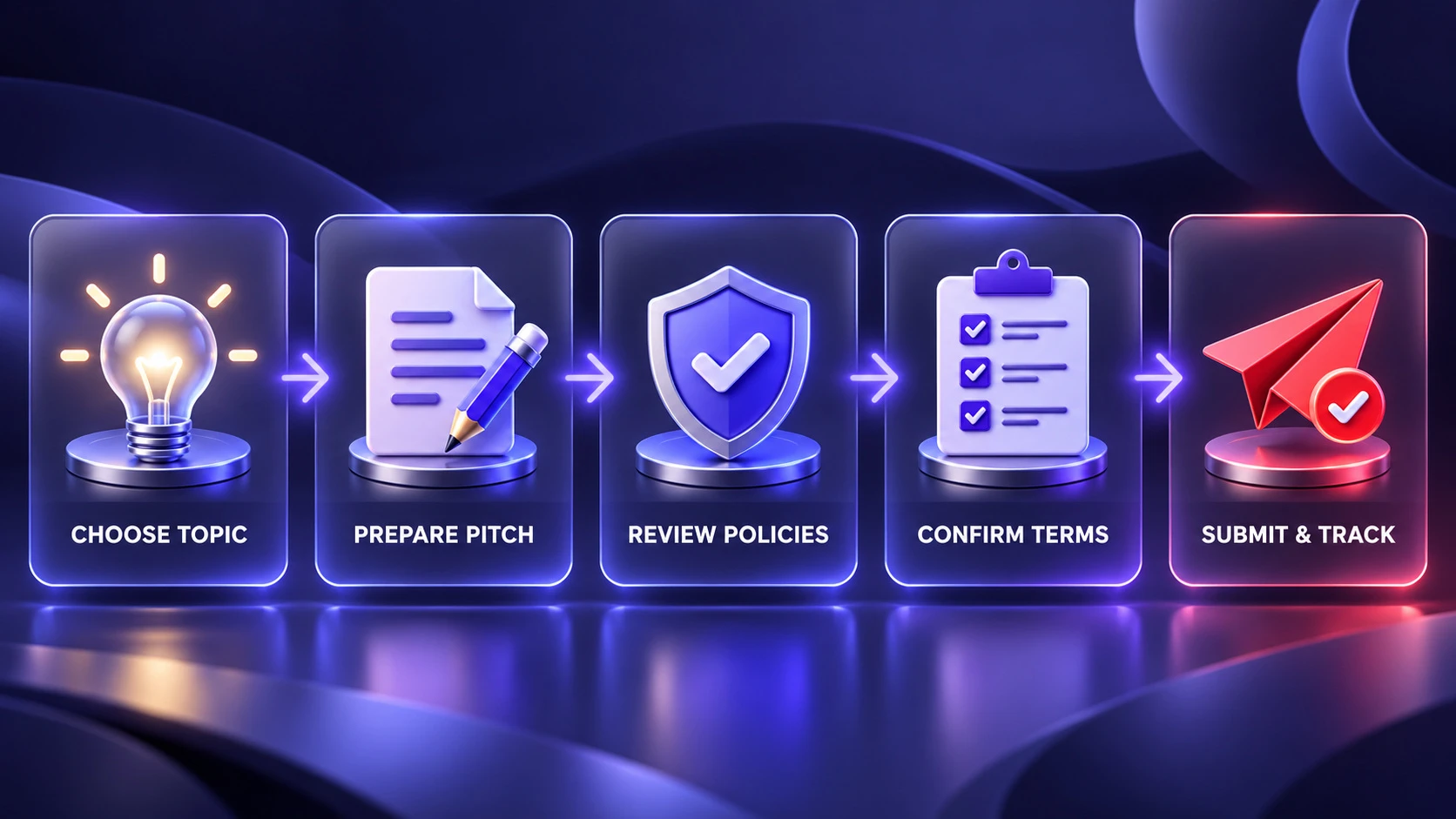
Before contacting Voozon, organize your proposal and supporting materials so the editorial team can evaluate them efficiently.
- Choose A Relevant Topic: Review Voozon’s published categories and select a subject that provides useful information for its readers.
- Prepare A Short Pitch: Summarize the proposed headline, target audience, main points, and reasons the article would be valuable.
- Review Content and Link Policies: Check originality requirements, supporting references, permitted links, and any commercial disclosures before drafting.
- Confirm Submission Conditions: Ask about article length, formatting, images, fees where applicable, editing responsibilities, and the expected publication process.
- Submit and Track Your Enquiry: Use Voozon’s published contact route, retain your correspondence, and keep the original article file until the editorial process is complete.
Publication remains subject to editorial acceptance. If the proposal is approved, follow the specific instructions provided for that submission rather than assuming every contributor follows the same process.
Apply the Same Publishing Standards to Your Own Website
Guest publishing works best when it complements the content already available on your own website. Maintain clear editorial standards across both channels, including original writing, accurate sources, useful links, consistent author information, and appropriate disclosure of commercial relationships.
TechBonafide’s technology guest post guidelines offer another example of how a publication can define originality, subject relevance, article length, and supporting references for contributors. These principles can help writers prepare stronger submissions while maintaining quality across multiple publishing outlets.
A coordinated content strategy should also connect external contributions with useful resources on your own website, where permitted. Focus on topics that demonstrate genuine expertise, answer reader questions, and support long-term editorial consistency.
Conclusion
Before publishing on Voozon.com, review its contributor guidelines, editorial standards, originality requirements, copyright considerations, link policies, and applicable commercial terms. Confirm the submission process and any special requirements directly with the publication before investing significant time or money.
Voozon may provide a useful opportunity for relevant guest contributions, but acceptance, search visibility, and commercial outcomes are not guaranteed. The strongest approach is to prioritize original content, accurate information, transparent publishing arrangements, and long-term reader value.
Frequently Asked Questions
Can I Republish Articles on Voozon If They Already Exist Elsewhere?
Republishing depends on Voozon’s originality requirements and the rights associated with the article’s original publication. Voozon’s editorial policy discourages copied, lightly rewritten, and substantially duplicated submissions, so contributors should obtain approval before republishing existing material. Google’s guidance on syndicated content and canonicalization also explains why relying on a cross-domain canonical tag alone is not a dependable solution for syndicated articles. Confirm attribution and indexing arrangements with the receiving publisher and ensure that any new version provides meaningful additional value.
Does Voozon Pay Contributors or Charge for Guest Posts?
Voozon.com publicly describes guest-posting opportunities and sponsored publishing arrangements, but this should not be confused with a confirmed creator earnings program. Commercial terms may vary depending on the content and publishing agreement. Contributors should contact Voozon directly to confirm whether any fees apply, what services are included, and whether their particular arrangement involves payment to the writer or payment for publication.
How Do I Reduce the Risk of A Post Getting Removed?
Follow Voozon’s editorial and media requirements closely, especially those involving sensitive topics, copyrighted assets, originality, and promotional links. Use a pre-publish checklist to verify factual claims, citations, image permissions, and formatting. If a published article raises concerns, contact the editorial team through its official communication channel and provide the article URL, a clear explanation, and relevant supporting information.