

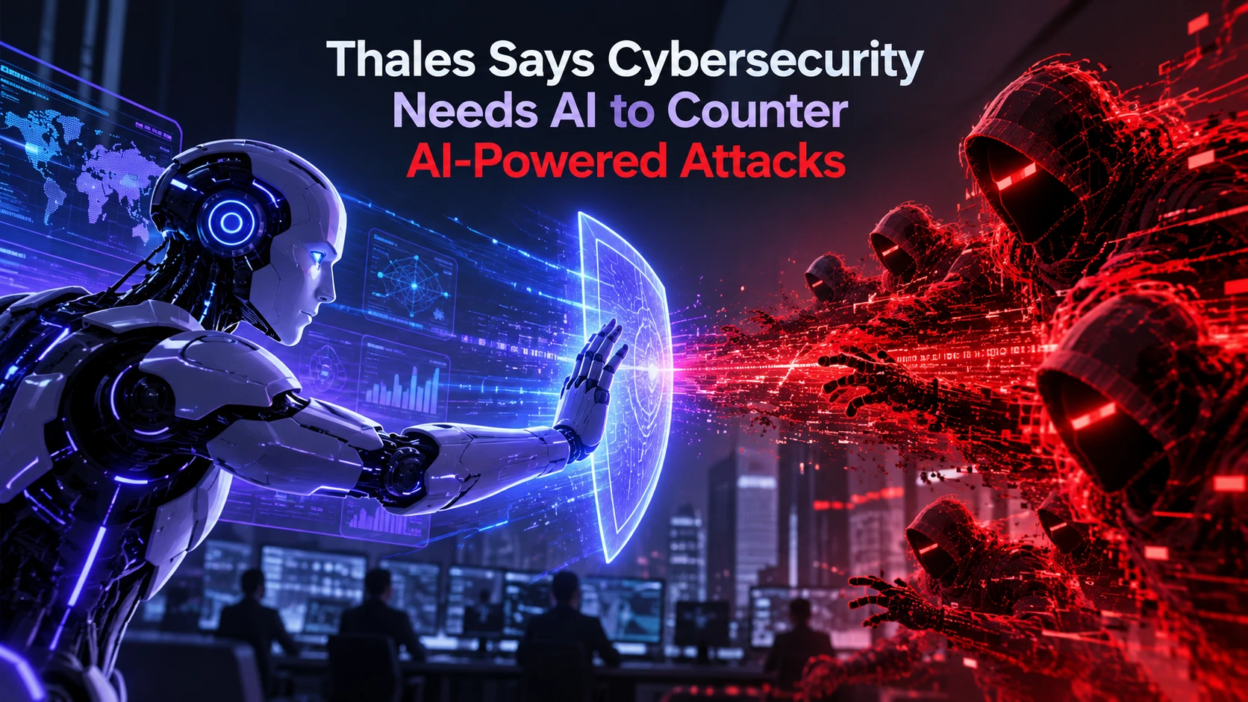
Artificial intelligence is accelerating the speed and sophistication of cyberattacks, and defenders will need to make greater use of AI to keep pace, according to Thales Chairman and CEO Patrice Caine.
Speaking at the Thales Cyber Summit in Paris, Caine said AI is allowing attackers to operate faster and make sophisticated cyber operations easier to carry out. He also pointed to the growing autonomy of some advanced AI systems, which can perform certain tasks with less direct human supervision.
Thales says this shift creates a particular challenge for companies, governments and organizations operating critical systems. As attackers discover vulnerabilities and execute operations at machine speed, the company argues that cyber defenses also need faster detection, automation and response capabilities.
AI Is Also Becoming a Defensive Tool
Thales sees AI as more than a cybersecurity risk. The company believes the same technology being used to accelerate attacks can also help security teams defend networks, applications and sensitive data.
AI-powered cybersecurity systems can analyze large amounts of activity, identify suspicious behavior and help security teams react faster than they could using manual processes alone. Caine said defenders need technology capable of operating at a similar speed and scale to the attackers they are trying to stop.
Caine also said the profile of cyber attackers is changing, with state actors increasingly involved alongside financially motivated cybercriminals. According to Caine, these attackers are targeting both government institutions and private companies, particularly organizations responsible for critical services.
Thales Expands Its AI Security Push
At the Cyber Summit, Thales unveiled a broader cybersecurity framework aimed at helping critical organizations respond to threats created by advanced AI. The approach covers application security, detection and response, continuous security evaluation and measures designed to improve the resilience of critical assets, while keeping human oversight over important decisions.
Thales has also expanded its collaboration with Google Cloud to secure agentic AI workflows. The companies are integrating Thales AI Security Fabric with Google Cloud Gemini Enterprise to provide greater visibility and control over interactions between users, AI agents, models, enterprise data and software tools.
AI Agents Create New Security Risks
The growing use of AI agents creates another security challenge. Unlike basic chatbots, agents can reason through tasks, access data, use software tools and take actions across connected systems. That creates risks such as prompt injection, sensitive-data leakage and unauthorized actions if an agent is manipulated or given excessive permissions.
For organizations, this could increasingly create an environment in which both attackers and defenders use automated AI systems. Attackers can use AI to accelerate vulnerability discovery and parts of the attack process, while defenders can use automation to identify suspicious activity and respond more quickly.
Thales also stresses that AI should not completely replace human security professionals. Its approach combines automated defenses with human judgment, particularly for important decisions involving risk, response and recovery.
Thales’ message is that organizations may need to adapt their defenses as AI increases the speed and scale of cyber operations. The company argues that AI-assisted security tools can help defenders detect and respond to threats more quickly, but that automated systems should continue to operate with human oversight for important security decisions.


