

Qi2 and Qi2 25W are wireless charging standards designed to make charging more convenient through magnetic alignment. Standard Qi2 supports up to 15W, while the newer Qi2 25W standard increases the maximum charging power to 25W on compatible devices. However, higher wattage does not automatically mean faster charging for every phone. Actual performance depends on device support, charger certification, power adapter compatibility and temperature. This guide compares Qi2 vs Qi2 25W to explain their differences, charging speeds, compatibility requirements and whether upgrading is worth the extra cost.
What Qi2 And Qi2 25W Actually Mean
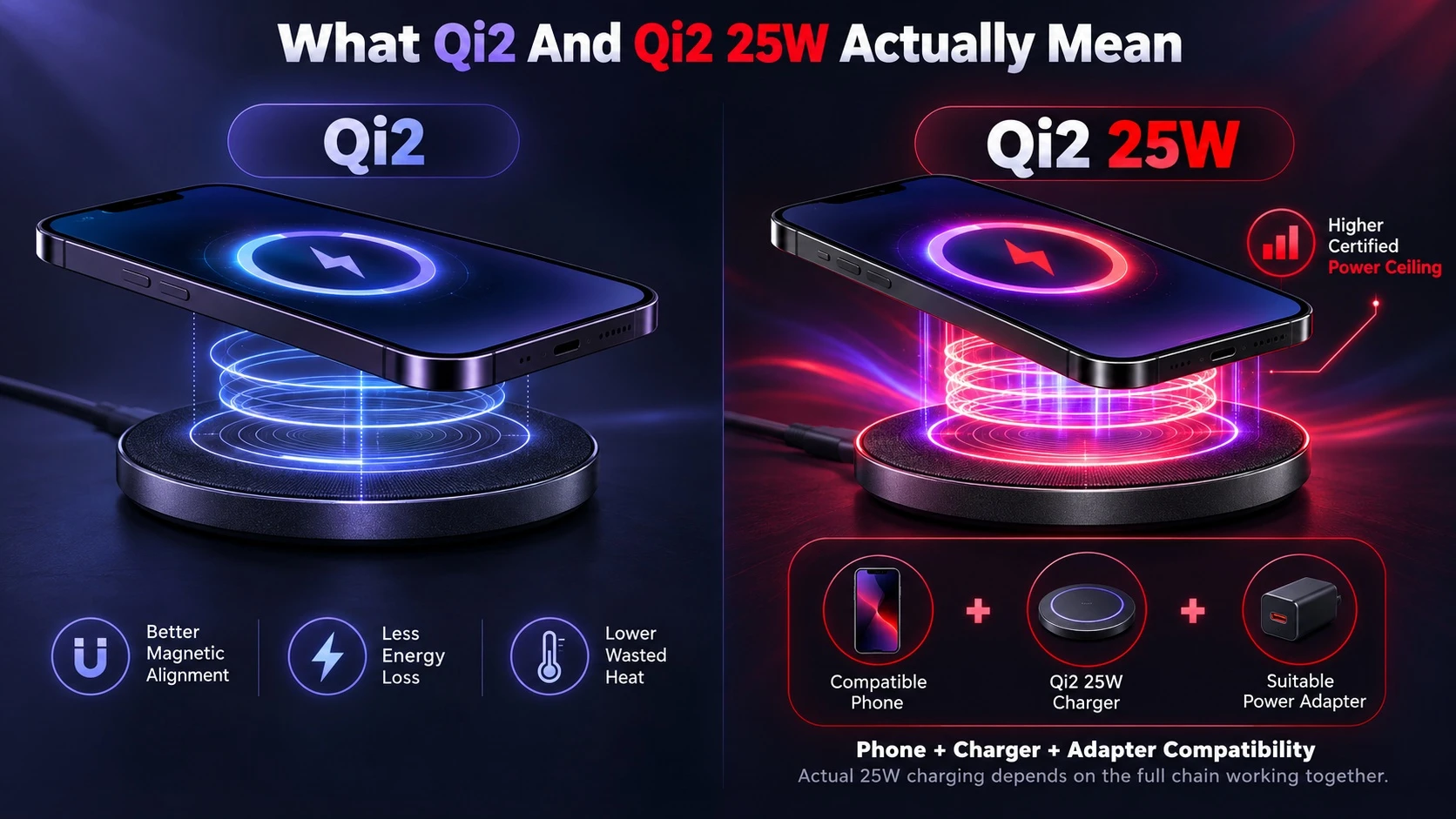
Qi2 is the Wireless Power Consortium standard that adds a Magnetic Power Profile for better coil alignment. Better alignment reduces energy loss, which can improve efficiency and limit wasted heat. It also makes placement less fussy, which is a major quality-of-life improvement.
Qi2 25W builds on the same idea but raises the power ceiling for certified setups. That does not guarantee your phone will charge at 25W, because the phone, charger, and power adapter must all negotiate and allow that level. The practical result is that compatibility matters more than the headline number.
Why Magnetic Alignment Matters
Wireless charging speed depends heavily on how well the coils line up. When alignment is off, the charger often slows down to control heat and maintain stable power transfer. Magnets keep the phone centered, which reduces variability across charges.
Magnetic alignment also helps accessories behave more predictably. Car mounts, desk stands, and bedside docks benefit because you get a repeatable charging position. That consistency is the core upgrade Qi2 brings, even before talking about wattage.
Charging Speed Realities Beyond the Watt Rating
Wireless charging is a system, not a single spec. Even with a 25W-capable pad, a phone may cap wireless input lower due to battery chemistry, thermal limits, or firmware. Many devices also taper charging aggressively as the battery approaches full, which makes peak wattage a short-lived phase.
Qi2 25W supports approximately 67% more maximum charging power than standard 15W Qi2, but this does not mean a phone will charge 67% faster from empty to full. Charging speed varies with battery level, device-specific power limits, temperature and charger compatibility. The Wireless Power Consortium states that Qi2 25W can charge a compatible smartphone battery from 0% to 50% in approximately 30 minutes under suitable conditions. Individual devices may take more or less time, so manufacturer specifications and independent charging tests are more useful than wattage alone.
Heat Management & Battery Health Tradeoffs
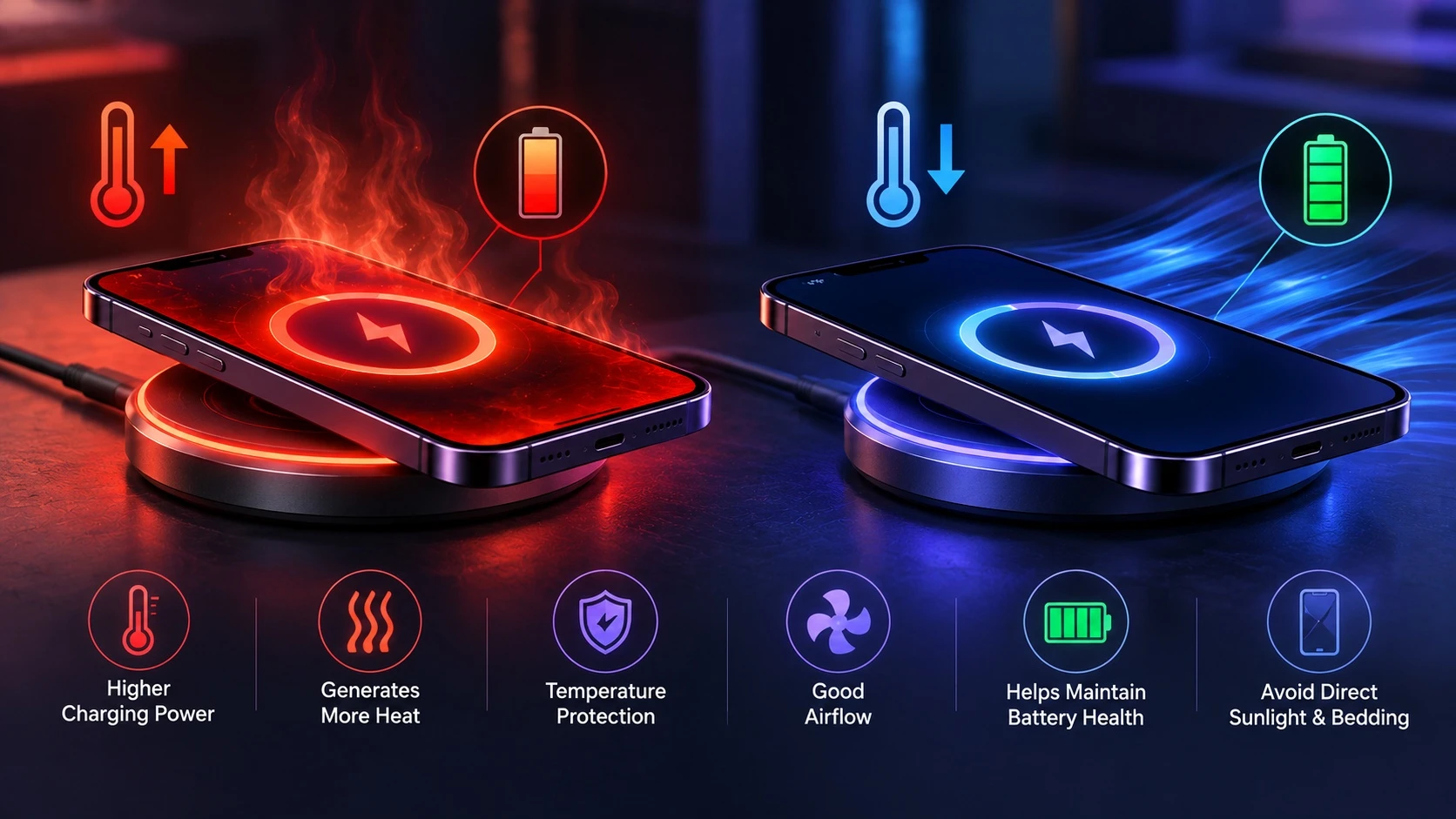
Heat is an important factor in wireless charging because prolonged exposure to high temperatures can affect battery lifespan. Qi2 25W supports higher charging power than standard Qi2, but operating temperature depends on the phone, charger design, alignment, case and surrounding environment. Modern smartphones can automatically reduce or pause charging when their temperature moves outside the recommended range. A higher wattage rating alone does not establish whether one charger will run hotter or cause more battery wear than another. For everyday use, choose certified accessories, maintain good airflow and avoid charging in direct sunlight or under bedding.
If you often charge while using navigation, gaming, or video calls, the phone is already generating heat. In those moments, a 25W wireless charger may downshift more often than you expect. A stable 15W session can sometimes be more consistent than a 25W session that keeps throttling.
Battery longevity also depends on everyday charging conditions, not just the charger’s maximum wattage. Apple’s guidance on battery life and lifespan recommends avoiding excessive heat and removing certain phone cases if they cause the device to become too warm while charging. These precautions are useful whether you use a standard Qi2 charger or a Qi2 25W model.
If your phone regularly becomes unusually warm during wireless charging, understanding why an iPhone gets hot while charging can help you identify common causes and practical ways to reduce overheating.
What Do You Need for Qi2 25W Charging?
Qi2 charging works best when all parts of the chain are strong. That includes a certified Qi2 or Qi2 25W charger, a power adapter that can supply enough wattage, and a phone that supports the relevant profile. Using an underpowered adapter can force the charger to fall back to slower modes.
Cases also matter. Thick cases, metal rings, and misaligned magnetic rings can reduce efficiency and cause extra heat. A well-made magnetic case that matches the phone’s coil location helps both Qi2 and Qi2 25W reach stable performance.
For example, Apple lists the iPhone 17 as supporting Qi2 wireless charging up to 25W. However, not every iPhone or Android phone supports the same wireless charging limit, even when it works with magnetic charging accessories. Apple also specifies that its compatible MagSafe Charger requires a suitable 30W or higher power adapter to reach peak charging speeds on supported iPhone models. Before buying a Qi2 25W charger, check the exact phone model, its supported wireless charging wattage and the accessory manufacturer’s adapter requirements.
- Phone Support: Your phone must support Qi2 or a vendor-specific mode that maps cleanly to the charger’s capabilities.
- Charger Certification: Look for Qi2 or Qi2 25W certification rather than vague watt claims.
- Power Adapter Headroom: Use a quality USB-C PD adapter with enough output to avoid power starvation.
- Case And Ring Alignment: A magnetic case with accurate ring placement improves speed and reduces wasted heat.
Once those pieces are right, you can focus on whether 25W meaningfully fits your routine.
The power adapter is another important part of the charging setup. A wireless charger may support 25W output but deliver less power if its connected adapter cannot meet the required input specifications. Our guide to USB-C Power Delivery and charging wattage explains how adapter power ratings and charging protocols affect performance.
Qi2 Vs Qi2 25W Feature Comparison
Both standards focus on efficient, repeatable charging. The key differences are the maximum supported power and how demanding the setup becomes at higher wattage. This table summarizes what to expect when shopping.
| Feature | Standard Qi2 | Qi2 25W |
|---|---|---|
| Maximum Certified Power | Up to 15W | Up to 25W |
| Magnetic Alignment | Yes | Yes |
| Main Advantage | Convenient, consistent charging | Higher potential charging speed |
| Device Requirements | Compatible Qi2 receiver | Device supporting Qi2 25W |
| Charger Certification | Check for Qi2 certification | Check for Qi2 25W certification |
| Power Adapter | Follow charger specifications | Follow charger specifications for full output |
| Charging Temperature | Depends on setup and environment | Depends on setup and environment |
| Actual Charging Speed | Varies by device | Varies by device |
| Suitable For | Everyday charging and top-ups | Compatible devices needing faster top-ups |
The difference is simple on paper but more nuanced in daily use due to phone limits and heat.
When the Upgrade to Qi2 25W is Worth It
Qi2 25W makes sense when you regularly need quick wireless boosts and your device can actually use the extra power. It also helps if you rely on magnetic mounts and want the best chance of maintaining higher wattage without constant repositioning.
Upgrading to Qi2 25W can also make sense when replacing an older wireless charger, especially if your current phone supports the faster standard. However, the additional expense should be justified by actual compatibility and charging needs. Before purchasing, compare the price of a certified 15W Qi2 charger with a certified Qi2 25W model, including any separately required power adapter. If your phone only accepts 15W wireless charging, buying a 25W charger will not automatically increase its charging speed.
- Frequent Short Charges: Faster peak rates matter most when you charge in 10 to 30 minute windows.
- Desk Charging While Working: A higher ceiling can recover battery faster between meetings.
- Travel And One-Charger Setups: A more capable charger can cover more situations with less downtime.
If your phone cannot use the extra power, you mainly pay for headroom you may not access.
When Standard Qi2 is the Smarter Buy
Qi2 is often the best value because magnetic alignment fixes the most annoying part of older wireless charging. You get more consistent charging without chasing the highest watt rating. For many users, that reliability beats a modest speed improvement.
Standard Qi2 remains a practical choice for overnight charging, occasional top-ups and phones that do not support 25W wireless charging. However, choosing a 15W charger does not automatically guarantee lower temperatures or better battery health. Charger quality, device temperature, alignment and charging habits all affect performance. If your current Qi2 charger works reliably and you rarely need faster charging, upgrading may offer little practical benefit.
How to Choose a Good Wireless Charger?
Before buying a wireless charger, verify that its claimed Qi2 certification matches the actual product. The Wireless Power Consortium maintains an official database of certified wireless charging devices. Search for the brand and exact model number to confirm its certification. For Qi2 25W chargers, check for specification version 2.2.1, the MPP25 power profile and a 25W load-power rating. Do not assume that advertising phrases such as Qi2 compatible or supports 25W establish official Qi2 25W certification.
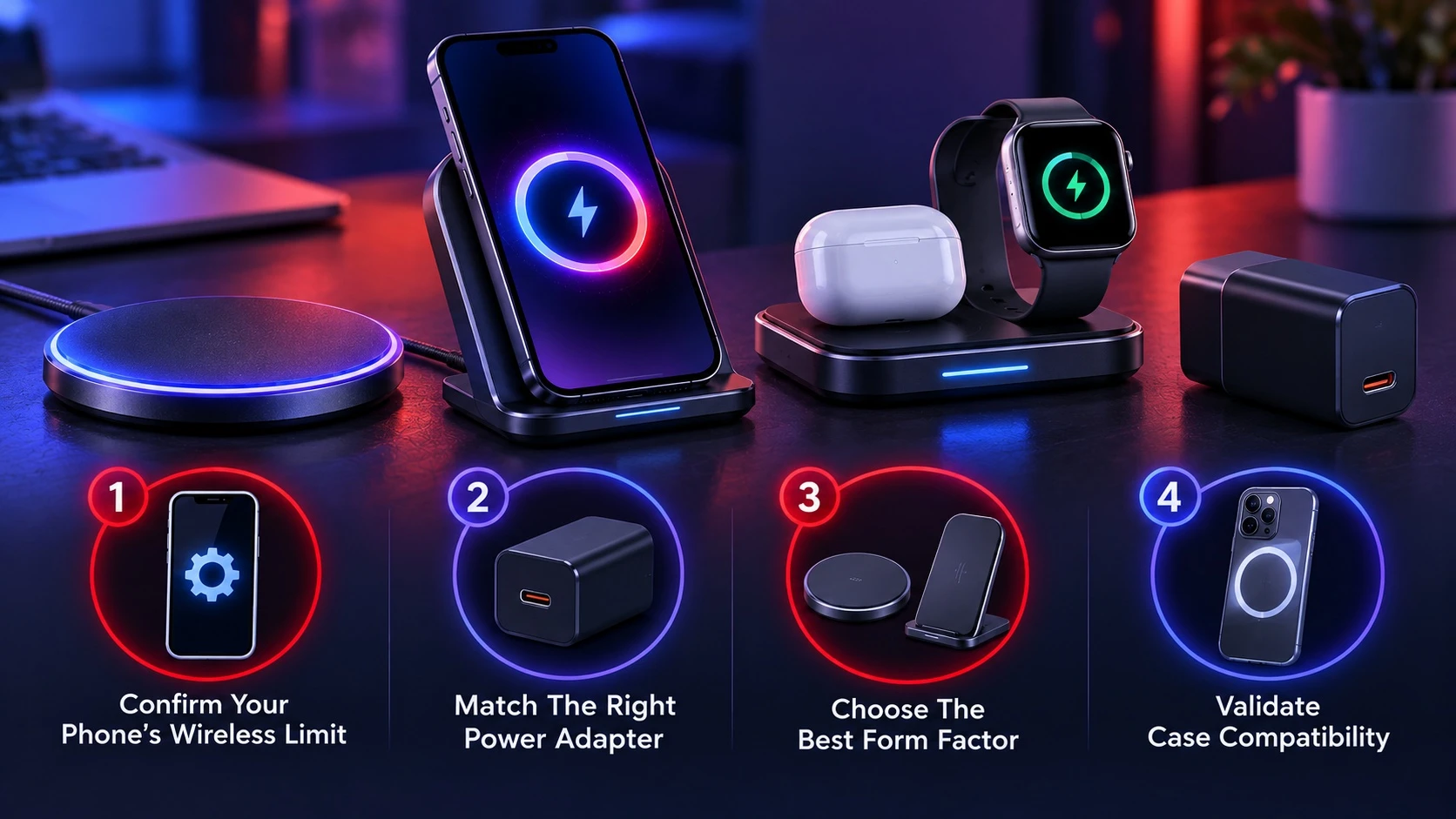
Wireless chargers come in several designs, including flat pads, upright stands and multi-device charging stations. Choose the format that suits your daily routine, but always follow the manufacturer’s placement and ventilation instructions. Place the charger on a stable surface away from direct sunlight, blankets and other materials that may trap heat. If the phone becomes unusually warm, check the case fit, charging position and surrounding temperature before assuming that higher wattage is the cause.
- Confirm Your Phone’s Wireless Limit: Check whether your device supports Qi2 and whether it supports the higher profile.
- Match The Right Power Adapter: Use a quality USB-C PD adapter that meets the charger’s recommended input.
- Choose The Best Form Factor: Prefer a stand for desk use and a stable pad only for hard, cool surfaces.
- Validate Case Compatibility: Use a thin magnetic case with accurate ring alignment to prevent throttling.
With those basics covered, both Qi2 and Qi2 25W can feel significantly better than older wireless charging.
If you are also replacing your wall adapter, consider its size, available ports and USB-C Power Delivery support. Some buyers prefer compact GaN adapters for travel or multi-device charging, although GaN technology does not automatically make wireless charging faster. Understanding the difference between GaN and regular chargers can help you choose an adapter that fits your setup and budget.
Conclusion
Qi2 and Qi2 25W both offer convenient magnetic wireless charging, but their main difference is maximum supported power. Standard Qi2 delivers up to 15W, while Qi2 25W raises the ceiling to 25W for compatible devices. The upgrade is worth considering if your phone supports the faster standard and you regularly need shorter charging sessions. However, users who primarily charge overnight or own devices limited to lower wireless charging speeds may find standard Qi2 sufficient.
Choosing well comes down to matching your phone’s capabilities, your charging habits, and your accessory setup. A certified charger paired with a proper power adapter and an aligned magnetic case will outperform a higher-watt option with a weak ecosystem.
Frequently Asked Questions
Will a Qi2 25W Charger Charge Every Phone at 25W?
No. The phone must support the higher power profile, and it may still limit power based on temperature, battery level, or firmware rules. Many phones will charge below 25W even on a capable charger. You still benefit from magnetic alignment and stable placement.
Does Qi2 Charging Work Through Any Phone Case?
It works through many cases, but thickness and materials affect efficiency. Misaligned magnetic rings can cause slower charging and extra heat. A thin magnetic case designed for accurate ring placement usually performs best.
Is Faster Wireless Charging Bad for Battery Health?
Higher charging power can increase heat, and sustained heat can accelerate battery wear. A well-designed charger and good airflow reduce that risk, and phones often throttle to protect the battery. If battery longevity is your top priority, slower and cooler charging sessions are generally gentler.
Do You Need a Special Power Adapter for Qi2 25W?
A Qi2 25W charger needs a power source that meets its manufacturer’s input requirements to deliver its full supported charging power. Some models require a 30W or higher USB-C Power Delivery adapter, while requirements can vary by charger. Always check the product specifications before buying. Using an adapter with insufficient output may result in slower charging.


