

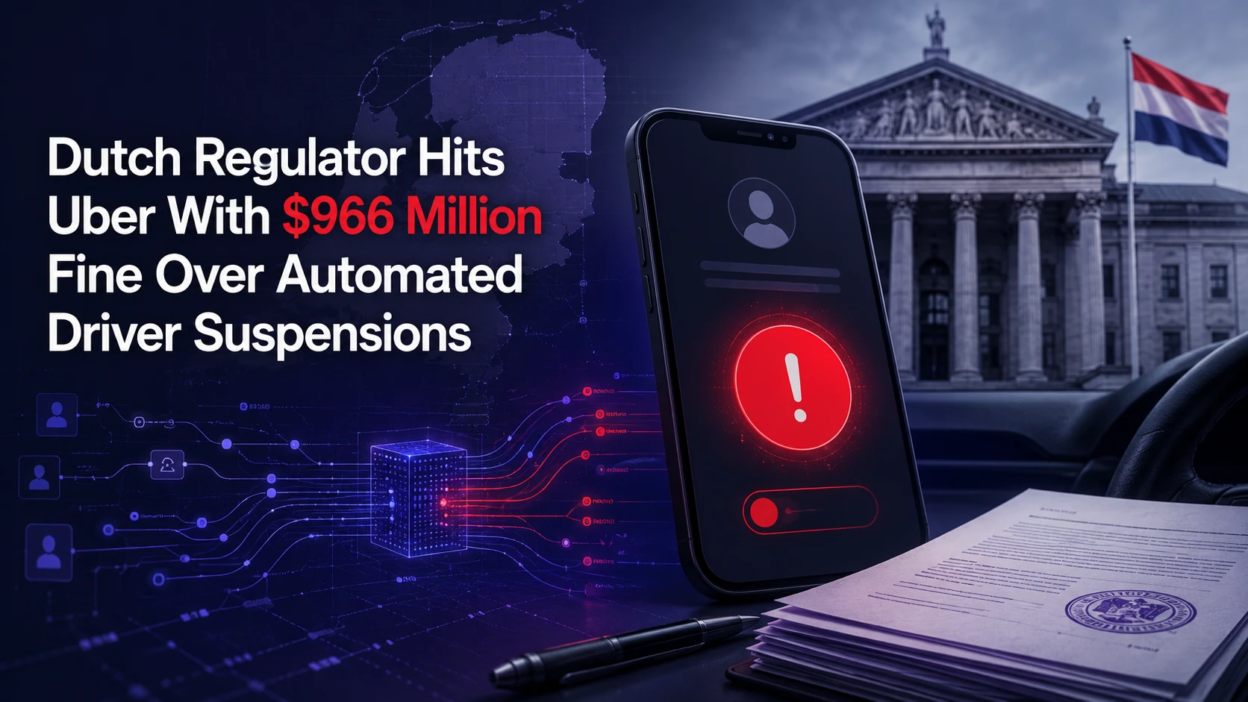
Uber has been hit with a massive €825 million ($966 million) fine in the Netherlands over the way its automated systems suspended drivers from its platform.
The Dutch Data Protection Authority found that Uber relied too heavily on automated systems when making decisions that could seriously affect drivers. In some cases, driver accounts were suspended without enough human involvement or a clear explanation of how the decision was made.
The case focuses on Uber’s practices between 2020 and 2022 and began after complaints involving drivers in France. The regulator examined whether drivers were given enough information and protection when automated systems made important decisions about their accounts.
Under the European Union’s General Data Protection Regulation, or GDPR, people have rights when companies use automated systems to make decisions that significantly affect them. This can include the right to understand why a decision was made, challenge it and receive meaningful human review.
For Uber drivers, being suspended from the platform can have an immediate financial impact because they may no longer be able to accept rides or earn money through the app. The regulator therefore considered account suspensions to be serious decisions that should not depend mainly on automated processing without proper safeguards.
The Dutch authority concluded that Uber did not provide enough transparency about some of these decisions and did not offer sufficient human oversight. Regulators said drivers should have been able to understand what led to a suspension and have a meaningful opportunity to challenge the outcome.
The €825 million penalty is one of the largest fines ever issued under Europe’s GDPR rules. It also highlights growing regulatory attention on algorithms and automated decision-making systems used by major technology platforms.
Uber disagrees with the regulator’s findings. The company says its current systems provide human review and allow drivers to appeal account decisions. Uber also plans to challenge the fine through the legal process.
The case could have wider effects beyond Uber. Many digital platforms use algorithms to detect fraud, evaluate users, distribute work and take action against accounts. European regulators are increasingly examining whether these systems give people enough transparency and whether humans remain meaningfully involved in decisions with major consequences.
For technology companies, the ruling is another warning that automation cannot simply replace human responsibility. Companies using algorithms for employment, gig work, finance or other high-impact services may need to make sure users clearly understand automated decisions and have a practical way to challenge them.
For Uber, the legal battle is not over, and the final outcome could depend on its appeal. However, the size of the penalty makes the case an important example of how European privacy rules are being applied to automated systems that affect people’s work and income.