
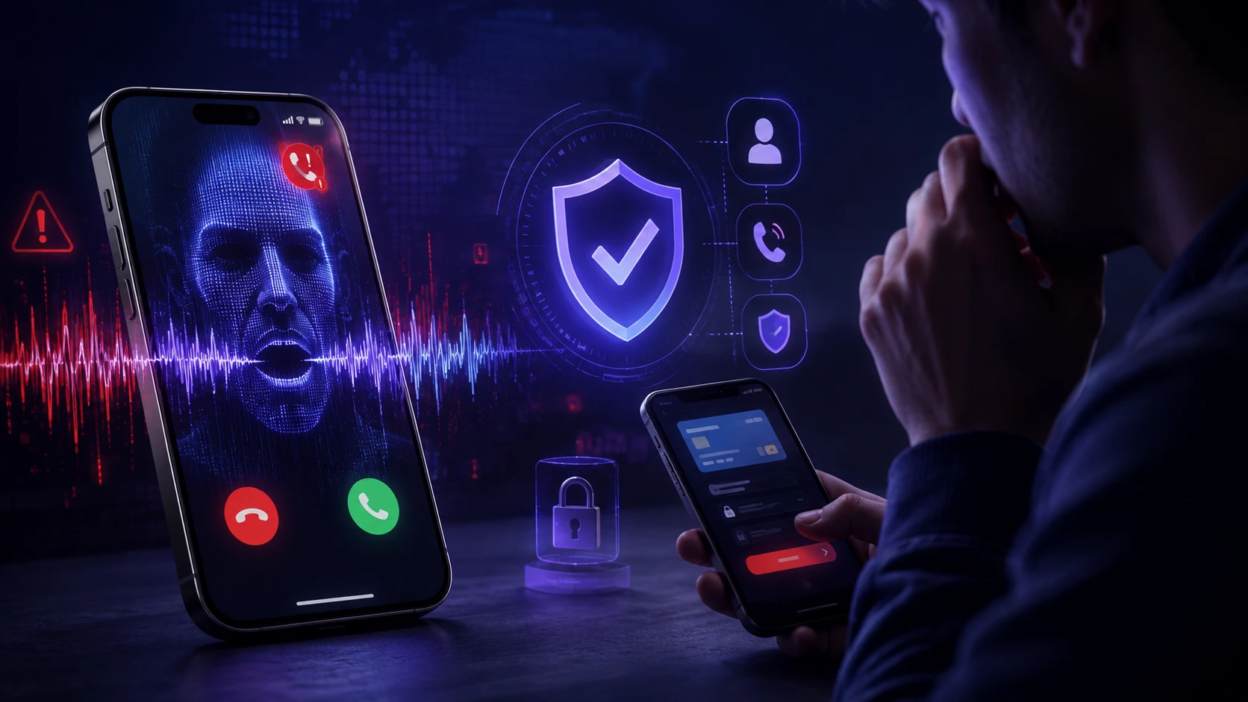
Deepfake voice scams can turn a single urgent call into an expensive mistake, especially when the caller pushes secrecy, speed, and fear. The safest response is to slow down, verify identity through a separate channel, and follow a payment process that cannot be overridden by pressure.
Deepfake Voice Scams And Why They Work?

Modern voice cloning can mimic tone, cadence, and even filler words well enough to trigger recognition in the listener. Criminals exploit that split second of trust to steer the conversation toward money, gift cards, wire transfers, or account access.
These scams succeed because they target human reflexes, not technical weaknesses. Urgency narrows attention, and authority cues make normal verification feel rude or unnecessary.
Common Warning Signs In An Urgent Call
Deepfake voice scams often follow patterns that create urgency and limit your ability to check facts. The content of the request matters less than the pressure tactics used to get immediate compliance.
- Time pressure: The caller insists on paying within minutes and treats any delay as a crisis.
- Secrecy demand: The caller says you must not tell coworkers, family, or a manager.
- Payment method shift: The caller pushes irreversible payments like wire, crypto, or gift cards.
- Unusual process override: The caller asks you to bypass approval rules, documentation, or normal vendor steps.
- Callback resistance: The caller discourages hanging up or refuses a return call to a known number.
- Emotional manipulation: The caller uses fear, guilt, or praise to keep you compliant.
When two or more of these signs show up together, treat the call as unverified until proven otherwise.
How To Verify An Urgent Call Before Paying?
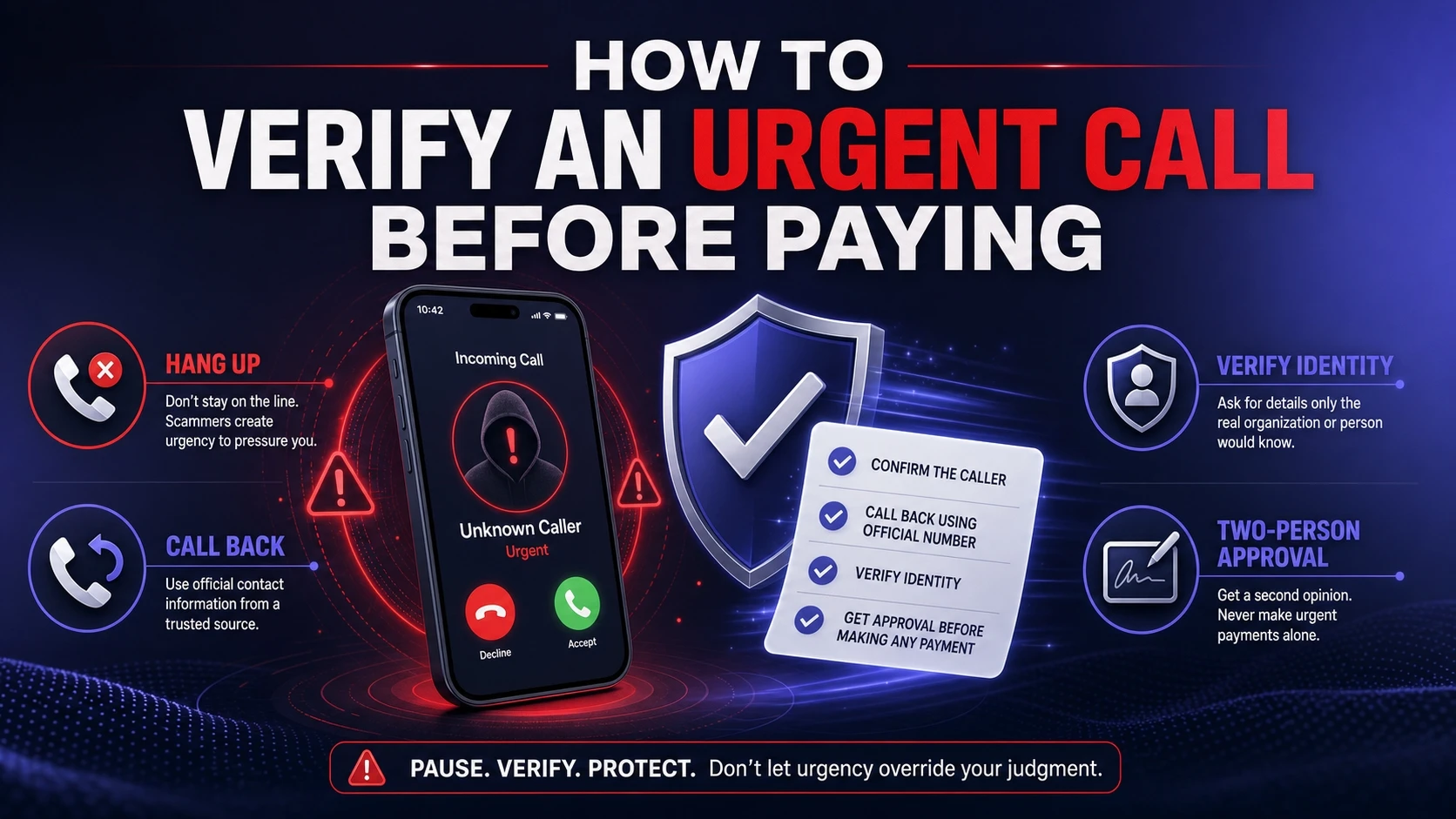
Verification should be quick, repeatable, and difficult for an attacker to control. The goal is to move the conversation away from the channel the scammer owns and into one you control.
- Stop the transaction: Pause any payment activity, including drafting wires, buying gift cards, or sharing one time codes.
- End the call politely: Say you must follow verification policy and will call back after confirming details.
- Call back using a trusted number: Use a saved contact, an internal directory, or a verified invoice record, not the number provided during the call.
- Use a second channel check: Confirm through an authenticated method such as a company chat tool, a known email thread, or an identity verified ticketing system.
- Ask for a shared verification phrase: Use a pre agreed phrase or code word that is never spoken publicly or stored in plain text notes.
- Require written details: Request the exact amount, payee, bank details, and purpose in writing through a verified channel before any approval.
- Enforce approvals: Follow two person approval for any high risk payment, even when the caller claims executive authority.
- Document and report: Capture the time, number, requested action, and any voice cues, then notify the appropriate security or fraud contact.
These steps work because they break the scammer’s control of the conversation and replace voice trust with process trust.
Verification Questions That Reduce Risk
Attackers prepare for common security questions, but they struggle when questions are context specific and tied to private workflows. Keep questions short and require answers that can be checked quickly without relying on memory alone.
- Process confirmation: Ask which internal form, ticket, or approval route must be used for this type of payment.
- Known relationship detail: Ask for the last legitimate invoice reference, purchase order, or prior approved amount.
- Specific callback requirement: State you will call back on the directory number and ask them to confirm the extension or department.
- Shared secret check: Request the agreed code word or a short phrase used only for payment verification.
- Reasonableness test: Ask why the payment cannot follow normal lead times and what consequence occurs if it waits for approval.
Pair questions with objective verification, since deepfake voice scams are designed to win over your intuition.
Fast Decision Table For High Pressure Calls
This table helps you decide what to do when a caller demands immediate payment or sensitive information. Treat it as a simple triage and follow the action even if the voice sounds familiar.
| Signal | What It Often Means | Safe Action |
|---|---|---|
| Caller demands secrecy | Isolation tactic to prevent verification | End the call and verify through a known channel |
| Urgent wire or gift card request | Preference for irreversible payments | Require written request and two person approval |
| Refuses callback to a trusted number | Control of communication path | Call back using directory or saved contact only |
| Asks for one time codes or account access | Attempt to take over accounts | Do not share codes and report immediately |
Use this triage consistently so decisions do not depend on stress, rank, or familiarity.
Payment Controls That Block Deepfake Voice Scams
The strongest defense is a payment process that cannot be rushed by a voice call. Even small teams can apply lightweight controls that make fraud attempts expensive and time consuming for attackers.
- Two person approval: Require a second approver for any new payee, changed bank details, or high value transfer.
- Verified vendor changes: Confirm banking updates through a pre existing vendor record and a separate channel.
- Payment thresholds: Set escalation rules when amounts exceed a defined limit, including mandatory hold periods.
- Role based permissions: Limit who can add payees, edit bank fields, and release payments.
- Call verification policy: Make it standard to end unexpected urgent calls and call back using trusted numbers.
Once these controls are routine, deepfake voice scams lose their main advantage, which is forcing instant compliance.
What To Do If You Already Paid Or Shared Details?

Speed still matters after a mistake, but the actions should be structured and calm. Focus on limiting further damage and creating a clear record for your bank and internal team.
- Contact your bank or payment provider: Request an immediate recall, reversal, or fraud hold using the provider’s urgent fraud process.
- Secure accounts: Change passwords, revoke sessions, enable multi factor authentication, and reset recovery options for affected accounts.
- Notify internal stakeholders: Inform finance leadership, IT, and security so they can freeze further payments and monitor for follow on attempts.
- Preserve evidence: Save call logs, voicemails, payment confirmations, and any written instructions you received.
- Update controls: Add a short hold period, strengthen approvals, and train staff on the exact tactic that was used.
Recovery often depends on how quickly you act and how clearly you can prove the payment was unauthorized.
Training And Habits That Build Everyday Resistance
People are the target, so training should be practical and focused on behavior. The best programs teach a small set of reflexes that work under pressure.
- Default to callback: Make it normal to hang up and call back on a known number.
- Normalize verification language: Provide a short script that anyone can use without feeling confrontational.
- Practice high pressure drills: Run quick internal exercises that test urgent payment requests and bank detail changes.
- Limit public voice samples: Reduce public posting of long audio clips for executives and key finance staff when possible.
- Centralize reporting: Give employees one clear place to report suspicious calls and reward fast reporting.
Consistency is what makes these habits stick, especially for teams that handle invoices, payroll, or procurement.
How Tech bonafide Can Help You Reduce Voice Scam Risk?
Deepfake voice scams sit at the intersection of cybersecurity, identity verification, and business process. Tech bonafide can help by assessing your current payment workflow, tightening approval controls, and guiding a practical security awareness program that staff can follow during urgent calls.
For organizations that want stronger defenses, building a simple verification runbook, enforcing multi factor authentication, and reviewing access permissions can reduce the blast radius of a single successful social engineering attempt. A focused security review can also identify where vendor change procedures and call based approvals create unnecessary exposure.
Conclusion
Deepfake voice scams are effective because they exploit trust and urgency, not because they are technically perfect. The most reliable protection is a repeatable verification routine that shifts confirmation to trusted channels and refuses irreversible payments without approvals.
If an urgent caller pressures you to act immediately, treat it as unverified until you confirm identity through a callback and a second channel. Process beats panic, and a short delay is cheaper than a fast mistake.
Frequently Asked Questions
Can a deepfake voice scam copy someone perfectly?
Some clones sound convincing, but perfection is not required for fraud to work. Attackers rely on urgency and authority cues to push you past verification. A callback to a trusted number and a second channel check are more reliable than judging audio quality.
What is the safest way to handle urgent payment requests by phone?
End the call and verify through a channel you control, such as calling a known number from your directory and confirming in an authenticated work tool. Require written details and follow your approval workflow, especially for new payees or changed bank information. If the caller resists these steps, treat the request as suspicious.
Should we ban phone approvals for payments?
For high risk payments, removing phone only approvals is a strong control because voice can be spoofed. Many teams allow phone communication but require written authorization plus two person approval before funds move. A clear policy and training make enforcement easier under pressure.