

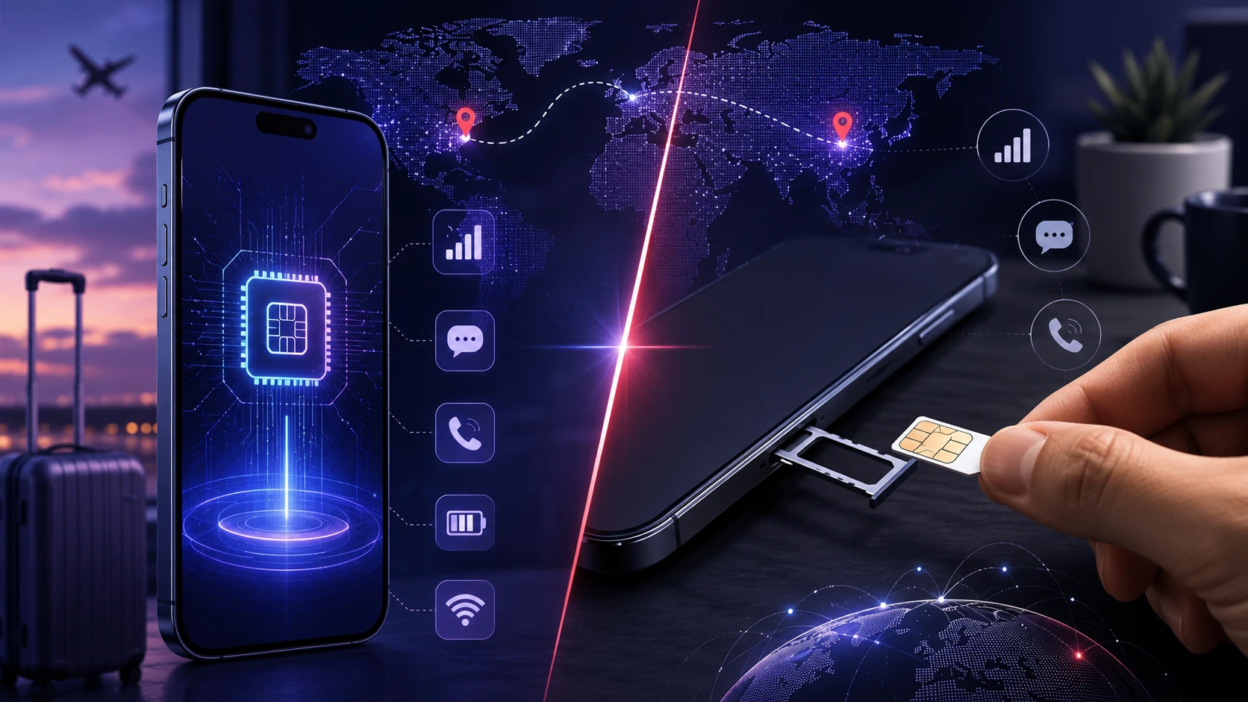
Choosing between an eSIM and a physical SIM affects how fast you get connected, how easily you can switch carriers, and how resilient your setup is when problems happen. Both can work well for travel and everyday life, but they shine in different situations. The best choice depends on your phone, how often you change plans, and how much you value convenience versus simplicity.
What Esim And Physical Sim Mean?
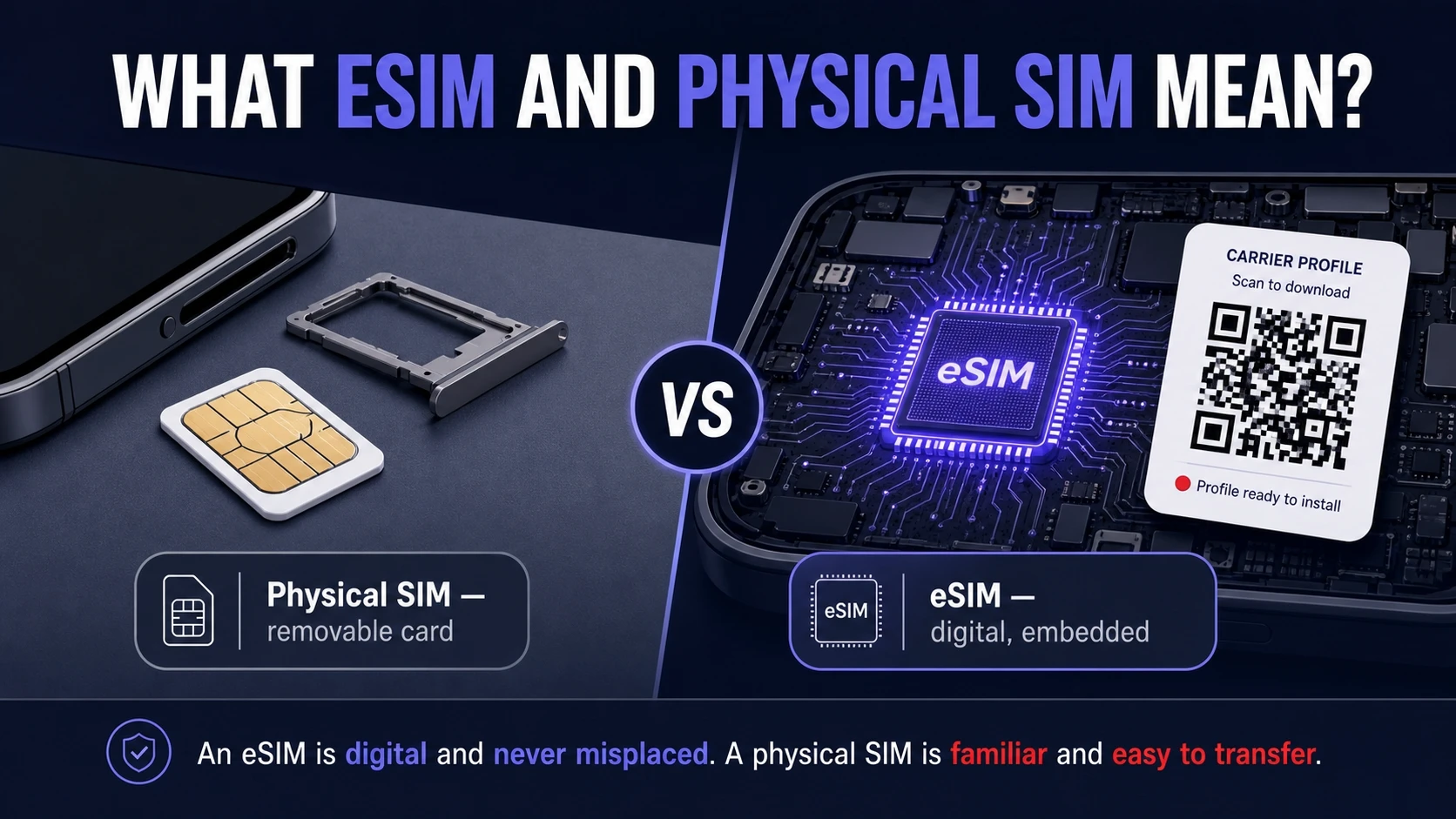
A physical SIM is a removable plastic card that stores your subscriber identity and helps the network authenticate your device. You insert it into a tray, and it can be moved to another compatible phone in minutes. Many people like it because the process is visible and familiar.
An eSIM is a digital SIM built into the phone or smartwatch. Instead of inserting a card, you download an operator profile, usually by scanning a QR code or using an app. Because it is embedded, there is no tray to open and nothing to misplace.
Key Differences That Matter Most
The practical difference is how you activate, switch, and manage service. eSIM tends to win on speed and flexibility, while physical SIM often wins on universal handling and quick manual swaps. Understanding the tradeoffs helps avoid surprises during a trip or a carrier change.
| Factor | eSIM | Physical SIM |
|---|---|---|
| Activation | Download a profile with QR code or app | Insert card and provision on network |
| Switching Plans | Usually faster and can store multiple profiles | Requires swapping cards or reissuing SIM |
| Risk Of Loss Or Damage | No card to lose, but profile depends on device access | Card can be lost, bent, or misplaced |
| Phone Transfer | May need carrier steps or re-download to new device | Move SIM to new phone instantly if unlocked |
This comparison sets the baseline. Next, it helps to separate travel needs from day-to-day needs.
Esim Benefits For Travel
Travel often involves short timelines, unfamiliar stores, and the need to get online quickly for maps, messaging, and banking. eSIM can reduce friction because you can set up service without searching for a kiosk. It also lowers the chance of losing your home SIM while swapping cards abroad.
- Fast Setup: You can often activate before landing if you have Wi-Fi or data access.
- Keep Your Home Number Active: Many phones let you keep your main line and add a travel data plan at the same time.
- Easier Multi-Country Hopping: Switching plans is usually a software change rather than a physical swap.
- Less Fragile While On The Move: No tiny card to drop in a taxi or hotel room.
Those strengths are most noticeable when you travel often or visit multiple regions. Still, eSIM is not always the smoothest option everywhere.
Physical Sim Benefits For Travel
A physical SIM can be the most straightforward choice in places where eSIM plans are limited or where local providers mainly sell prepaid SIM cards in stores. It also helps when you switch devices frequently, such as moving a local SIM from a phone to a mobile hotspot. For some travelers, the simplicity of a physical swap feels safer than downloading profiles.
- Wide Availability: Physical prepaid SIMs are commonly sold in airports, convenience stores, and carrier shops.
- Instant Device Swap: You can move the SIM to a backup phone if your main phone fails.
- Easy Troubleshooting: A reseat or swap can solve certain network registration issues quickly.
- Works With More Devices: Older phones and many budget models still rely on physical SIM only.
These advantages are practical when coverage and plan options are unpredictable. The downside is the need to handle the card carefully while traveling.
Daily Use Considerations
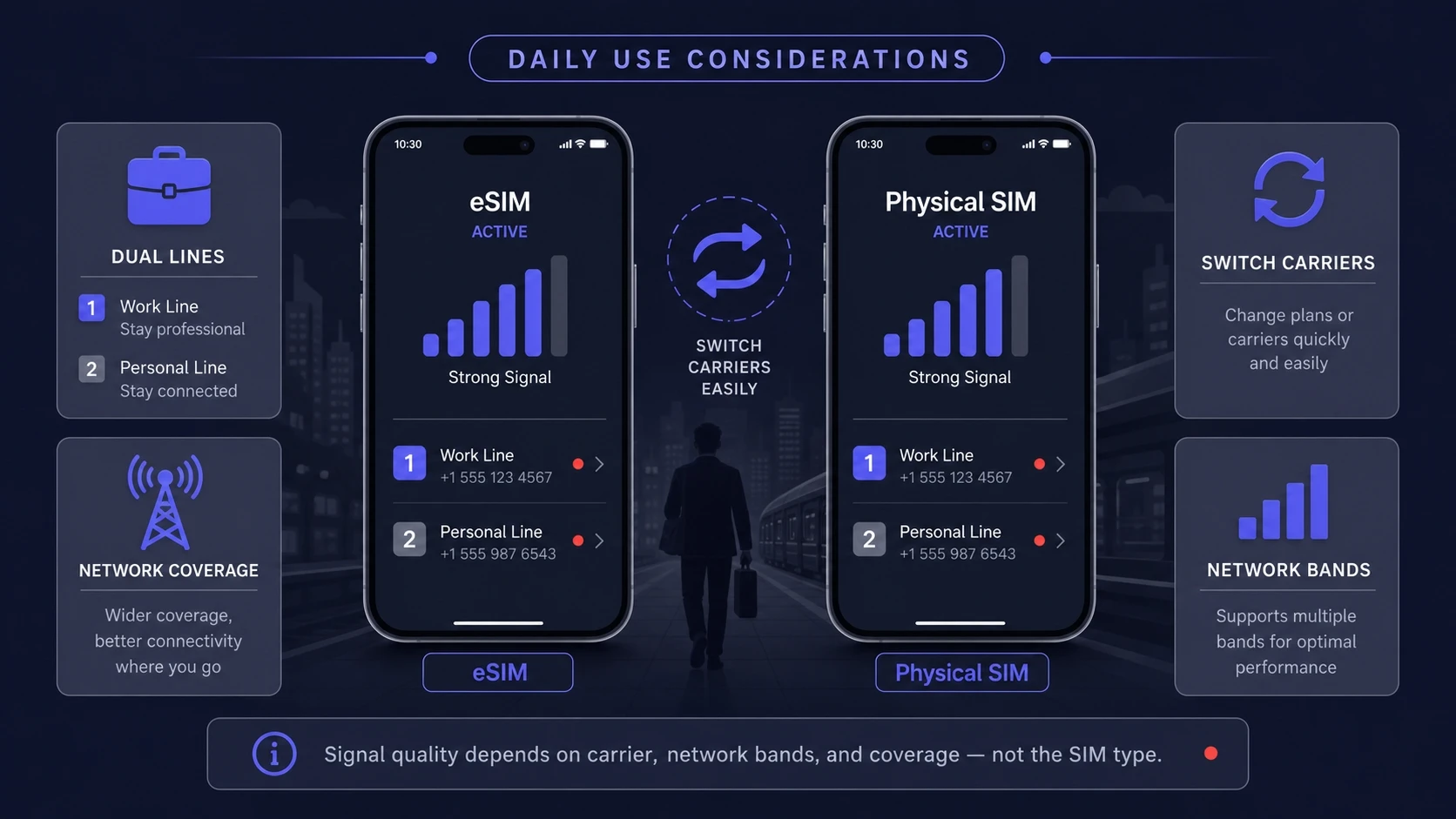
For daily use, the decision usually comes down to how often you change carriers, how many lines you manage, and whether you use dual SIM features. eSIM is great for separating work and personal numbers without carrying a second phone, assuming your device supports it. Physical SIM can be better if you swap phones often and want the simplest transfer path.
Signal quality is not inherently better with eSIM or physical SIM. Performance depends on the carrier, network bands your device supports, and coverage where you live and work. The SIM type mostly affects management, not radio strength.
Device Compatibility And Carrier Support
Not every device supports eSIM, and support varies by region and carrier. Even when a phone has eSIM hardware, some operators limit eSIM on prepaid plans or require extra verification. Physical SIM is still the default in many markets and is usually easier to activate across a wider range of devices.
Before committing, check whether your phone is unlocked and whether your carrier supports eSIM transfers between devices. If you rely on a company-issued phone, confirm whether your IT policies allow eSIM provisioning. This matters for business travelers and remote teams.
Setup And Switching Process
Both options are simple when everything goes right, but the failure points differ. Physical SIM setup can fail due to a damaged card, a dirty tray, or provisioning issues that require a replacement. eSIM setup can fail if the QR code is expired, if the device cannot reach the activation server, or if identity verification gets stuck.
If you value quick self-service switching, eSIM usually has the edge because profiles can be added and disabled in settings. If you value a purely offline fallback, physical SIM can be easier because you can carry a spare. Either way, saving carrier support details and keeping a backup connectivity plan reduces downtime.
Security And Privacy Tradeoffs
Physical SIM theft can enable SIM swap style attacks if a criminal convinces a carrier to reassign your number. eSIM does not eliminate that risk, but it reduces the chance of someone physically stealing your SIM from the device. At the same time, eSIM management is tied to account security, so strong carrier account passwords and multi-factor authentication matter.
For privacy, both SIM types expose similar network identifiers to carriers. The bigger privacy factors are the apps you use, your device security updates, and whether you separate travel data from your primary number. Using a dedicated travel data plan can reduce the amount of activity tied to your main line.
Costs And Plan Flexibility
Pricing depends on the market and the plan, not the SIM format. Some carriers charge a small fee for a replacement physical SIM, while others may charge for eSIM re-issuance or limit the number of transfers. Travel plans may be cheaper on local prepaid physical SIMs in some destinations, while eSIM travel plans can be more convenient when you want predictable setup and quick activation.
When comparing costs, look at total usable data, hotspot support, speed throttling policies, and validity periods. Also confirm whether voice and SMS are included or if it is data-only. Those details affect daily usability more than the SIM type itself.
Dual Sim And Multi Line Use
Dual SIM can be a deciding factor because it changes how you manage your primary number while using a secondary line for data. Many modern phones support one physical SIM plus one eSIM, and some support multiple eSIM profiles with one active at a time. That makes it easier to keep your home line for calls and authentication codes while using a separate plan for data.
For frequent travelers, pairing your primary number with a travel eSIM often reduces hassle. For people who handle multiple devices, a physical SIM can still be handy for quick swaps between phones, tablets, and hotspots. The best setup depends on how your workflow is structured.
Reliability And Backup Planning
Reliability is less about which SIM is better and more about how you plan for failure. With a physical SIM, the common failure is losing or damaging the card, so a spare can help. With eSIM, the common failure is account access or profile transfer issues, so secure credentials and a secondary connectivity method matter.
- Keep Devices Unlocked: An unlocked phone gives you more options when switching plans or providers.
- Store Recovery Access Securely: Protect carrier account logins and ensure recovery email and phone are up to date.
- Maintain A Backup Connection: A second line, hotspot, or offline maps can prevent getting stuck without access.
Small preparations reduce the risk of losing access to banking, navigation, and authentication. That matters both on the road and at home.
Which One Should You Choose?
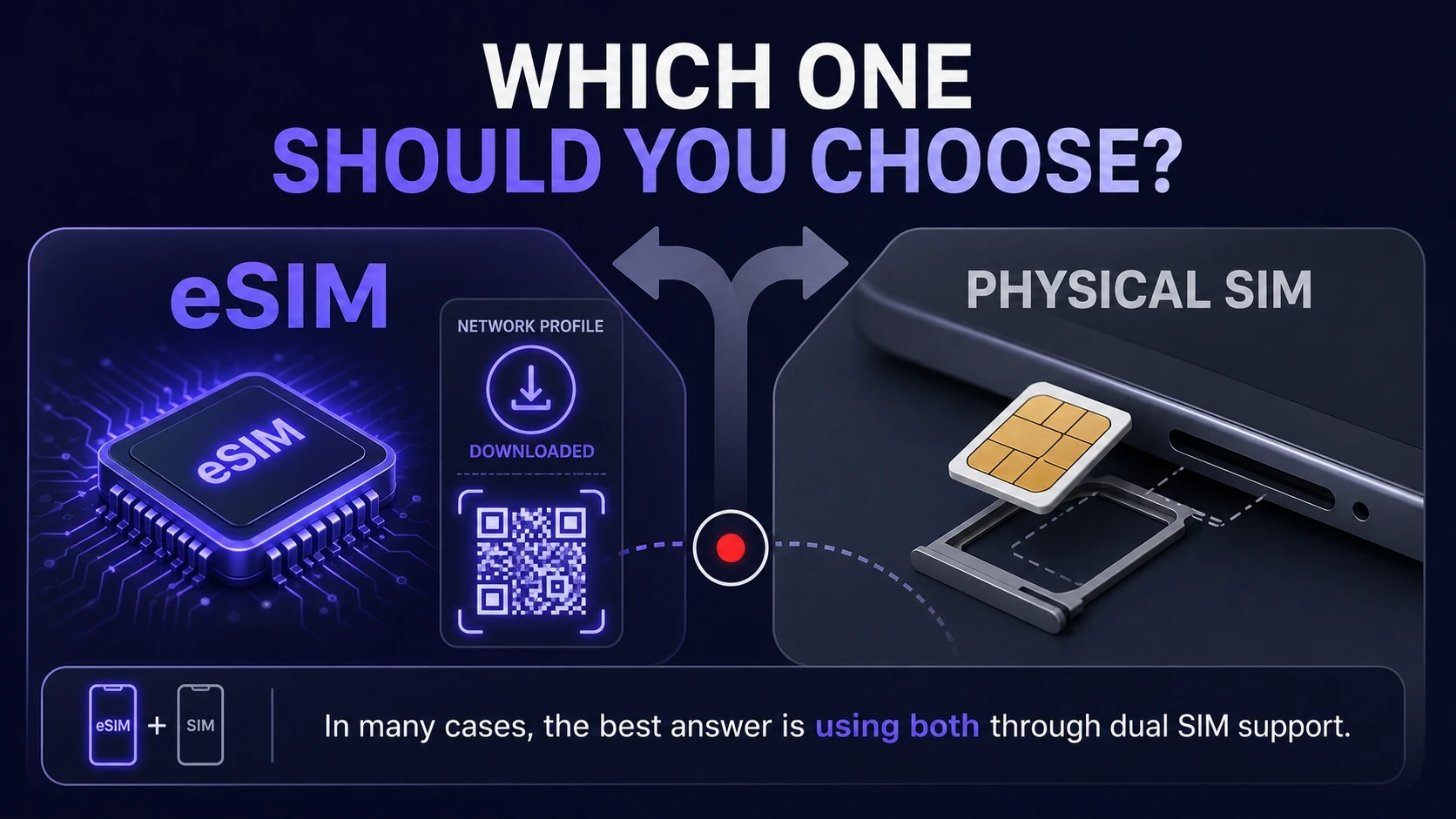
Choose eSIM if you want fast activation, frequent switching, and the ability to keep your main line active while adding a secondary plan. It is especially useful if you travel often, prefer managing plans in settings, and use newer devices with strong carrier support. It also helps reduce the friction of handling small SIM cards.
Choose a physical SIM if you regularly swap phones, rely on older devices, or travel to places where eSIM options are limited. It can also be a better fit if you want a simple, tangible fallback and the ability to move service instantly between devices. In many cases, the best answer is using both through dual SIM support.
Conclusion
eSIM is usually better for convenience, quick plan changes, and keeping your primary number active while traveling. Physical SIM is usually better for broad compatibility and fast manual transfers between devices. The most practical approach is picking the option your device and carrier support reliably, then backing it with a secondary plan for continuity.
If your phone supports dual SIM, combining a stable primary line with a flexible secondary plan often delivers the best everyday and travel experience. Check compatibility, confirm transfer rules, and choose the plan terms that match how you actually use data, calls, and hotspots.
Frequently Asked Questions
Does eSIM work without Wi-Fi when activating?
Most eSIM activations require an internet connection to download the carrier profile. If you do not have Wi-Fi, you may need temporary mobile data from an existing line or activate before you travel. Some carriers can also push profiles through their apps when you have connectivity.
Can I switch from physical SIM to eSIM on the same number?
In many cases, yes, but the process depends on your carrier and plan type. Some carriers let you convert in settings, while others require account verification or a new QR code. Confirm any fees, transfer limits, and the time window for re-issuing an eSIM.
Which is safer for losing access to my number?
Both can be secure if your carrier account is protected with strong authentication. Physical SIM adds a risk of the card being lost or stolen, while eSIM adds a risk of account takeover if credentials are weak. Using multi-factor authentication and keeping recovery details current is the best defense.