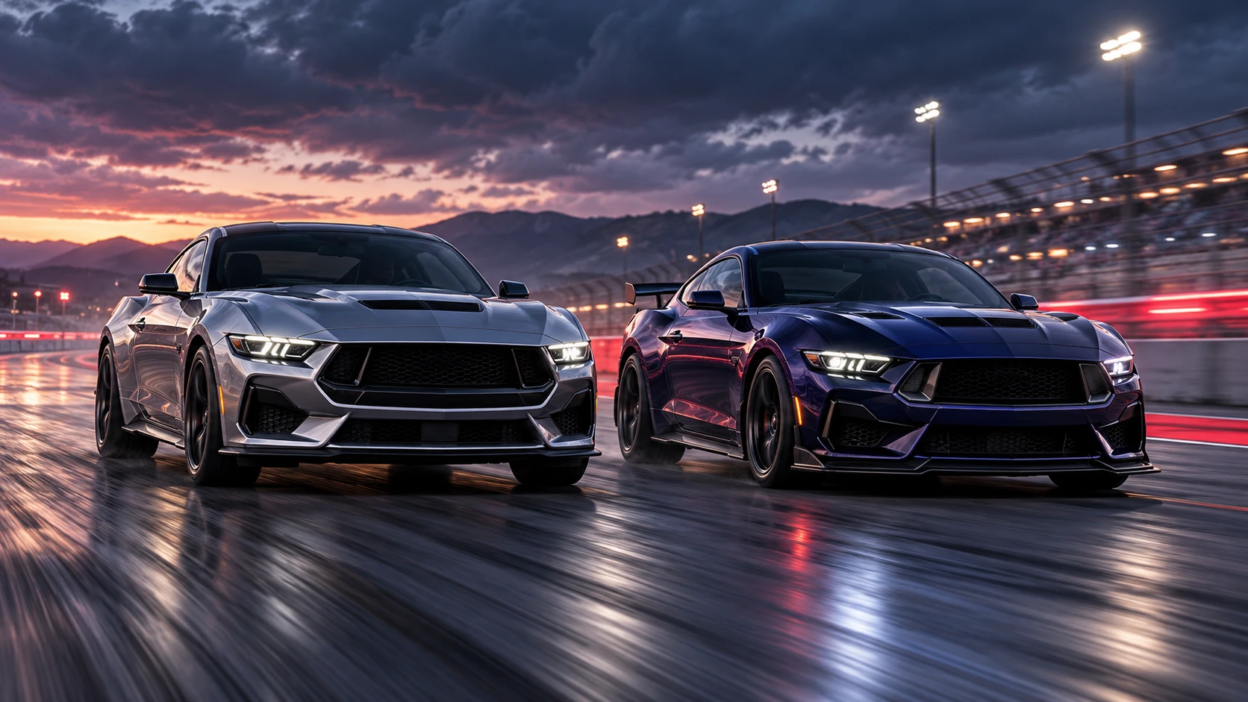
The Ford Mustang GT and Mustang Dark Horse deliver impressive acceleration, but which one is actually faster from 0–60 mph? Instrumented testing of the 2024 models provides a useful comparison. MotorTrend recorded 3.9 seconds for an automatic Mustang GT convertible and 3.7 seconds for an automatic Dark Horse. Its manual-transmission tests returned 4.3 seconds for the GT and 4.1 seconds for the Dark Horse. These results show a small advantage for the Dark Horse in the tested configurations, although differences in tires, body styles, and equipment prevent a perfectly matched comparison. This guide examines the real test results and explains how traction, transmission choice, and launch conditions affect acceleration.
What 0–60 Measures and Why It Varies?
0–60 is a simple headline metric, but it bundles several hard-to-control variables into one number. Even small changes in grip or shift strategy can swing results by a few tenths, which is a big difference in modern performance cars.
Professional automotive publications often use GPS-based measuring equipment to record acceleration on controlled test courses. However, not all tests take place on specially prepared drag-strip surfaces. Another important difference is one-foot rollout, a timing method that excludes the initial foot of vehicle movement before the acceleration clock starts. This can make a published 0–60 mph time quicker than a measurement taken from the exact moment the vehicle begins moving. Readers can review Car and Driver’s acceleration-testing procedure to understand how rollout affects published performance figures.
- Surface Grip: Clean, warm pavement with rubber laid down helps the car hook and reduces wheelspin.
- Tire Compound and Temperature: Summer tires with some heat typically launch harder than colder all-seasons.
- Transmission Strategy: A fast automatic shift and consistent launch logic can beat a slightly higher-power car with a messy start.
- Vehicle Break-In and Conditions: Air density, wind, fuel quality, and drivetrain break-in can move the result.
Keep those factors in mind before treating any single 0–60 time as absolute. It is also important to distinguish acceleration from top speed, since the two measurements describe different aspects of vehicle performance. For another sports-car example, explore our Supra MK4 performance overview, which discusses engine output, top-speed characteristics, and the performance reputation of Toyota’s iconic sports car.
Mustang GT 0–60 in Real Tests
In MotorTrend’s 2024 Mustang acceleration tests, a Mustang GT coupe equipped with the six-speed manual transmission and Performance Package reached 60 mph in 4.3 seconds. A separately tested GT convertible with the 10-speed automatic, active performance exhaust, and Performance Package achieved 3.9 seconds. These results demonstrate the automatic’s acceleration potential, although the different body styles mean the figures should not be treated as a perfectly controlled transmission-only comparison.
Manual GT runs can be quick, but they are more sensitive to clutch slip, shift timing, and wheelspin. That makes the spread between best-case and average-case results wider than on the automatic.
Where the GT shines is repeatability when traction is available and the launch is clean. With good tires, the car can deliver quick 0–60 runs without needing perfect driver technique every time.
Mustang Dark Horse 0–60 in Real Tests
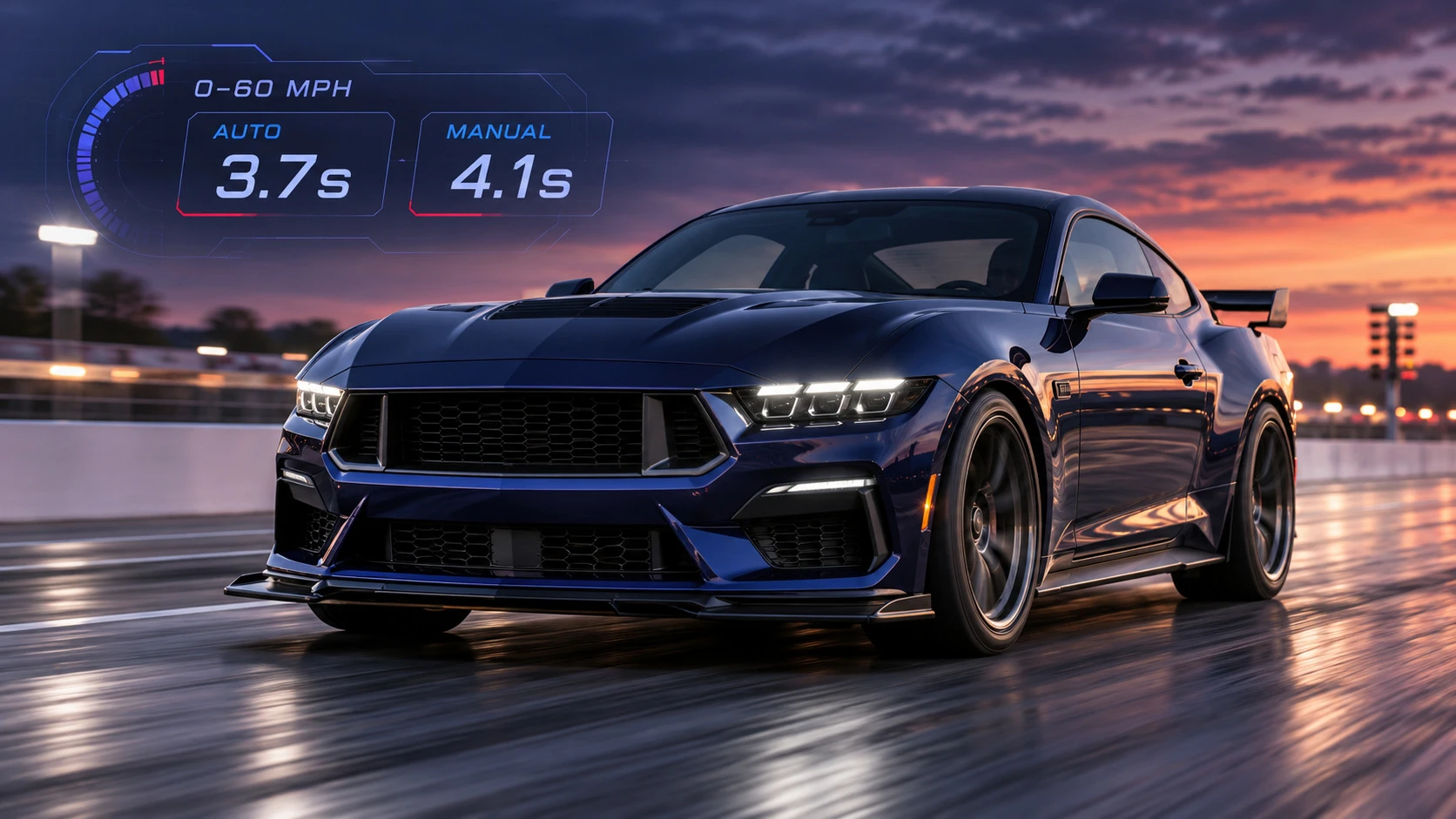
The Mustang Dark Horse is designed as a more track-focused version of the Mustang GT, with additional engine performance and upgraded driving hardware. In MotorTrend’s instrumented testing of the 2024 Dark Horse equipped with the Handling Package, the 10-speed automatic version reached 60 mph in 3.7 seconds, while the six-speed manual version completed the sprint in 4.1 seconds. Both results were two-tenths of a second quicker than the respective Mustang GT configurations tested by the publication. However, the Dark Horse test cars used more aggressive performance tires, making tire selection an important factor in interpreting the difference.
That overlap surprises some shoppers, but it makes sense. At this level, the launch is often traction-limited, and tire choice can matter as much as output.
The Dark Horse’s additional performance hardware and available track-focused tires can help it achieve strong acceleration results. However, published best-run figures alone do not establish that it delivers more consistent launches than the Mustang GT across repeated tests. Demonstrating that advantage would require multiple recorded acceleration attempts under comparable conditions. Transmission behavior, gearing, tire grip, and electronic traction management can all influence the outcome.
Mustang GT Vs Dark Horse 0–60 Comparison
The cleanest way to compare is to line up the same variables. When both cars run similar tires, similar conditions, and similar instrumentation, the gap is usually small.
In practice, the Dark Horse can be quicker, but the GT can match it with the right transmission and tire package. If a GT is on street-biased tires or a less aggressive setup, the Dark Horse is more likely to post the better headline run.
Mustang GT vs Dark Horse: 2024 Instrumented Test Results
| Tested Vehicle | Transmission | 0–60 mph |
|---|---|---|
| 2024 Mustang GT coupe — Performance Package | 6-speed manual | 4.3 sec |
| 2024 Mustang GT convertible — Performance Package | 10-speed automatic | 3.9 sec |
| 2024 Mustang Dark Horse — Handling Package | 6-speed manual | 4.1 sec |
| 2024 Mustang Dark Horse — Handling Package | 10-speed automatic | 3.7 sec |
MotorTrend’s published results give the Dark Horse a 0.2-second advantage in both transmission categories. However, the automatic Mustang GT tested was a convertible, while the Dark Horse models were coupes equipped with the Handling Package and Pirelli P Zero Trofeo RS tires. Differences in body style, weight, and tire equipment mean the results describe the tested configurations, not an exact trim-only performance gap.
Independent testing by Car and Driver also shows how closely matched these two Mustangs can be. In its 2024 Mustang GT manual test, the publication recorded a 4.2-second 0–60 mph time. Its separately tested 2024 Mustang Dark Horse manual completed the sprint in 4.1 seconds. That represents a difference of just 0.1 seconds in these two tests. Both cars were equipped with performance-oriented tires, although the GT used Pirelli P Zero PZ4 tires and the Dark Horse used Pirelli P Zero Trofeo RS tires. These results reinforce the importance of comparing actual vehicle specifications before declaring one model consistently faster.
Why the Dark Horse is Not Always Dramatically Quicker?
The Dark Horse has more engine power, but the difference is relatively small compared with the total output of either vehicle. In MotorTrend’s 2024 tests, the Mustang GT models equipped with active performance exhaust produced a rated 486 horsepower, while the Dark Horse produced 500 horsepower. That is a difference of just 14 horsepower between those tested configurations. Both vehicles send power to the rear wheels, so insufficient traction during the initial launch can reduce the benefit of the additional output. Higher horsepower may contribute more noticeably as speed increases, but it does not guarantee a large advantage in the first 60 mph.
Gearing and shift behavior also matter. If one car shifts earlier, short-shifts to maintain traction, or hits a shift at an awkward point before 60 mph, the stopwatch can favor the other even if peak power is higher.
Finally, trim-to-trim comparisons often hide option differences. A GT on sticky summer tires can outrun a Dark Horse on less aggressive rubber, even though the Dark Horse is the higher-tier model.
Transmission Effects on Real 0–60 Runs
If the goal is the quickest repeatable 0–60, an automatic transmission usually makes it easier. It removes missed shifts and reduces time lost to clutch modulation. However, actual results still depend on the specific vehicle configuration and test conditions. For a closer examination of Ford’s transmission options, read our 2026 Mustang GT automatic vs manual comparison, which explains the available acceleration evidence, gearing differences, and factors that affect repeatable launches.
Manual cars can still be quick, but the driver has to manage wheelspin, clutch engagement, and shift timing with precision. That is why manual results often show a larger spread between best and average runs.
- Automatic Consistency: The car can repeat similar launches with less variation from run to run.
- Manual Skill Factor: A great launch can be very fast, but small mistakes cost tenths quickly.
- Shift Count to 60: If 60 mph lands near a shift point, timing can change the final number.
Choosing a transmission is less about which is more fun and more about how much variability you accept in real tests.
Tires, Wheels, and Prep Matter More Than Most People Expect
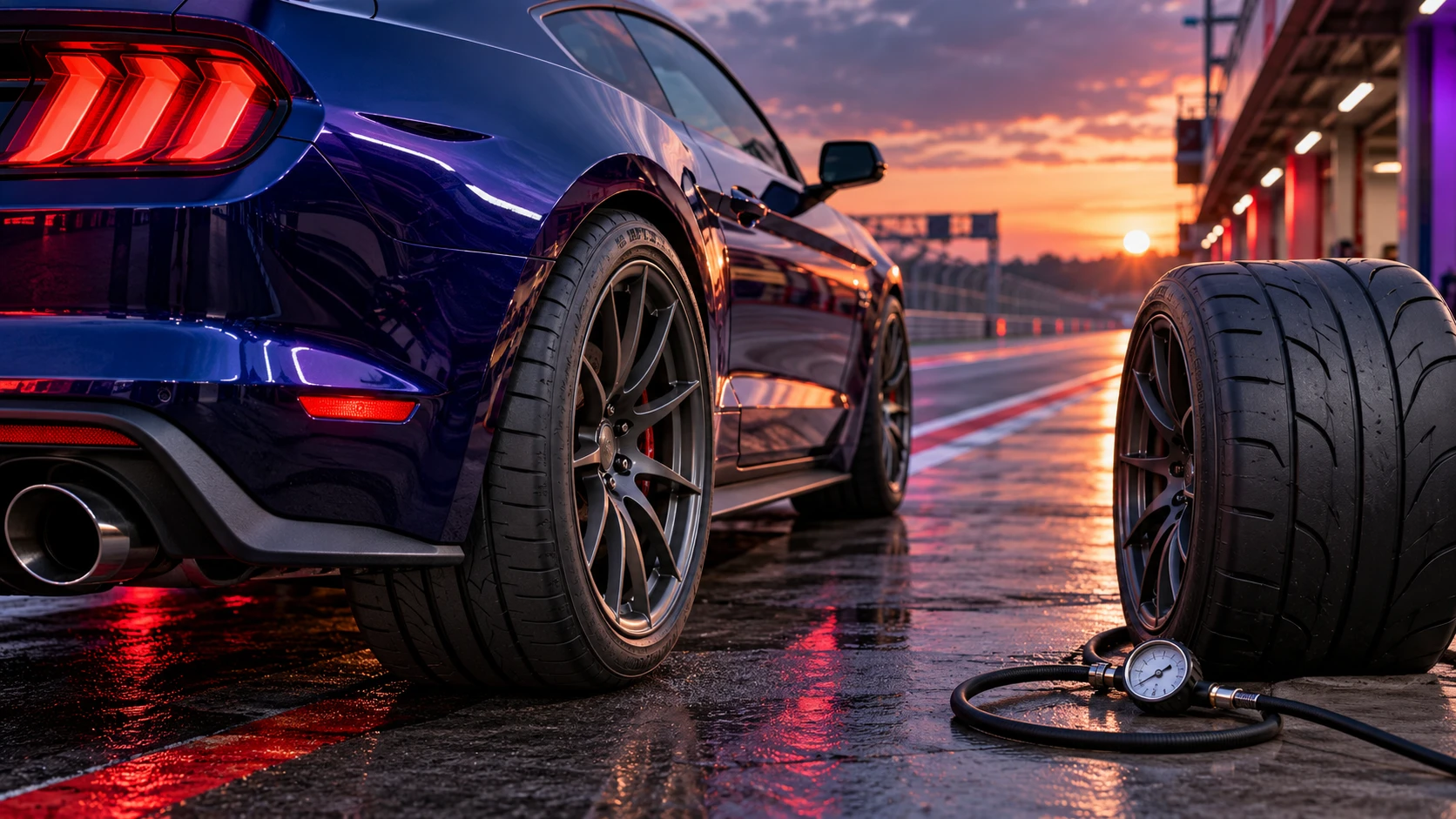
Two cars with identical power can deliver different 0–60 times purely from tires. Compound, width, and heat all influence the first 30 feet, which often decides the run.
Wheel and tire setups also change effective gearing and rotational inertia. A heavier wheel can slightly dull acceleration, while a better-matched tire can create a bigger real-world improvement than minor power differences.
If you are shopping trims, pay close attention to the tire package. It is one of the most reliable predictors of whether the car will put down its potential on the street.
Tire pressure and maintenance also affect performance and safety. For normal road use, drivers should follow the vehicle manufacturer’s recommended cold tire pressures rather than changing inflation settings simply to achieve a quicker acceleration time. The NHTSA tire safety guidance recommends checking tire pressure regularly and using the pressure specification provided on the vehicle’s door label or in its owner’s manual. Track-specific adjustments should follow appropriate professional or manufacturer guidance.
How to Compare Real Tests the Right Way?
If you are reading multiple reviews, focus on consistency and context instead of the single best number. A one-off hero run can be impressive, but it might not represent what you will see on typical pavement.
The importance of testing conditions extends beyond traditional V8 performance cars. Electric vehicles can use different power-delivery systems and traction-management strategies during acceleration. For an example of launch technology in a high-performance electric vehicle, see our Hummer EV acceleration and trim guide, which discusses the Watts to Freedom acceleration feature and different powertrain configurations.
- Check Measurement Method: Look for GPS-based data and whether rollout is included.
- Match Tires and Options: Compare cars with similar tire categories and similar wheel sizes.
- Note Conditions: Temperature and surface prep can shift times by noticeable margins.
- Watch for Repeat Runs: Multiple attempts reveal whether a result is repeatable or a best-case outlier.
Using this approach makes GT vs Dark Horse comparisons far more trustworthy.
Hard acceleration testing should take place only on suitable, legally permitted closed courses with appropriate safety precautions. Public roads are not appropriate environments for attempting maximum-performance launches or reproducing professional acceleration tests.
Which One is Faster for Most Buyers?
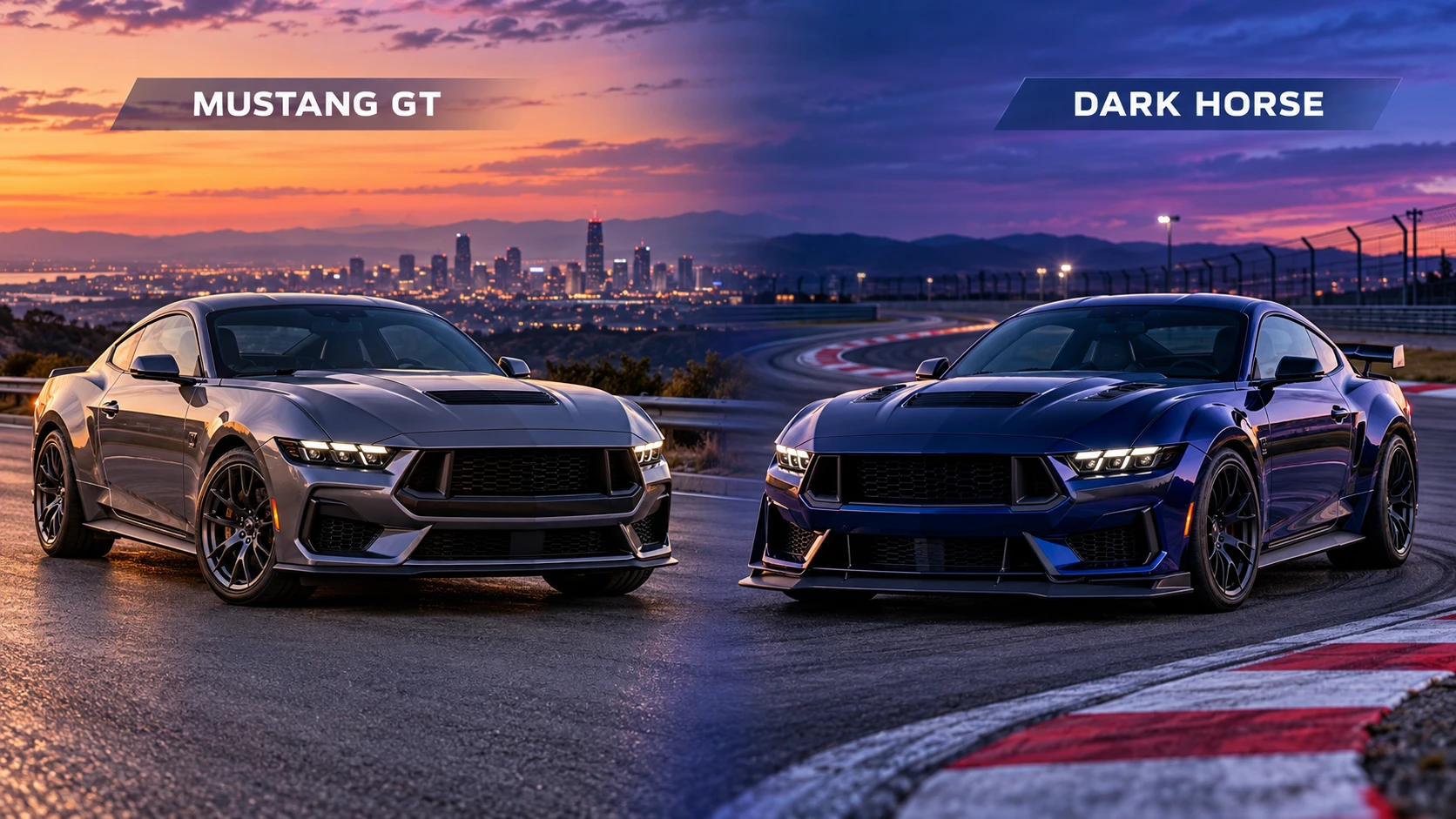
If both cars are configured for grip and tested under similar conditions, the Dark Horse often has a small edge, but it is rarely night-and-day in 0–60. The GT can match the Dark Horse surprisingly often when it has the right transmission and tire package.
That means the decision should not be based on 0–60 alone. Consider how you will use the car, whether you prioritize track durability, and which options you plan to buy.
Buyers should also compare the exact equipment offered for their preferred model year. Ford’s current U.S. specifications list a 480-horsepower standard Mustang GT and a 500-horsepower Dark Horse, with additional differences in available performance equipment. The Ford’s official Mustang trim comparison can help buyers verify engine specifications, transmission options, and performance packages before making a decision. These current model specifications should not be confused with the equipment fitted to the specific 2024 test cars discussed earlier.
- Choose Mustang GT: You want strong straight-line speed with more flexibility in pricing and packages.
- Choose Mustang Dark Horse: You want a more performance-focused setup and better support for repeated hard driving.
The best choice is the one that matches your tire plan, transmission preference, and typical driving environment.
Conclusion
Instrumented testing confirms that the Mustang GT and Dark Horse deliver closely matched straight-line acceleration. In MotorTrend’s 2024 tests, the automatic Dark Horse reached 60 mph in 3.7 seconds compared with 3.9 seconds for the automatic GT convertible. Manual versions recorded 4.1 seconds for the Dark Horse and 4.3 seconds for the GT. These results favor the Dark Horse in the tested configurations, but different tires, body styles, and performance packages prevent the figures from representing a universal 0–60 advantage. The GT remains a strong option for buyers focused on straight-line speed, while the Dark Horse offers additional track-oriented equipment.
If you compare like-for-like setups and look for repeatable runs, you will get a clearer picture of which trim is faster for your use. Use 0–60 as one data point, then weigh how each car delivers performance beyond the launch.
Frequently Asked Questions
Does Rollout Change Mustang GT vs Dark Horse 0–60 Results
Yes, rollout can make the reported time look quicker because the clock effectively starts after the car has begun moving. Some outlets use it and some do not, so comparisons should use the same method. If measurement methods differ, the numbers are not directly comparable.
Can A Mustang GT Be Quicker Than A Dark Horse to 60 mph?
It can happen when the GT has a stronger launch setup, especially with stickier tires and an automatic transmission. Since many starts are traction-limited, a better tire can outweigh small power or calibration differences. Conditions like pavement temperature can also flip the result.
What should I look for When Comparing Real 0–60 tests?
Focus on the tire package, the transmission, and whether the test includes rollout. Also look for repeat runs rather than a single best number, since that shows consistency. When those details match, GT vs Dark Horse comparisons become much more reliable.