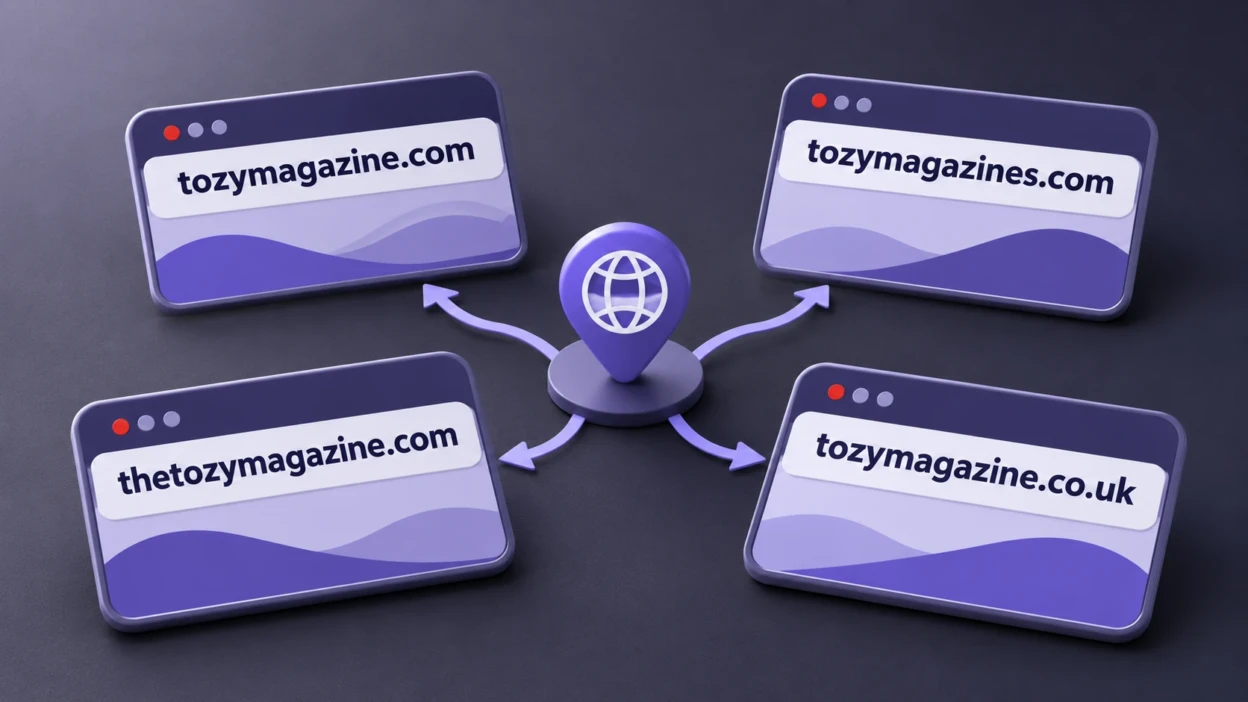
Search for TozyMagazine.com and you may find several websites with nearly identical names. The address tozymagazine.com leads to a publication called Tozy Magazine. But tozymagazines.com, thetozymagazine.com, and tozymagazine.co.uk are different web addresses, even when their pages use similar branding.
To find the site you intended, check the complete address first, then examine what the publisher says about itself. A matching name is not proof of shared ownership, and a working website is not automatically a trustworthy source for every subject it covers.
The Similar-Looking Domains Compared
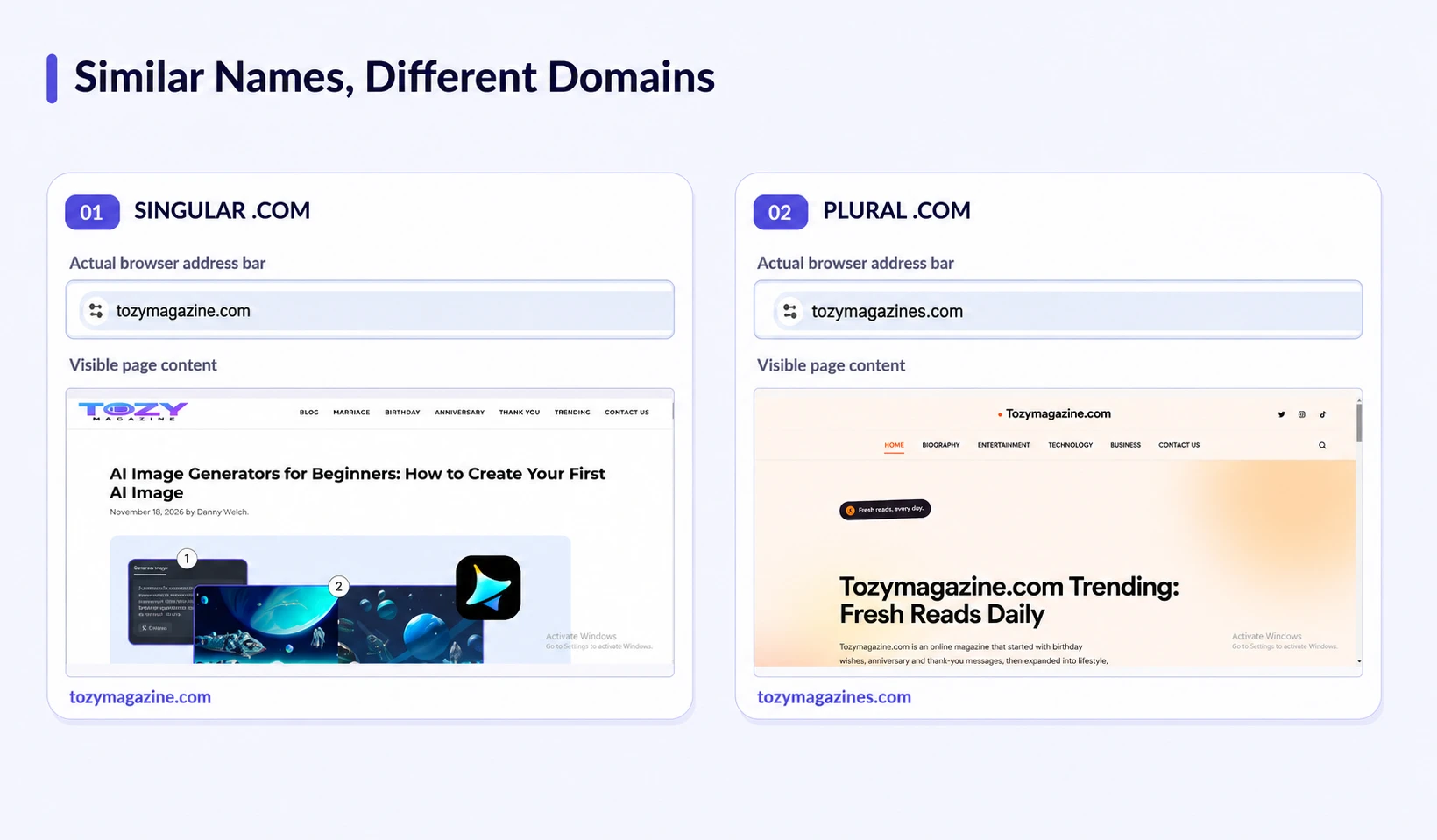
These four accessible websites use related names, but each address leads to its own domain. The differences are visible in the browser address bar, regardless of the words used in a website’s title or logo.
| Website address | What its public pages show | What the address establishes |
|---|---|---|
| tozymagazine.com | A Tozy Magazine homepage with occasion-message categories and a feed of general-interest articles. | An exact match for the singular .com address. |
| tozymagazines.com | A site using Tozymagazine.com branding, with biography, entertainment, technology, and business navigation. | A different domain because it adds an s. |
| thetozymagazine.com | A homepage prominently displaying a long guide about TozyMagazine.com USA. | A different domain because it adds the. |
| tozymagazine.co.uk | A broad article site with categories including technology, lifestyle, business, and entertainment. | A different domain using the .co.uk ending. |
None of these naming differences alone proves that the sites share an owner, have different owners, or are fraudulent. Establishing a business relationship requires stronger evidence than a similar heading, theme, or domain name.
What TozyMagazine.com Publishes?
The singular .com website presents itself as Tozy Magazine. Its About Us page emphasizes wishes, quotes, and messages for personal occasions. Its navigation includes Marriage, Birthday, Anniversary, and Thank You.
The homepage also lists articles about subjects beyond celebrations, including AI image generation, display technology, business analytics, fashion, and legal or consumer topics. That difference matters: someone searching for birthday wishes may reach the same domain as someone following a technology article.
The About page provides a contact route, and the Contact Us page includes a message form. Those pages help readers understand the site’s stated purpose and how to send inquiries. They do not, by themselves, independently verify the identity or qualifications of its operator or writers.
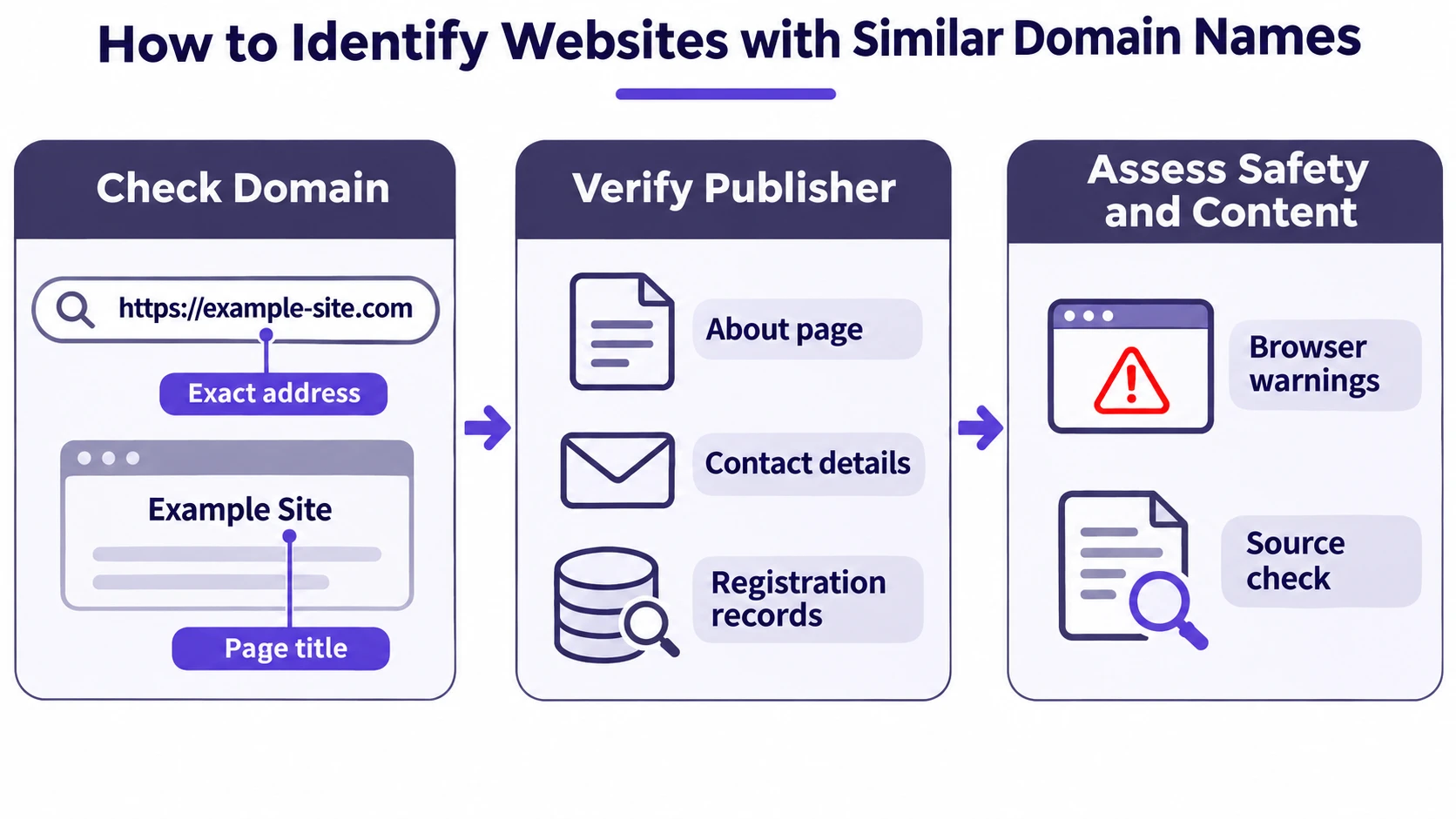
How to Verify the Address and Publisher?
Read the Entire Web Address
Look at the address bar rather than relying on a search-result headline. For example, tozymagazine.com and tozymagazines.com differ by only one letter, but they are separate domains. The words TozyMagazine.com can also appear in an article title hosted on a completely different website.
On a computer, you can preview a link’s destination by hovering over it. On many phones, touching and holding a link displays a preview. After opening a link, inspect the address again, especially if a redirect occurred. If you already know the precise website you want, type its address directly or use a bookmark you previously checked.
Compare Disclosures and Registration Records
Read each website’s About, Contact, privacy, and editorial pages. Look for the actual publisher’s name, consistent contact details, and an explicit explanation of any related domains. Self-descriptions are useful evidence of what a site claims, but independent confirmation is needed for important ownership claims.
For example, the About Us page on the .co.uk domain contains placeholder text rather than a meaningful publisher description. That is a transparency limitation, not proof of malicious intent.
You can also consult ICANN’s domain registration lookup. Enter each domain separately and compare the registration information that is publicly available. ICANN uses the Registration Data Access Protocol, or RDAP, for generic top-level domain registration data. Privacy protections and redactions can prevent public records from identifying the registrant, while matching service providers do not prove common ownership.
When evidence remains incomplete, the accurate conclusion is that the relationship is unverified. A website describing another domain does not automatically speak for that domain’s operator. TechBonafide’s comparison of TheTechyX.com and TheTechyX.net explains the same distinction with a different pair of addresses.
What “TozyMagazine.com USA” Means?
Some similarly named websites use the phrase “TozyMagazine.com USA” in headings, navigation, or explanatory content. Those words can describe an attempt to reach the magazine from the United States, but they are not evidence by themselves of a separate American edition or a partnership with the singular .com website.
If you encounter a result using “USA,” inspect the domain that actually hosts it. Then look for a clear statement from the intended publisher confirming any regional relationship. The websites examined here did not provide independently confirmed evidence that the alternative domains are official regional editions of tozymagazine.com.
Website Safety and Content Reliability
Correctly identifying a web address is only the first step. HTTPS can protect information sent between your browser and a website, but it does not prove who operates the website or whether an article is accurate. Google’s Chrome connection guidance explains why the address and browser warnings still matter.
If you are uncertain about a destination, enter its URL into Google’s Safe Browsing Site Status tool. A warning is a reason to stop, but the absence of a warning is not a guarantee that a website is safe or that its publisher is legitimate. Check each similar domain separately rather than transferring a result from one site to another.
Important: Do not enter passwords, payment details, one-time verification codes, or other sensitive information on an unfamiliar website merely because its name resembles a site you recognize. Verify the destination independently, and do not bypass browser security warnings.
The Federal Trade Commission’s phishing guidance recommends contacting an organization through a website or contact method you already know is genuine instead of trusting an unexpected message’s link.
Content quality deserves a separate check. A general-interest article can be useful as an introduction, but medical, legal, financial, and technical claims should be compared with suitable primary sources and qualified expertise. Look for accountable authorship, relevant references, clear context, and corrections. For a deeper assessment, see TechBonafide’s guide to evaluating technology website advice.
A Six-Step Identification Checklist
Use this process whenever multiple results appear to represent the same online publication:
- Start with the exact name. Write down the address you intended to visit, including its spelling and domain ending.
- Inspect the destination. Read the actual domain in the address bar, not just the search snippet, page heading, or logo.
- Match the site’s purpose. Compare its categories and recent articles with the publication or page you expected.
- Check publisher disclosures. Review About and Contact pages, and seek an explicit, verifiable statement before assuming two domains are affiliated.
- Check before sharing information. Heed browser warnings, consult Safe Browsing when useful, and verify important claims from independent sources.
- Save the confirmed destination. Bookmark the exact URL once you know it is the site you wanted.
For example, if you intended to open tozymagazine.com but a result takes you to thetozymagazine.com, you have reached a different domain. That fact does not determine whether the sites are connected. It tells you to confirm the publisher relationship before treating the second website as an official substitute.
Conclusion
TozyMagazine.com and its similarly named alternatives should be identified by their full web addresses, not their shared words or visual style. The singular .com website presents itself as Tozy Magazine, while the other addresses discussed here lead to distinct domains. Their ownership relationships cannot be established from name similarity alone. Check the address, review the publisher’s disclosures, and verify sensitive or consequential information before you act.

Tech Bonafide is the editorial identity of TechBonafide, an independent technology publication covering AI, software, cybersecurity, gadgets, and emerging technology.